
Folegandros: Clifftop Serenity
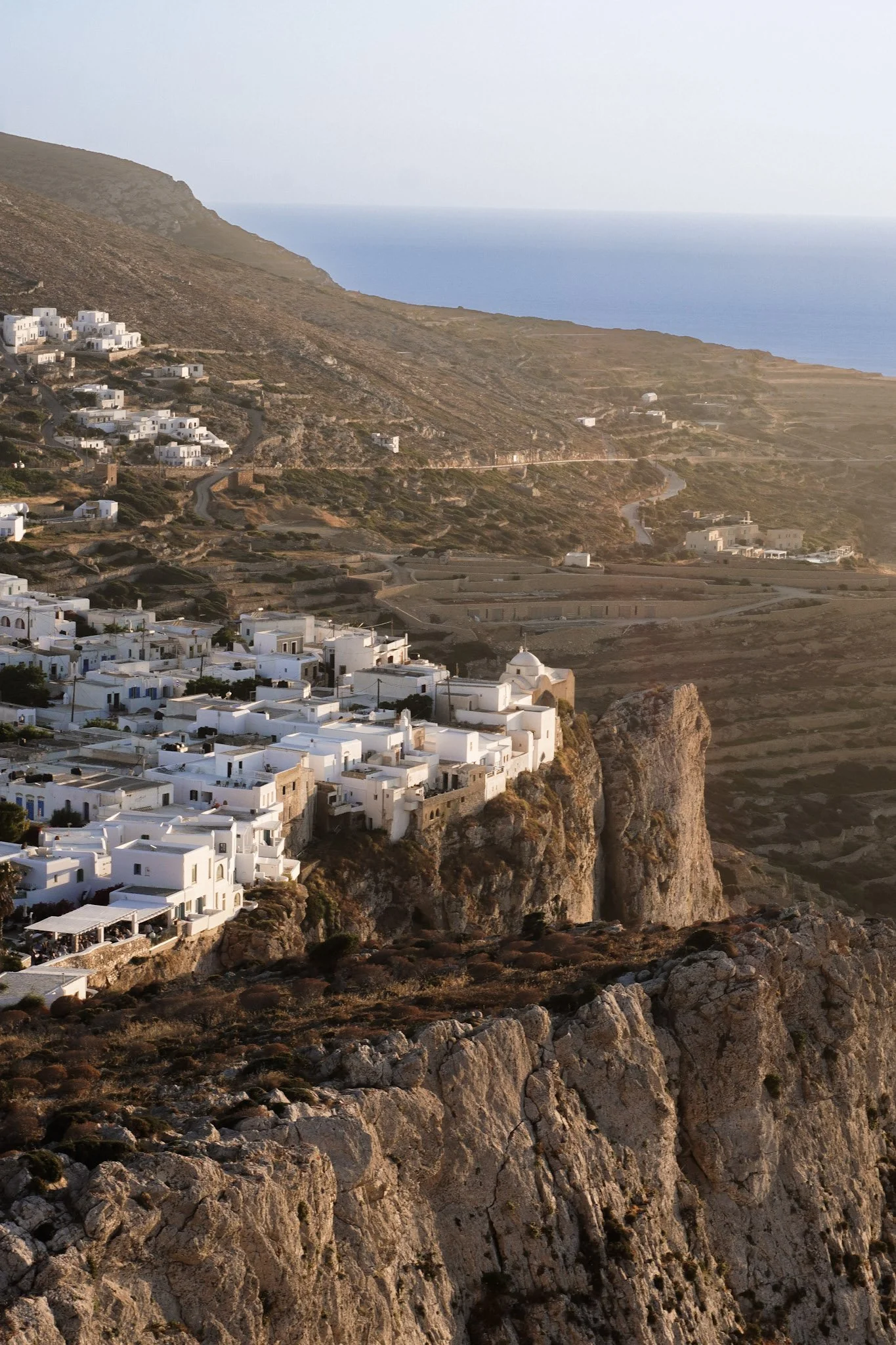
With only 700 inhabitants, Folegandros is one of the smallest and most peaceful islands in the Cyclades, a place of dramatic cliffs, clear Aegean waters and whitewashed villages where tourism has developed on a remarkably restrained scale.
Much of its character comes from what hasn't changed. Outside Chora, the landscape remains largely open and rural, crossed by old paths, dry-stone walls and small chapels. Ano Meria, in particular, preserves the island's agricultural heritage through its traditional themonies, self-contained farmsteads that once allowed families to live almost entirely from their own land.
The beaches follow the same philosophy. Many remain completely unorganised, without sunbeds, beach clubs or water sports, and some of the most beautiful can only be reached on foot or by small local boats.
What surprised me most was how peaceful Folegandros still is. Days naturally revolve around swimming, walking, long lunches and evenings in Chora, with very little competing for your attention. It is precisely this simplicity that makes the island so special.
/// Villages to Wander
Chora
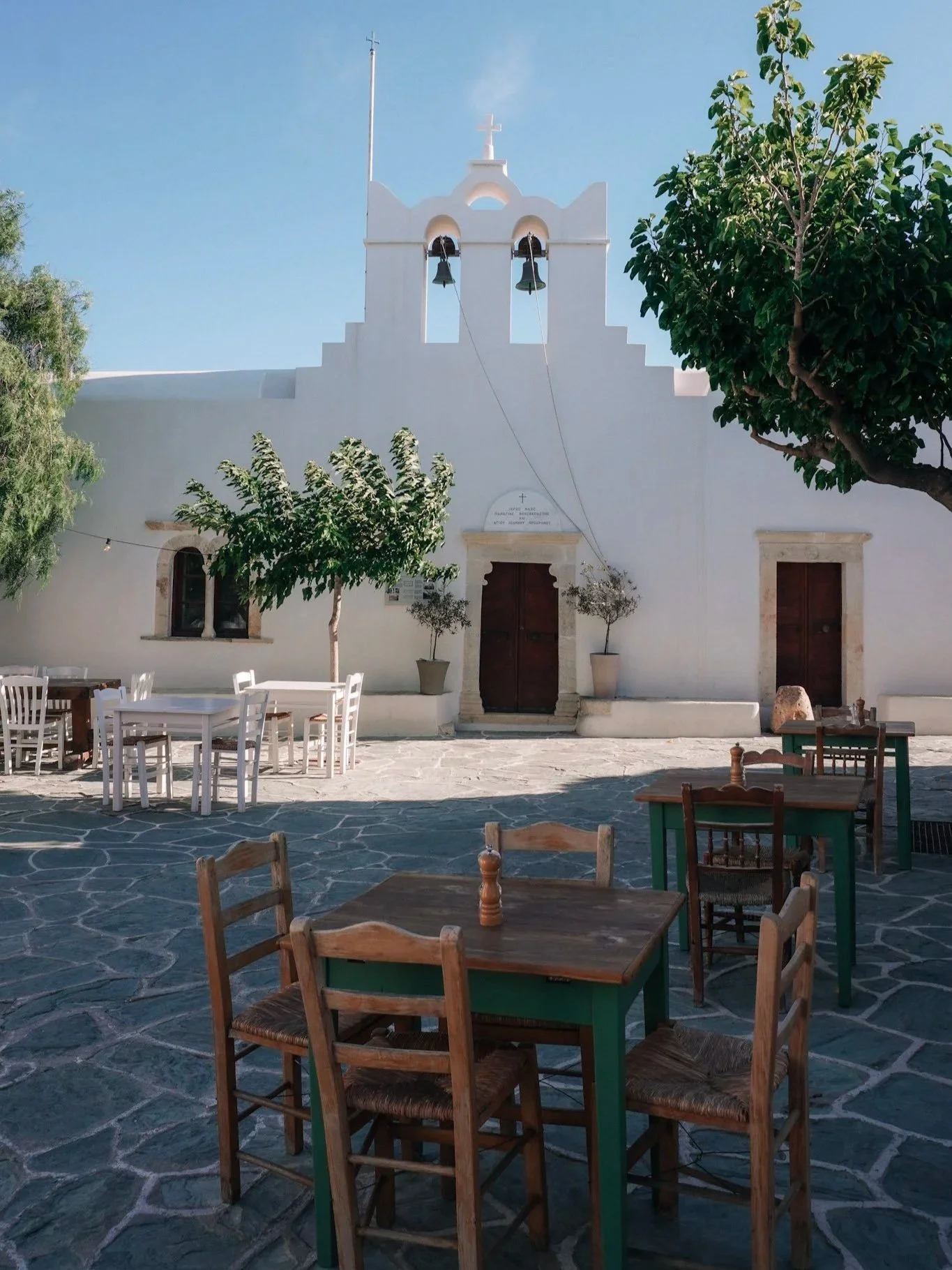
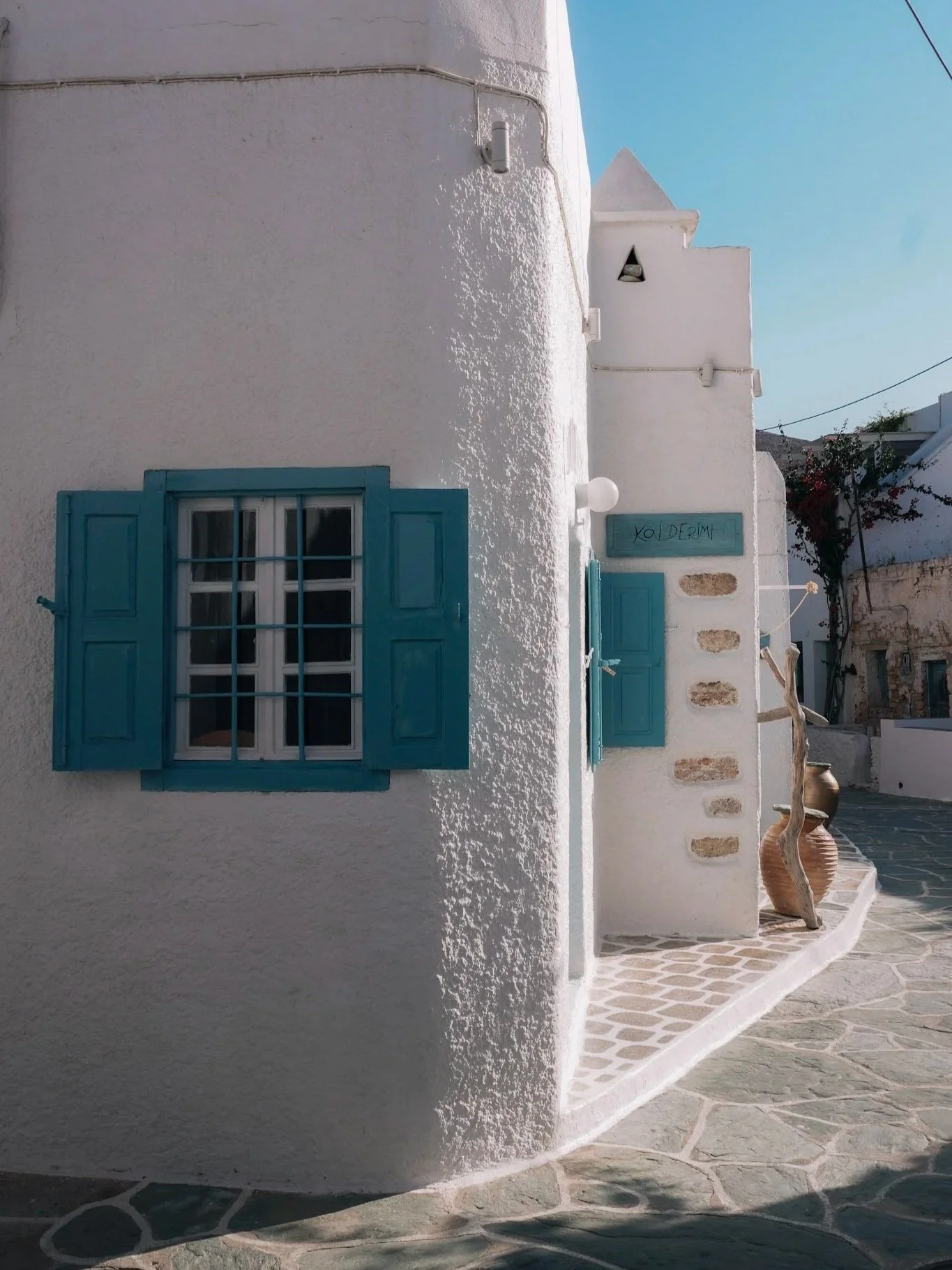
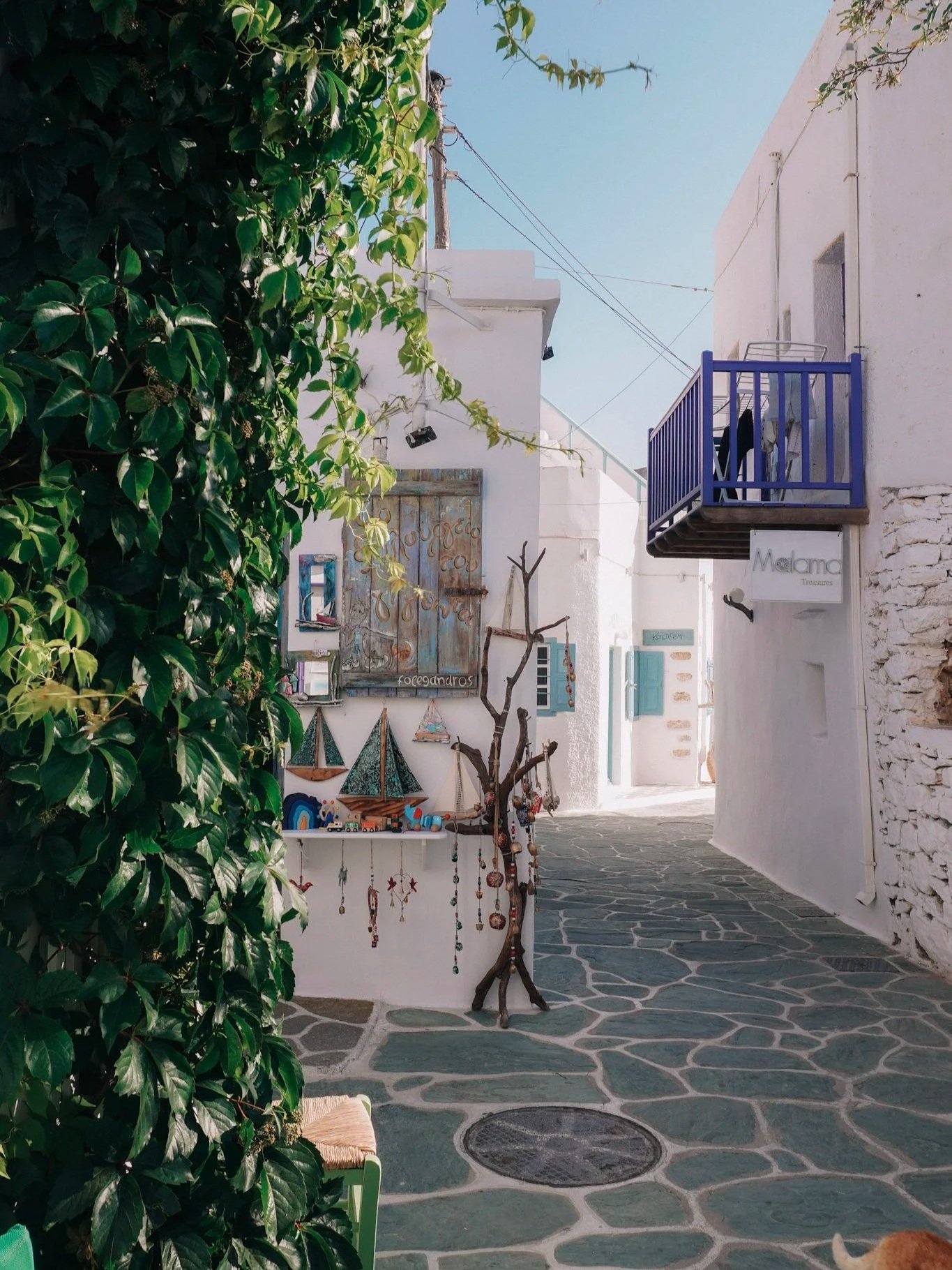
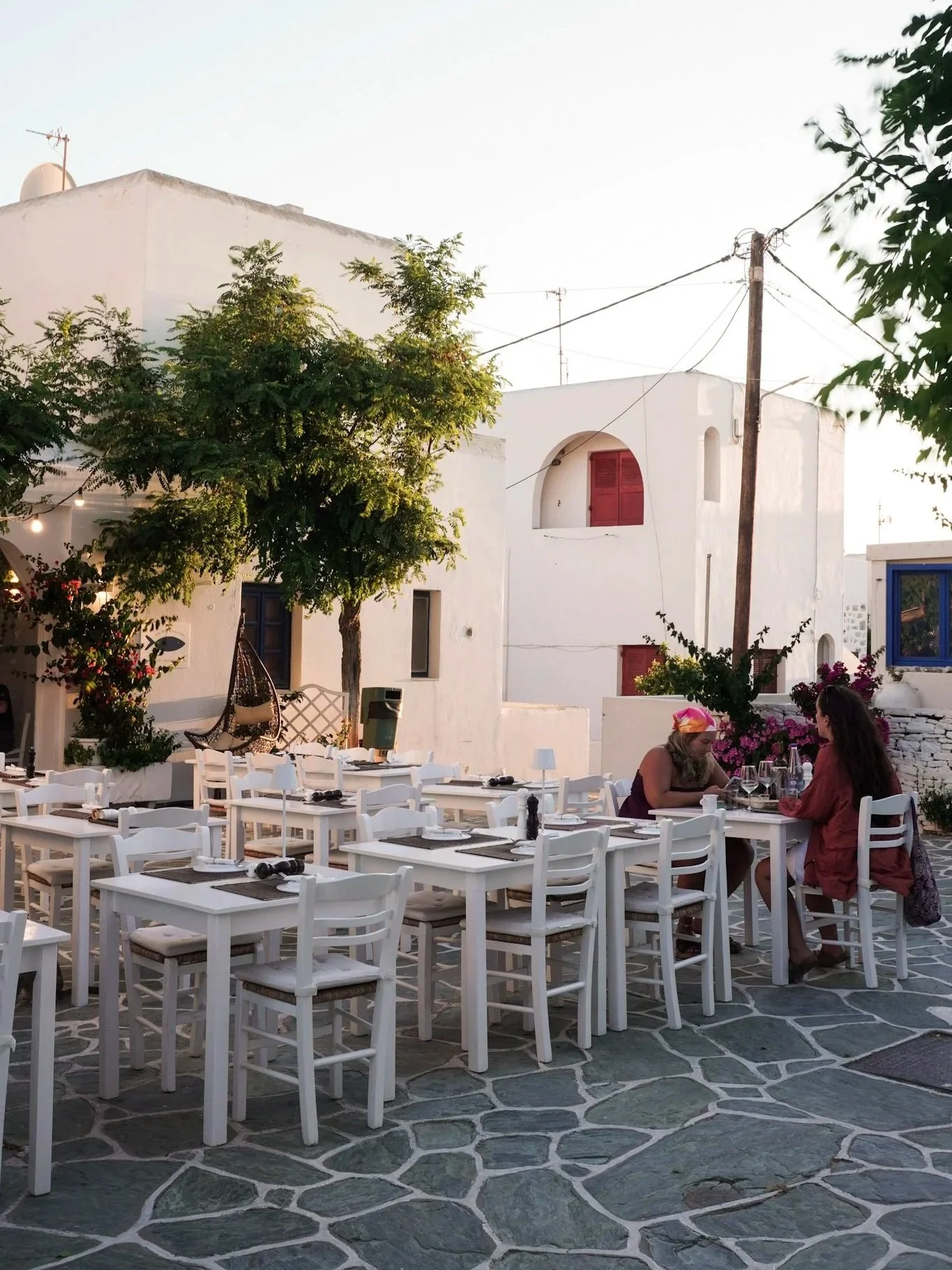
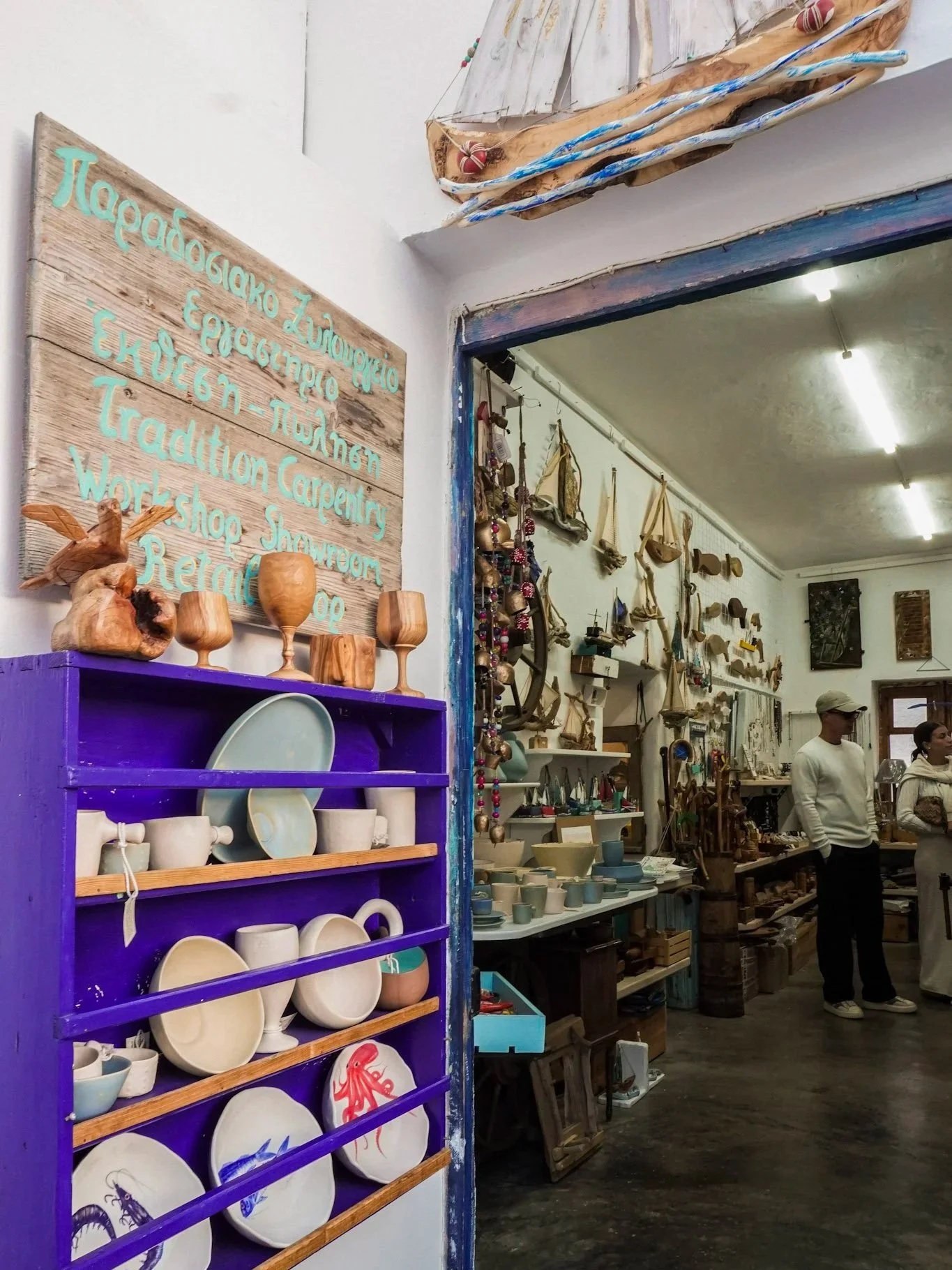
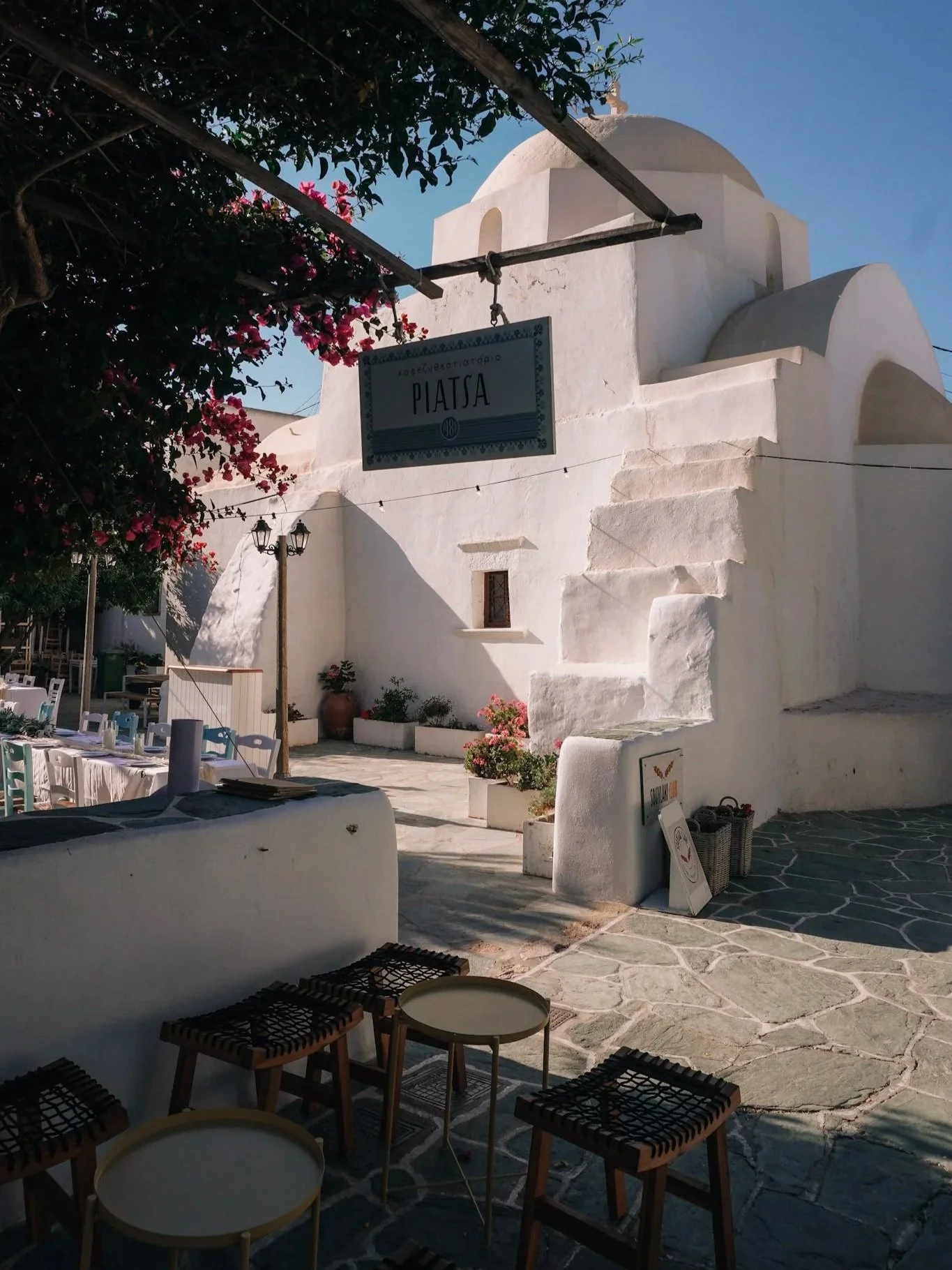
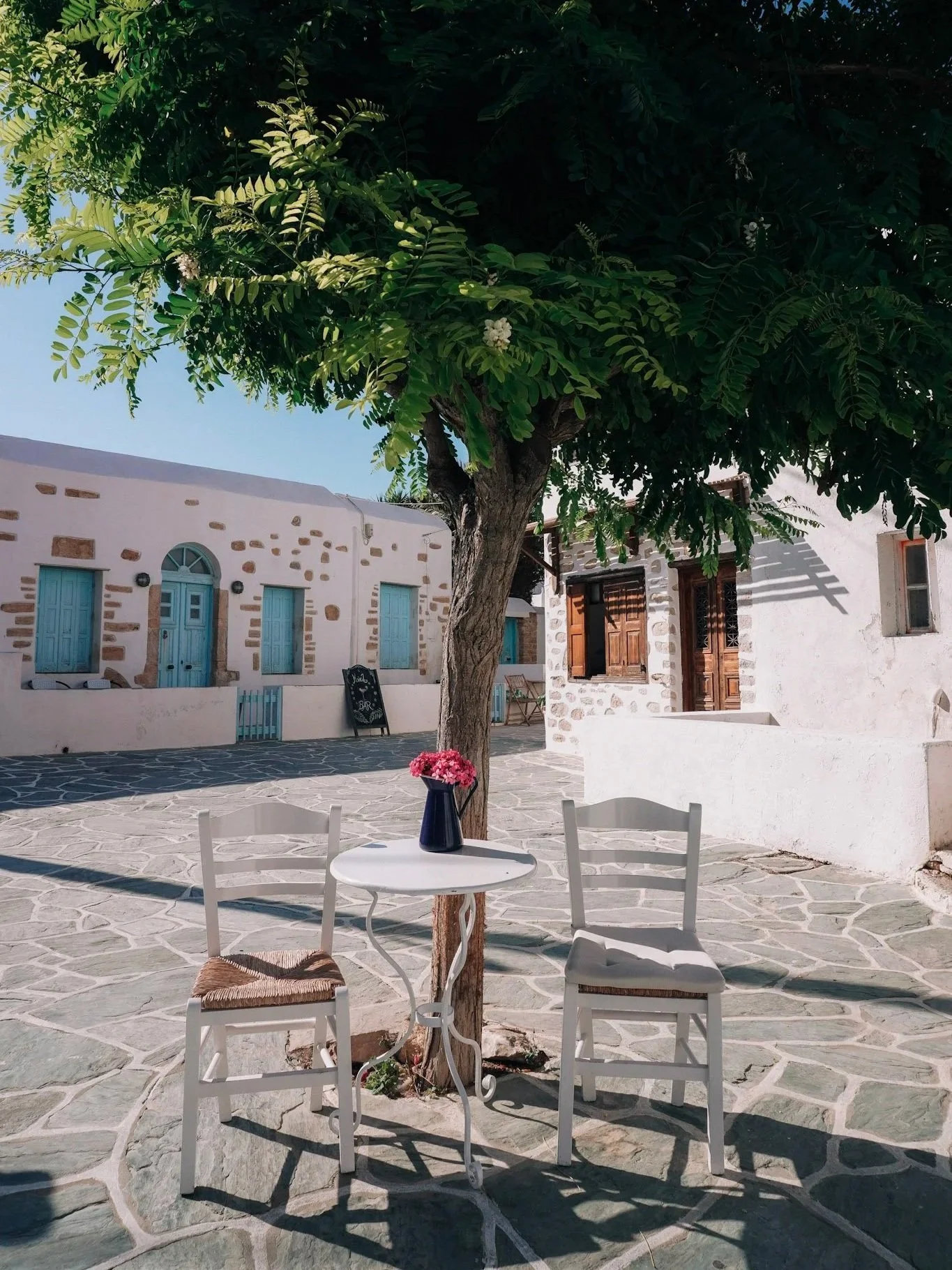
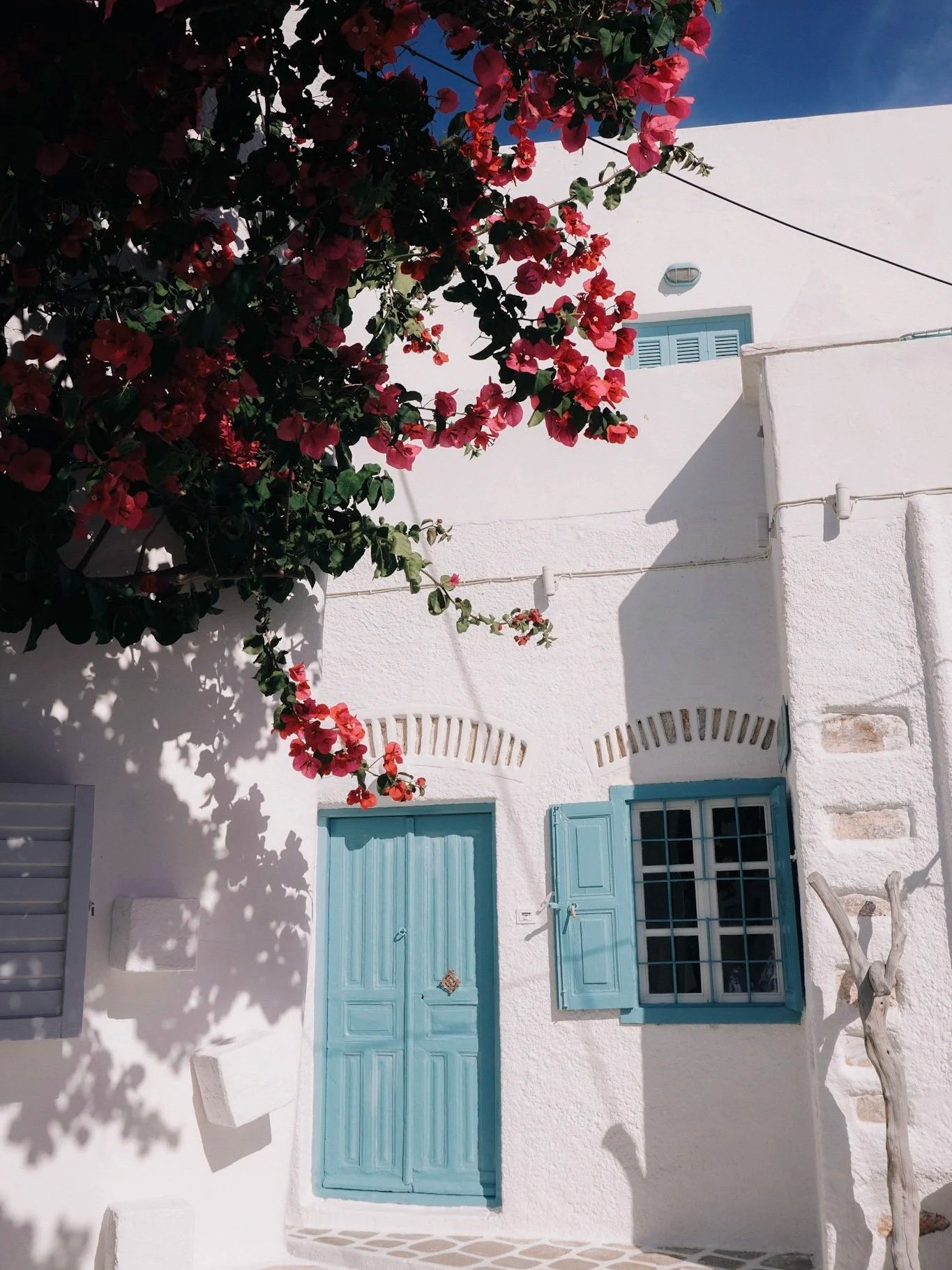
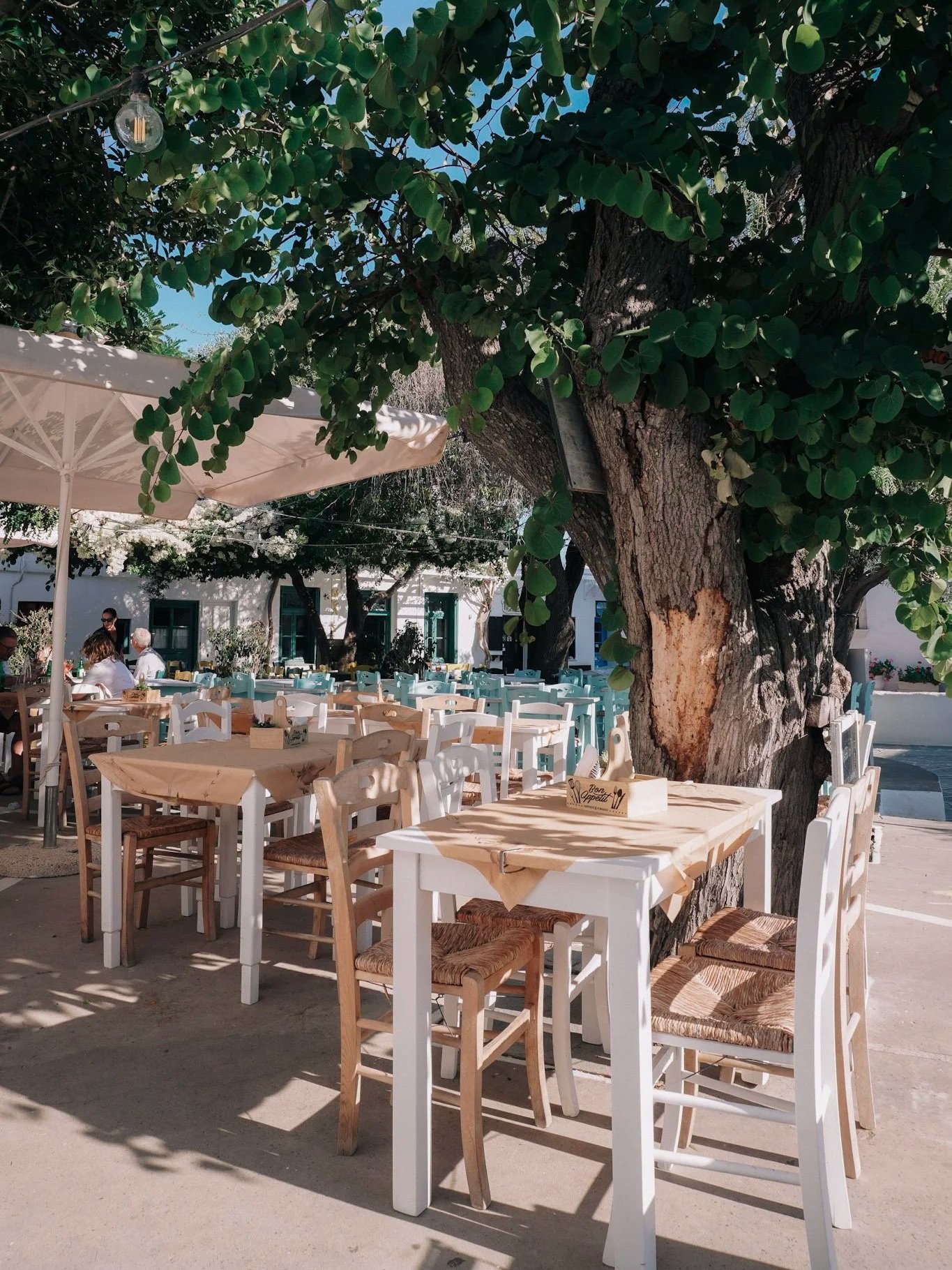
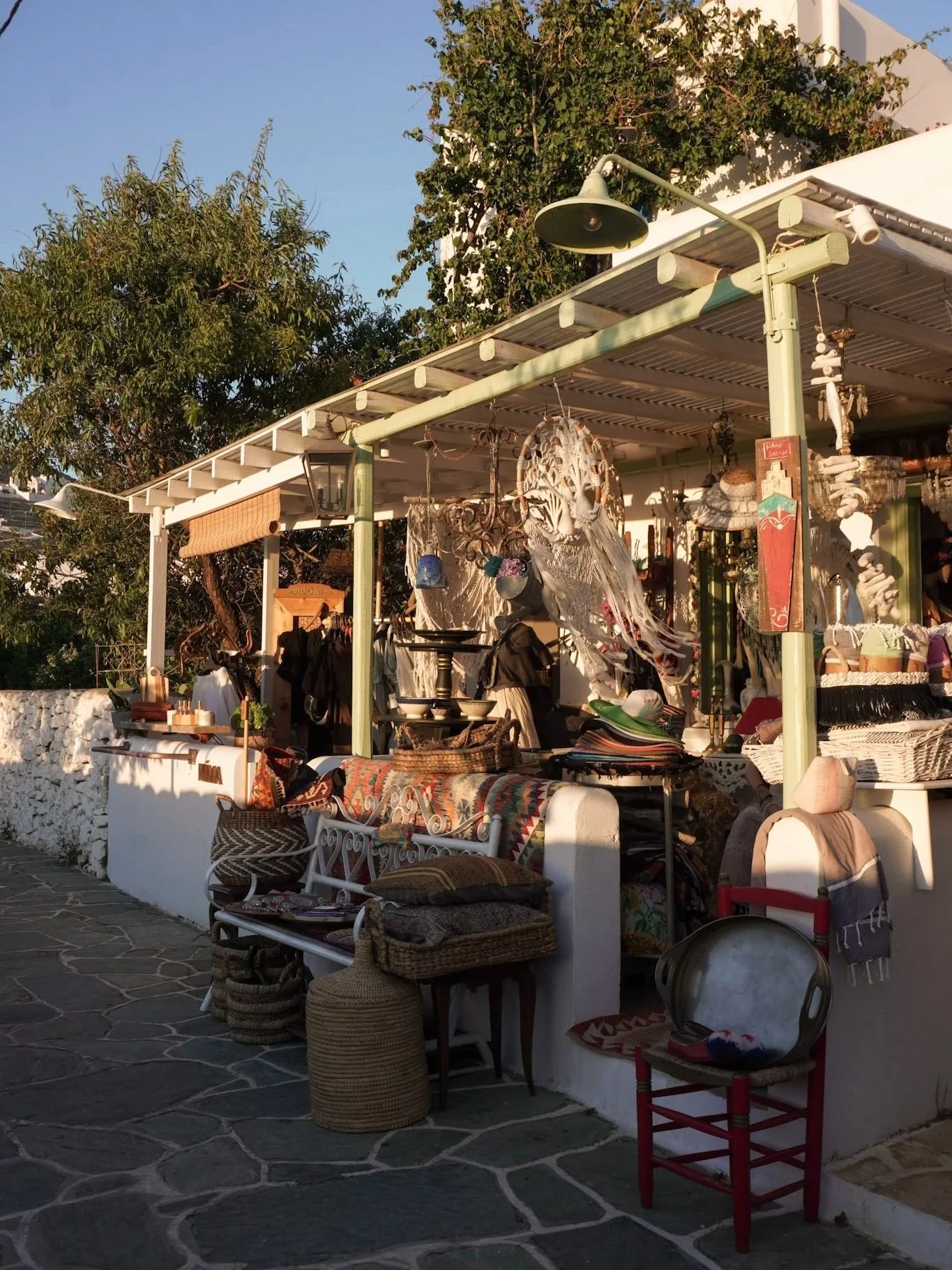
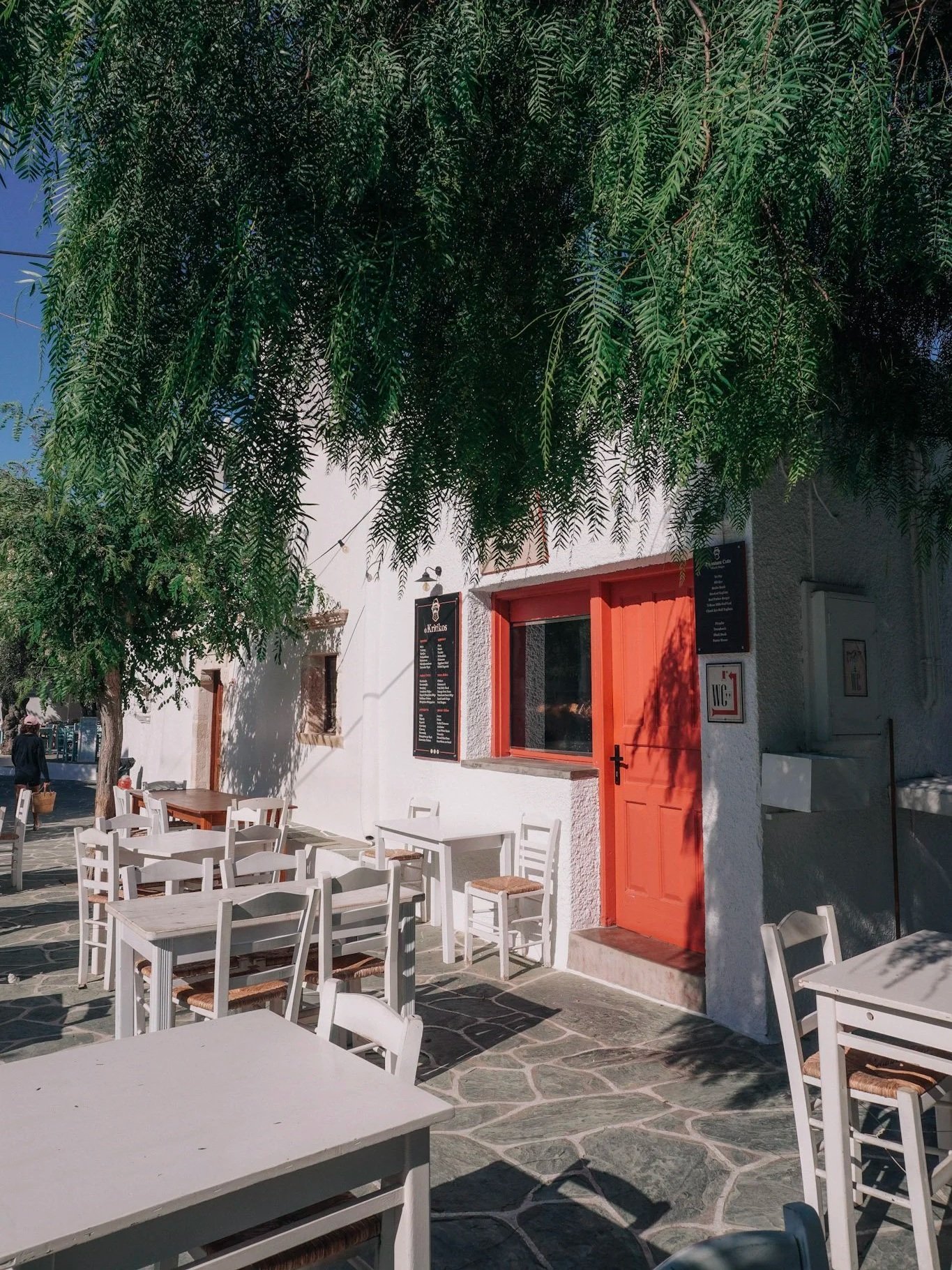
Chora is reason enough to come to Folegandros.
Perched around 200 metres above the Aegean on the edge of a dramatic cliff, the island's main village is remarkably well preserved. Cars stop at its entrance, leaving the centre entirely pedestrian: whitewashed lanes, bougainvillea-covered houses, tiny churches and a succession of interconnected squares filled with cafés and tavernas.
Within Chora, don't miss Kastro, its oldest fortified quarter. Compact, quiet and built right along the dramatic cliff edge, it offers a glimpse into the village's past while remaining very much part of everyday life today.
But Chora is at its best without an itinerary. Come in the late afternoon, wander through its alleys and squares, stop for a drink and stay for dinner. Before sunset, follow the unmistakable zigzag path climbing the hillside to the Church of Panagia for one of the island's most memorable views.
Ano Meria
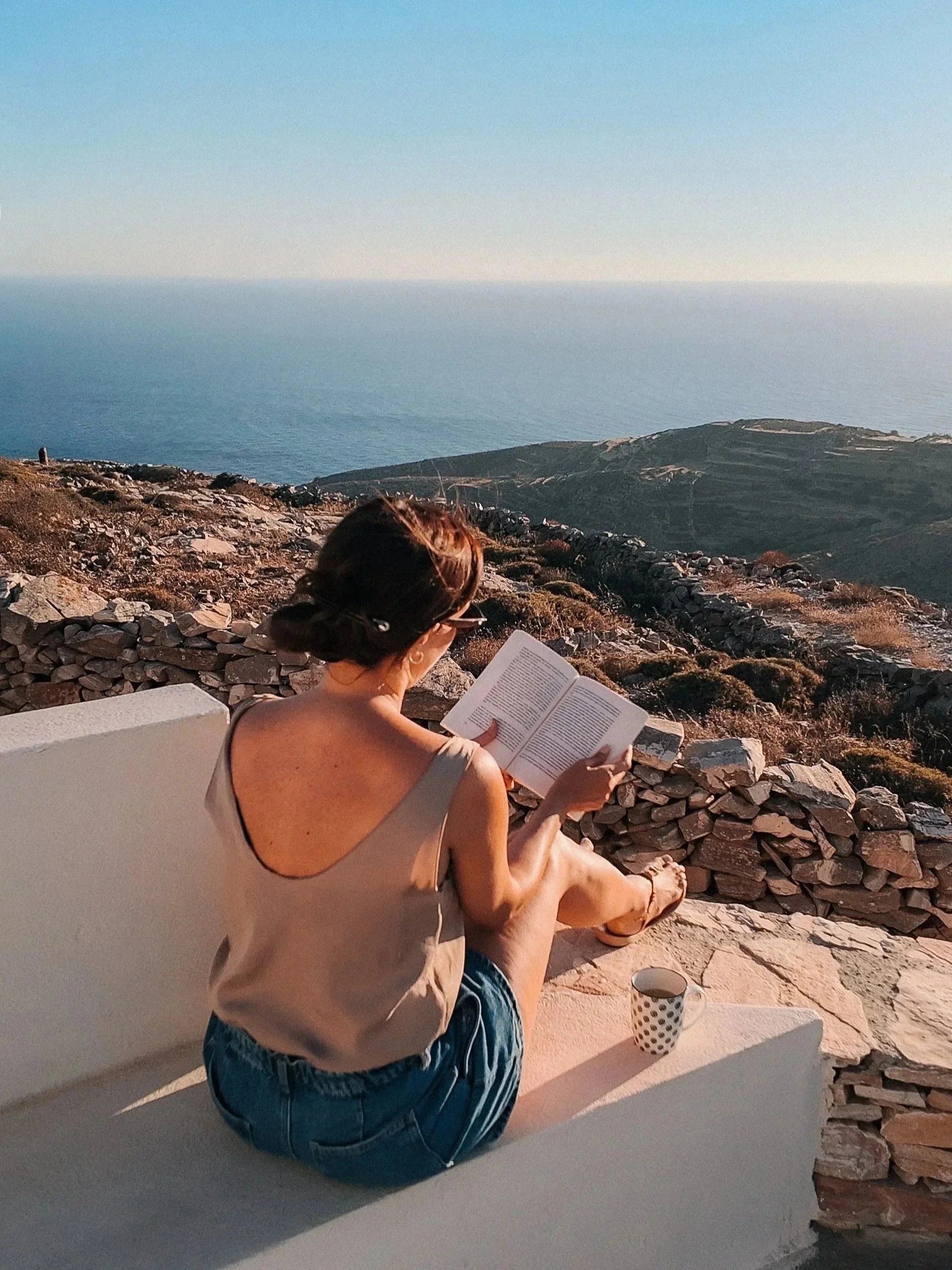
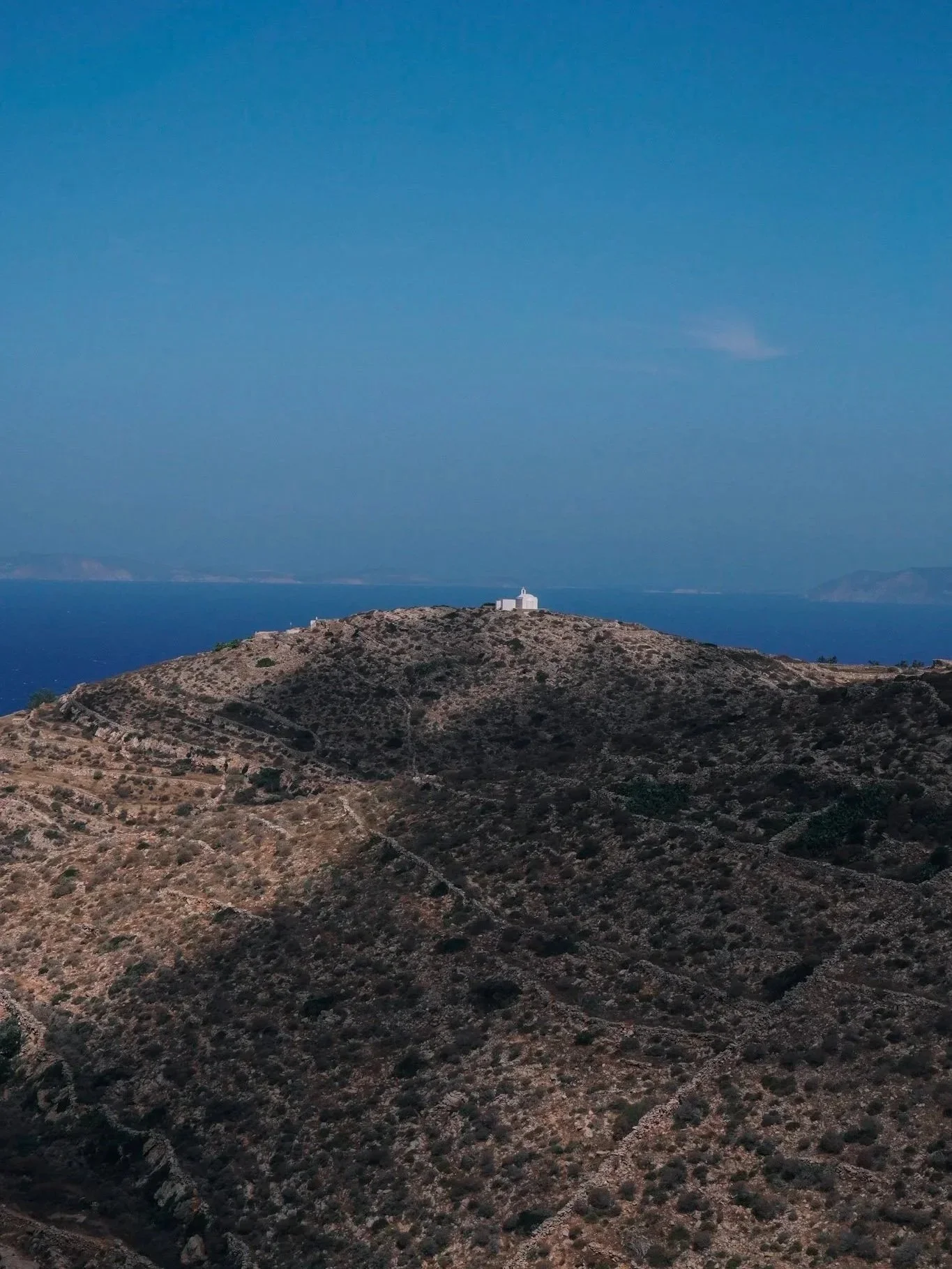
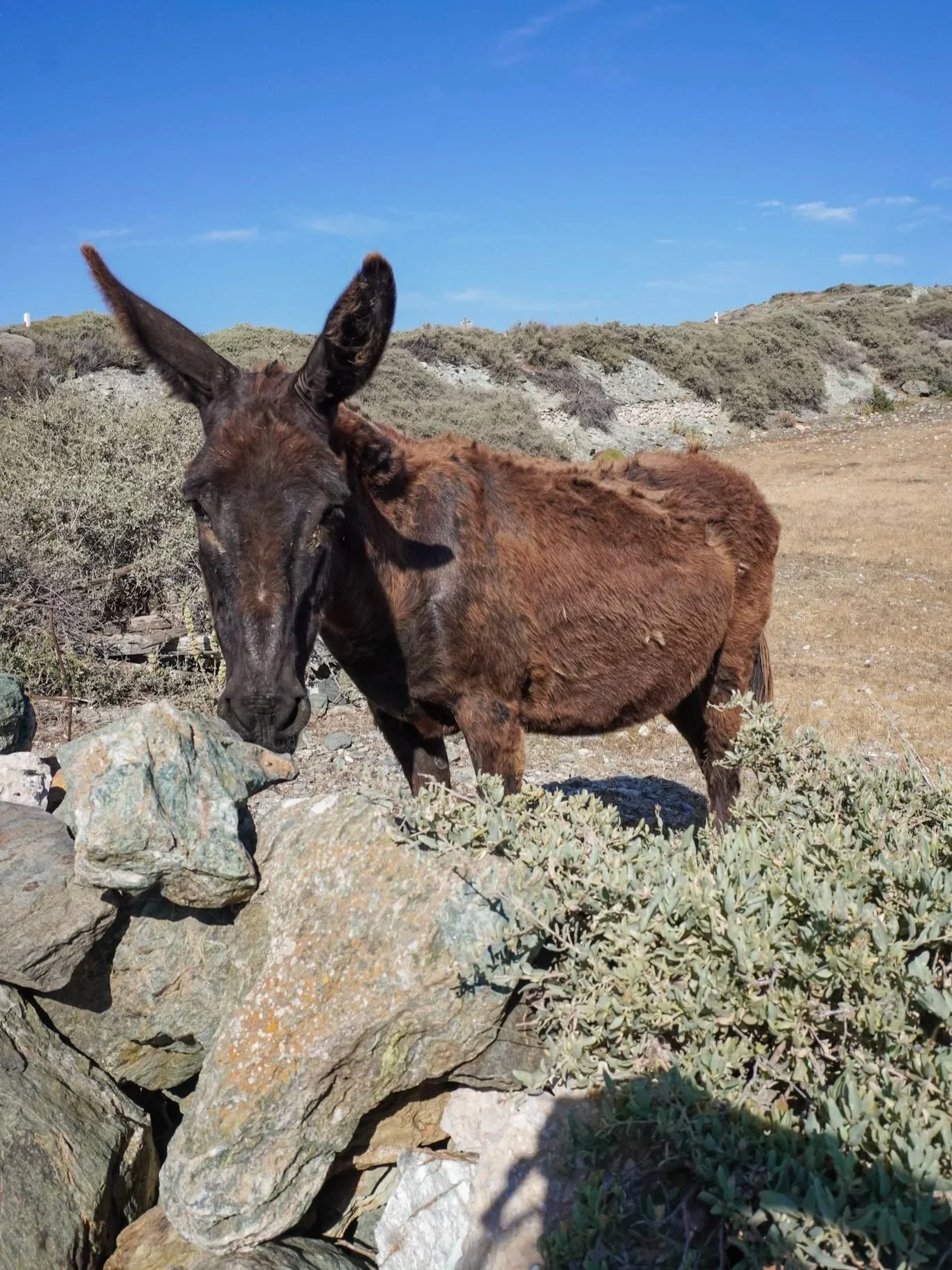
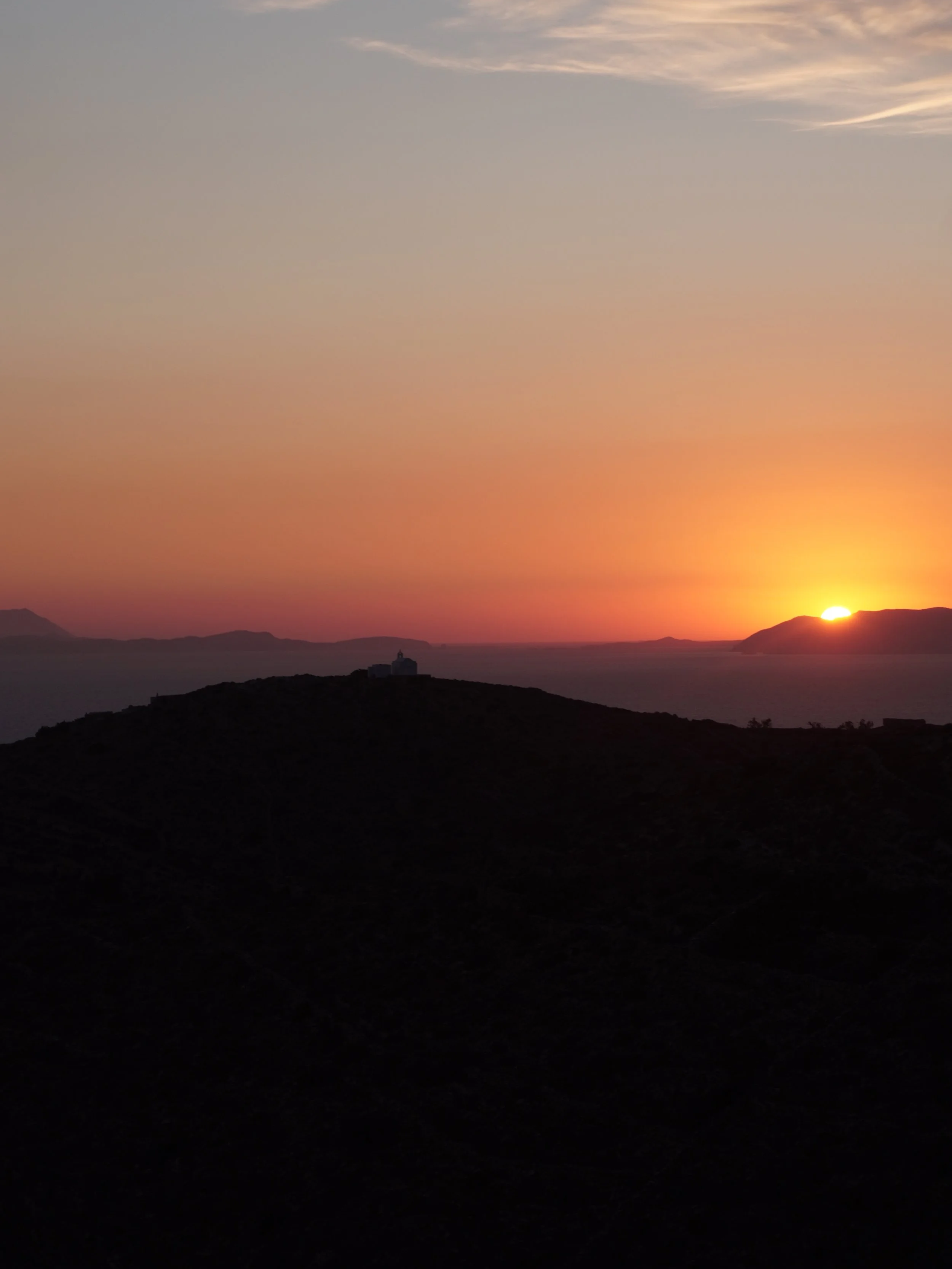
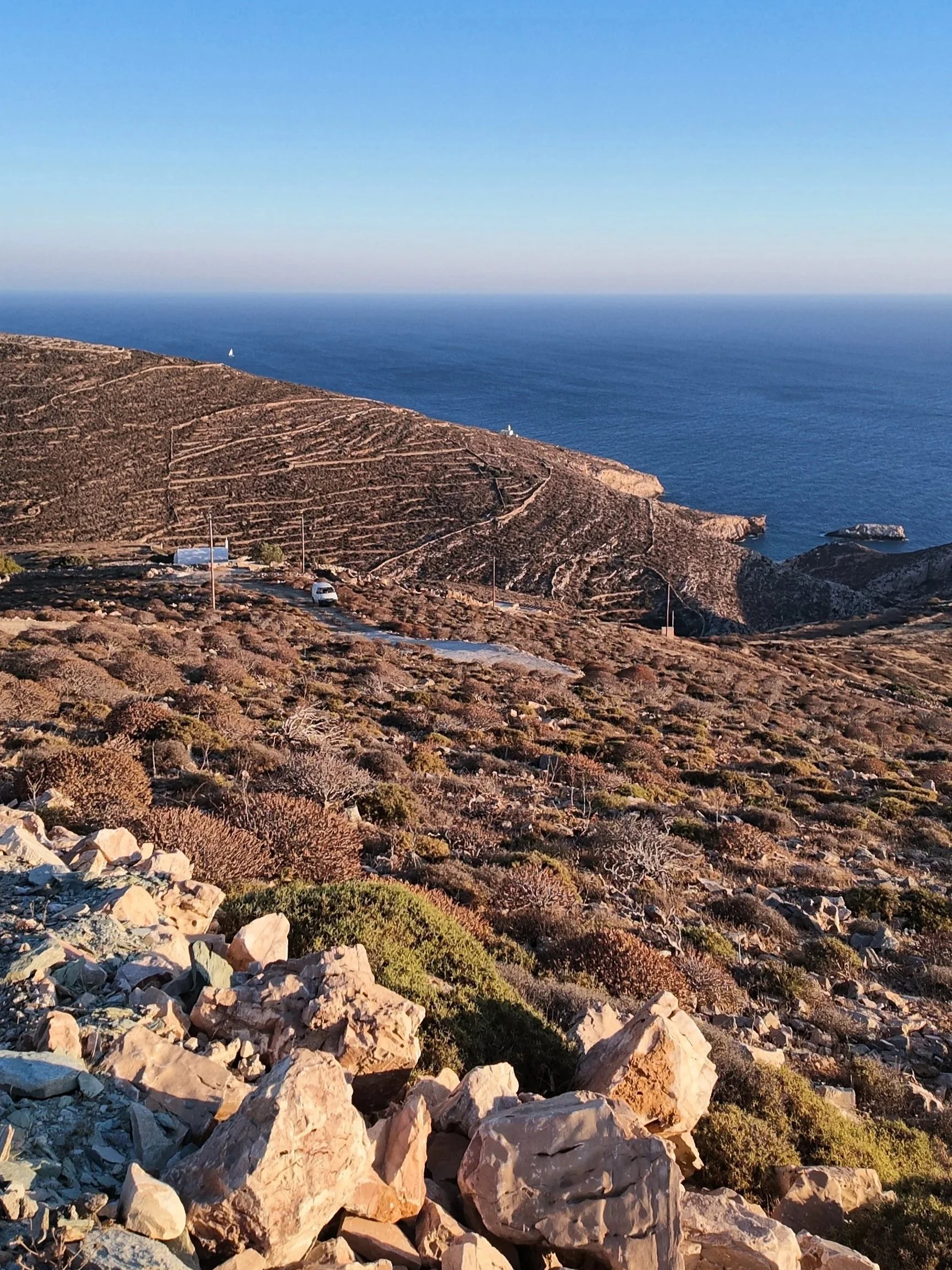
Only a few kilometres from Chora, Ano Meria reveals an entirely different side of the island.
There isn't really a conventional village centre. Instead, houses and farms stretch along the landscape for approximately three kilometres, separated by fields, stone walls and winding roads. The settlement developed around the traditional themonies, small self-sufficient agricultural units where families lived alongside their crops and animals.
Some of that rural way of life remains visible today, which is what makes Ano Meria particularly interesting. Stop for lunch at a local taverna, explore the surrounding paths and take your time driving through rather than treating it simply as somewhere to pass on the way to a beach.
It is perhaps the clearest glimpse of the Folegandros that existed long before tourism arrived.
/// Beach Escapes
Agkali
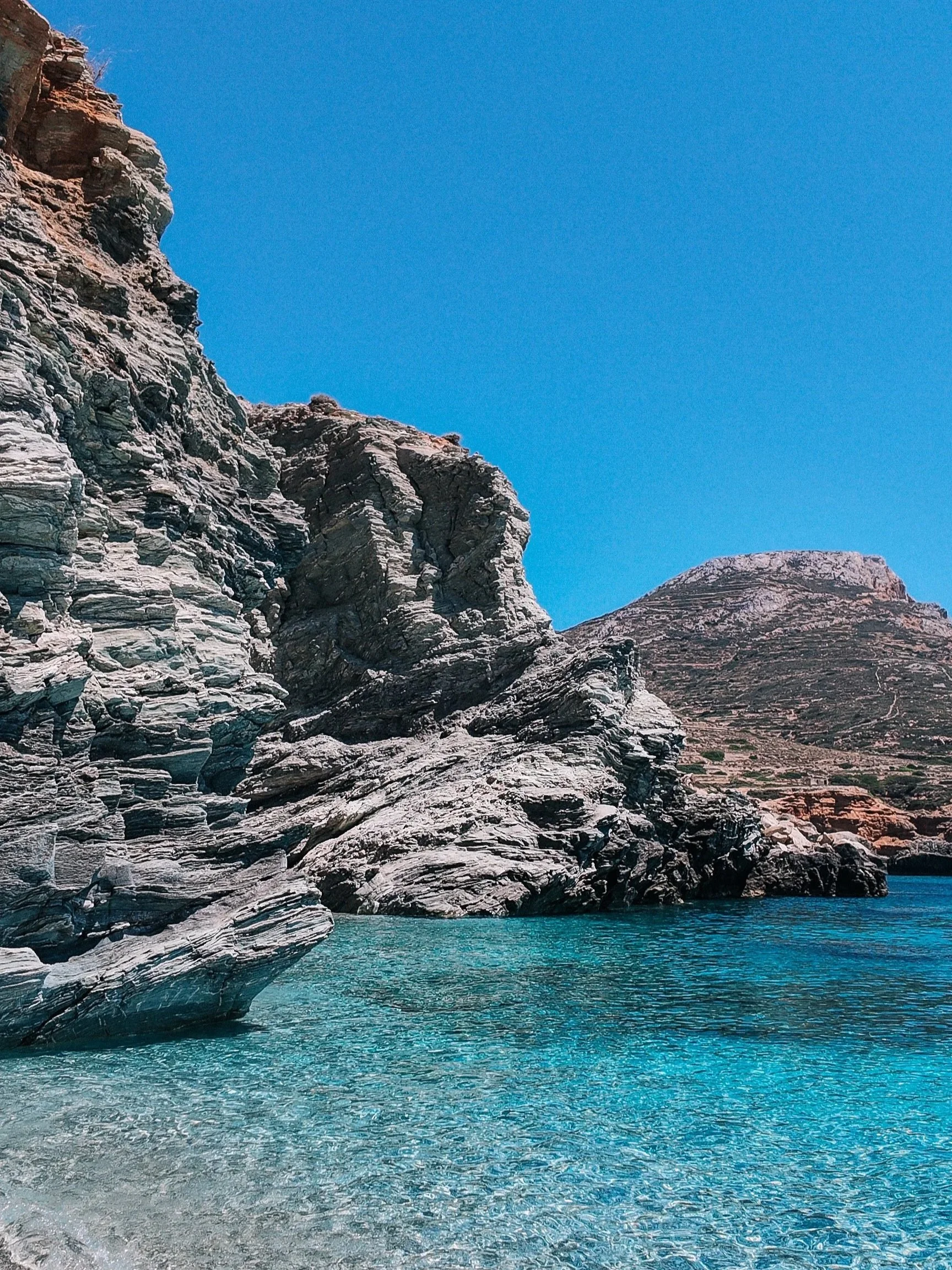
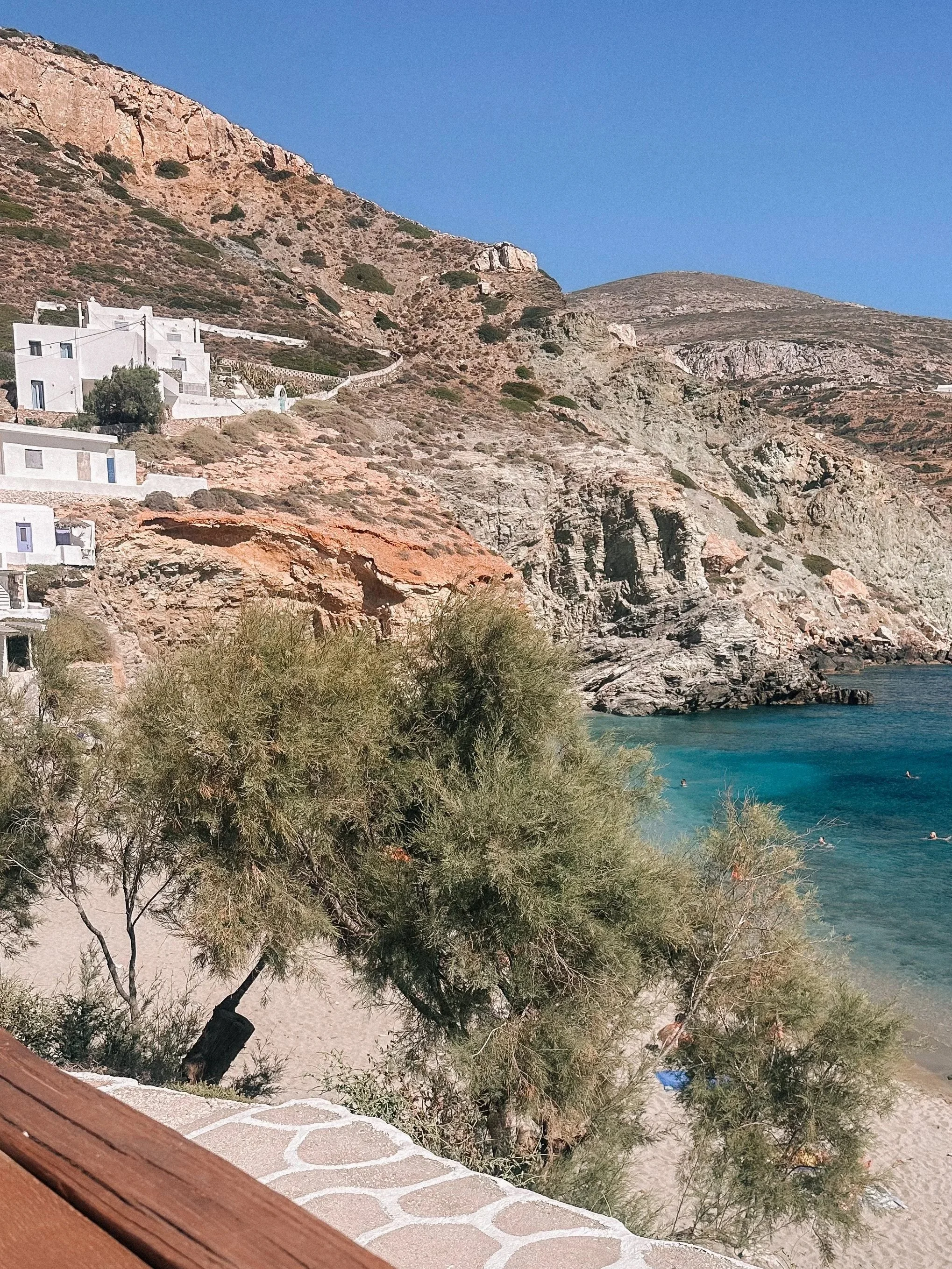
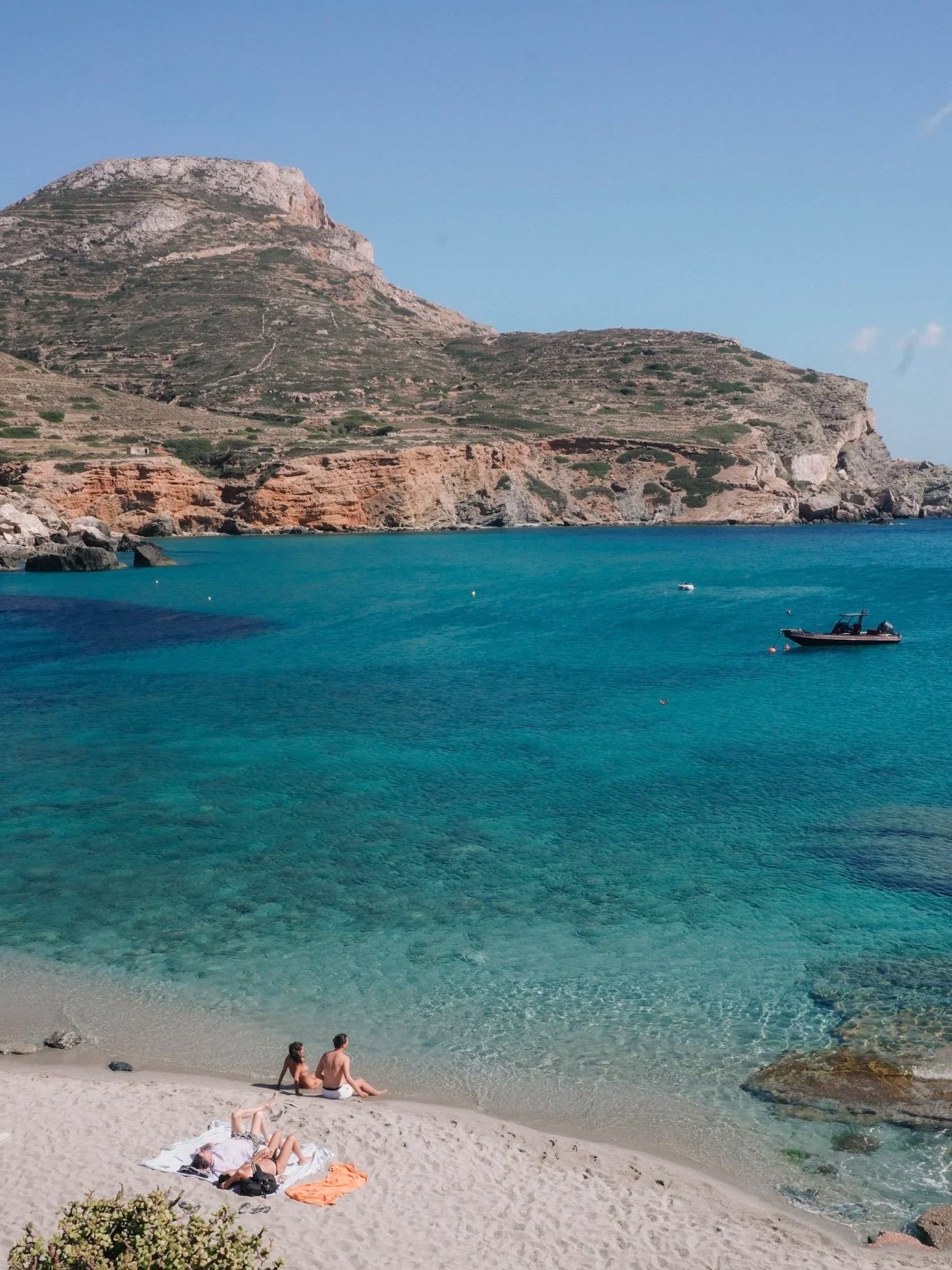
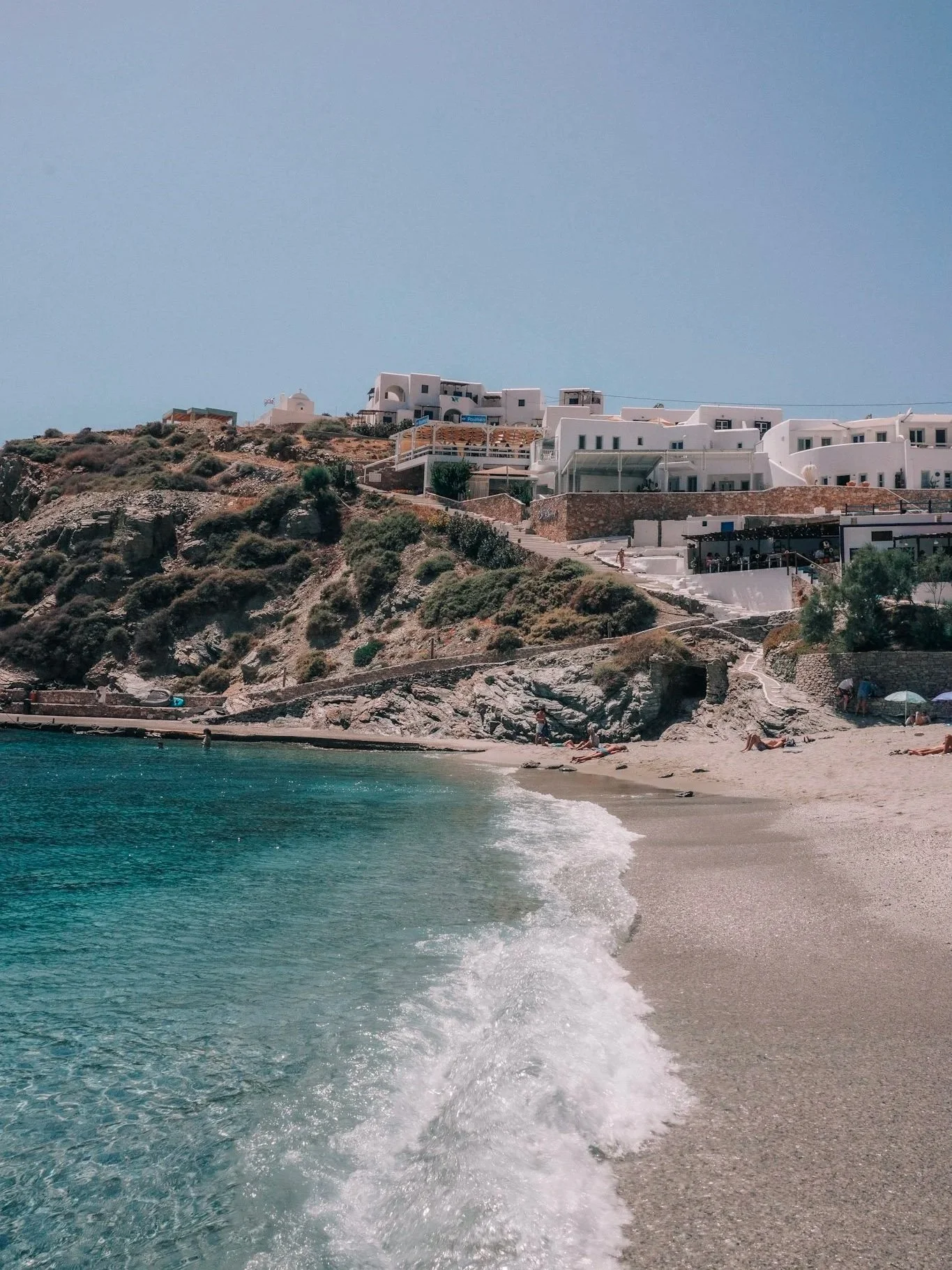
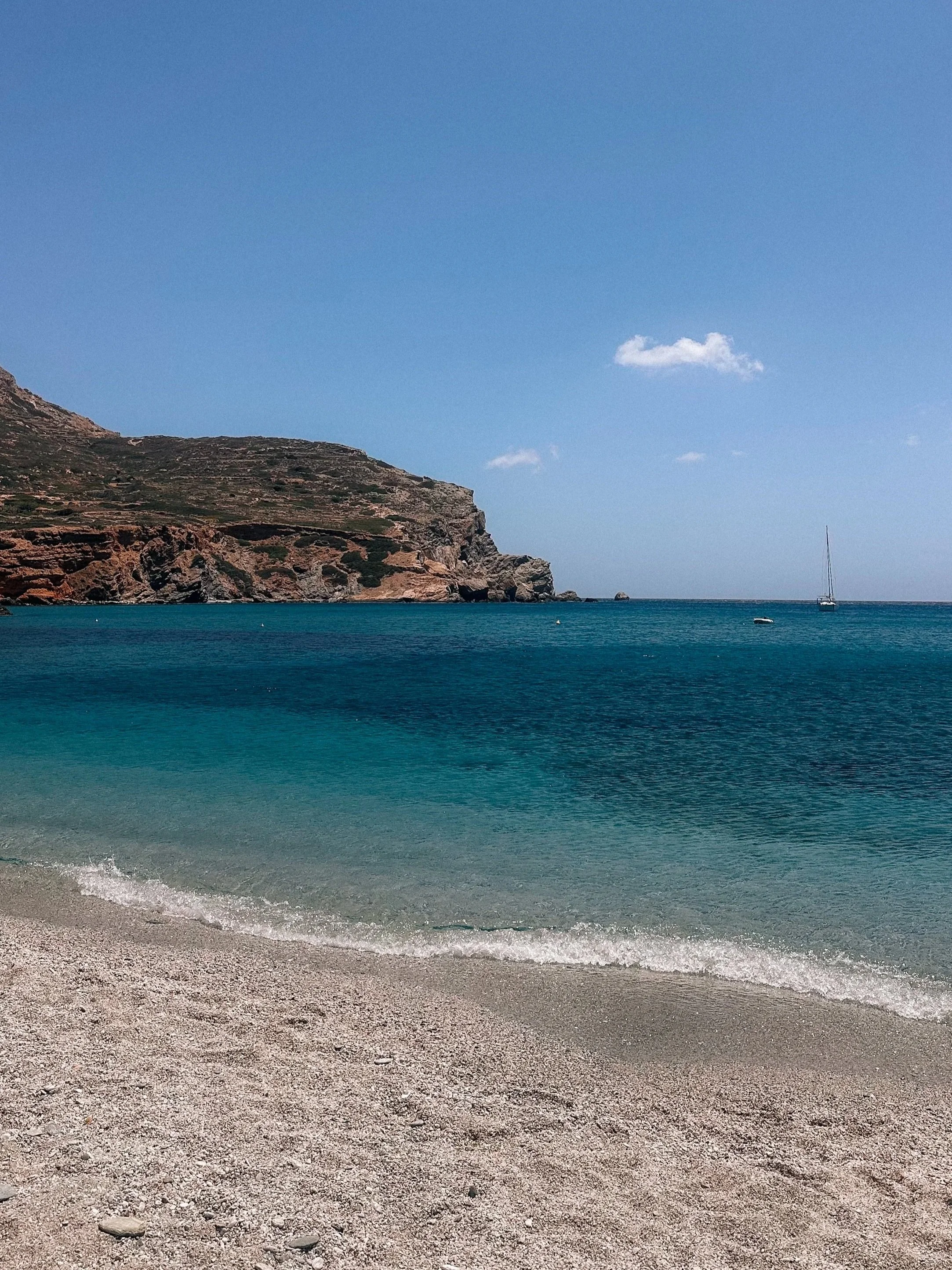
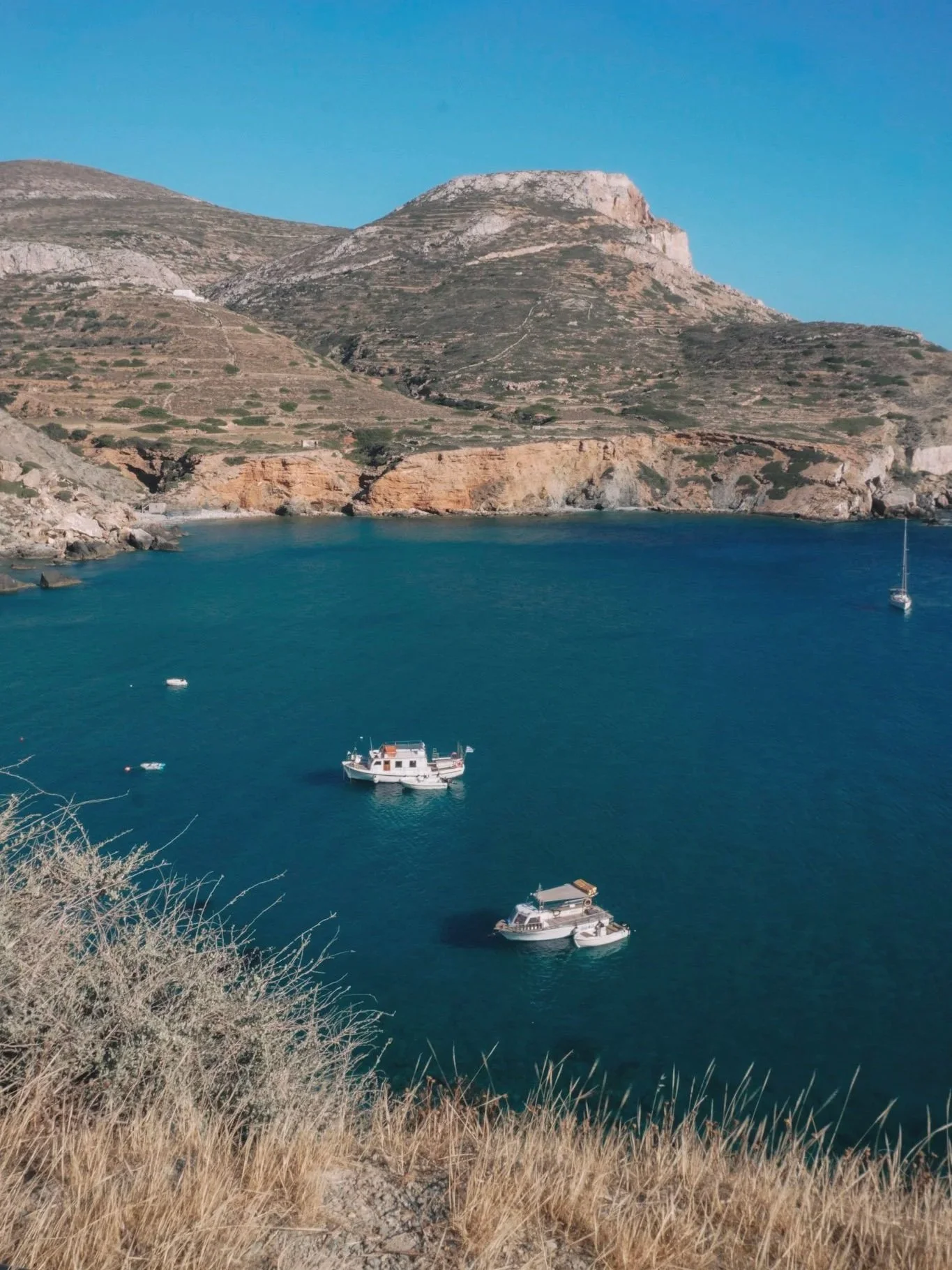
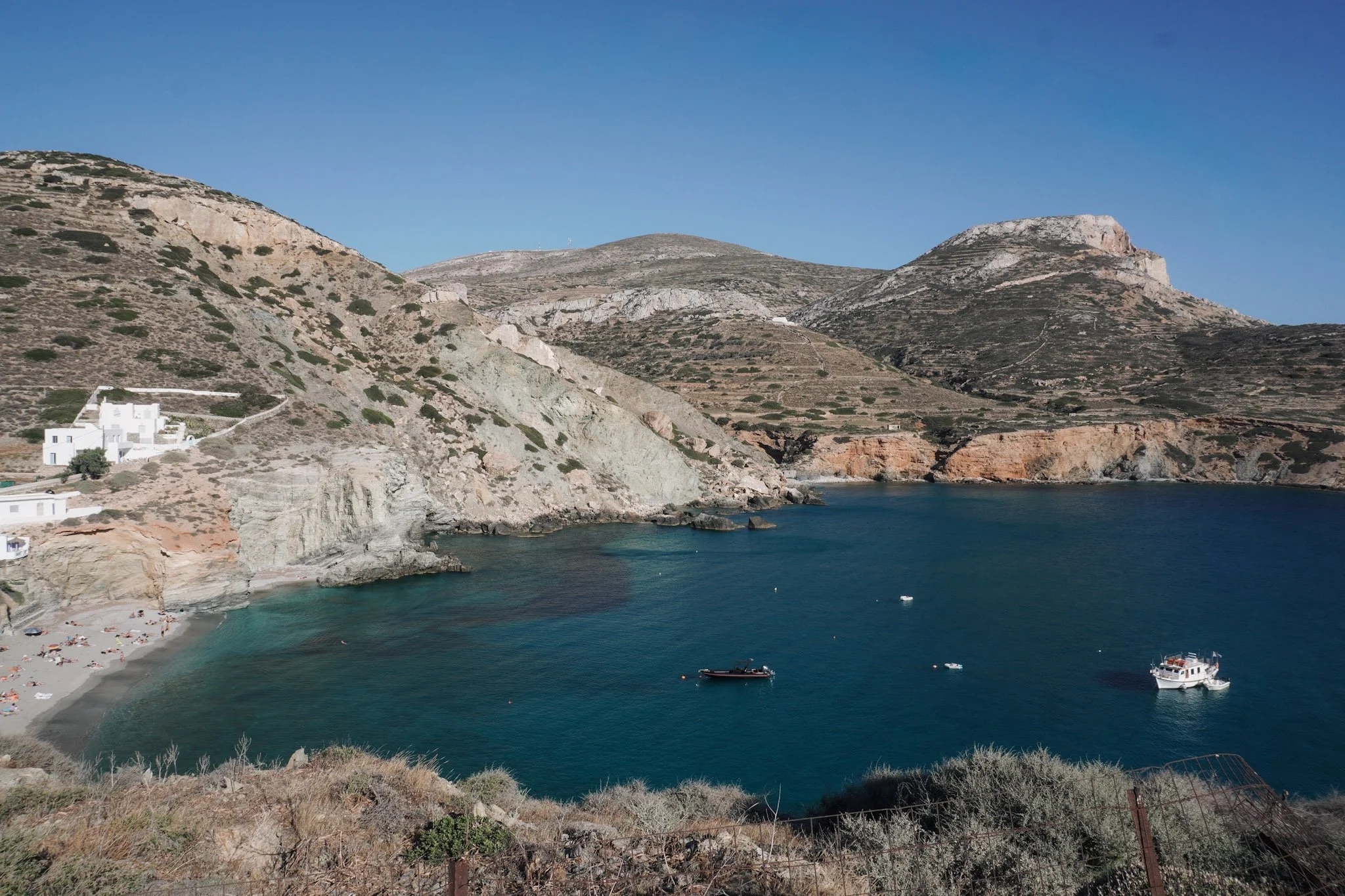
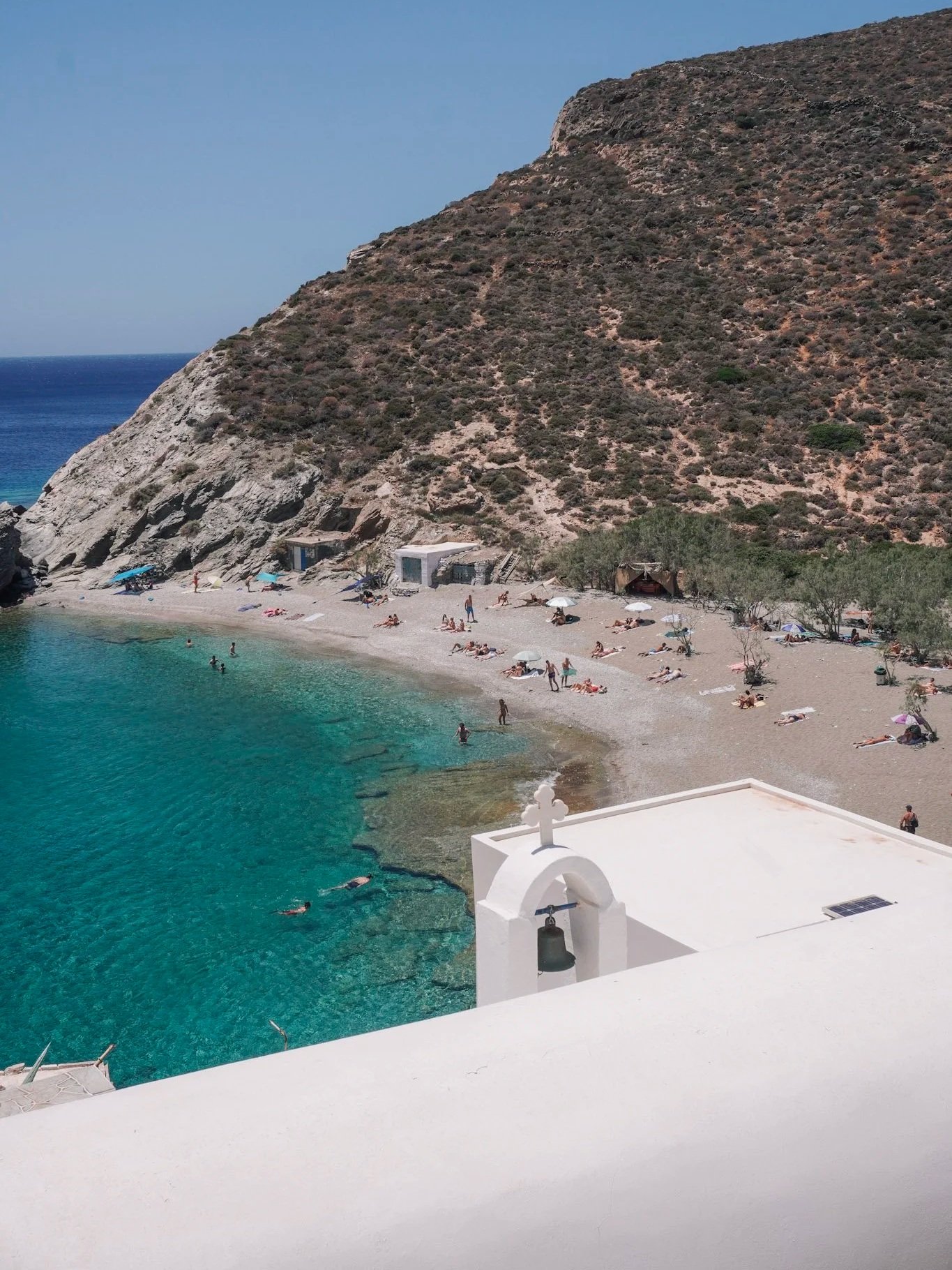
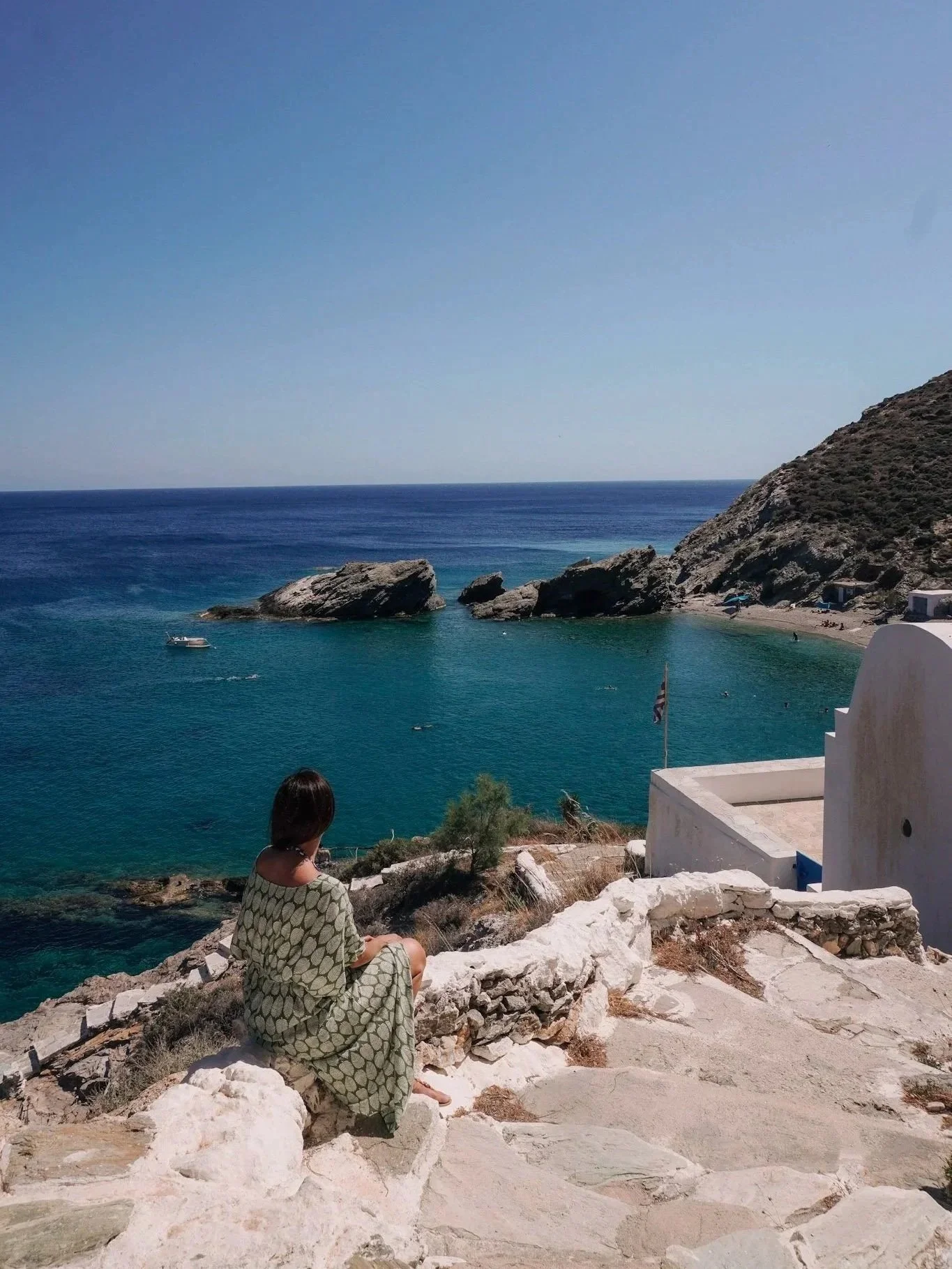
Set at the bottom of a sheltered bay surrounded by high cliffs, Agali is one of Folegandros' easiest beaches to reach and also one of the most useful bases for exploring the island's southern coastline.
The beach itself has an incredible clear water and a handful of tavernas nearby, but what makes Agali particularly interesting is what lies beyond it. Two coastal paths lead towards Fira and Galyfos, while small local boats leave for Agios Nikolaos and the more remote Livadaki.
You can therefore arrive in the morning and spend the entire day moving slowly between beaches without getting back into the car.
Agios Nikolaos
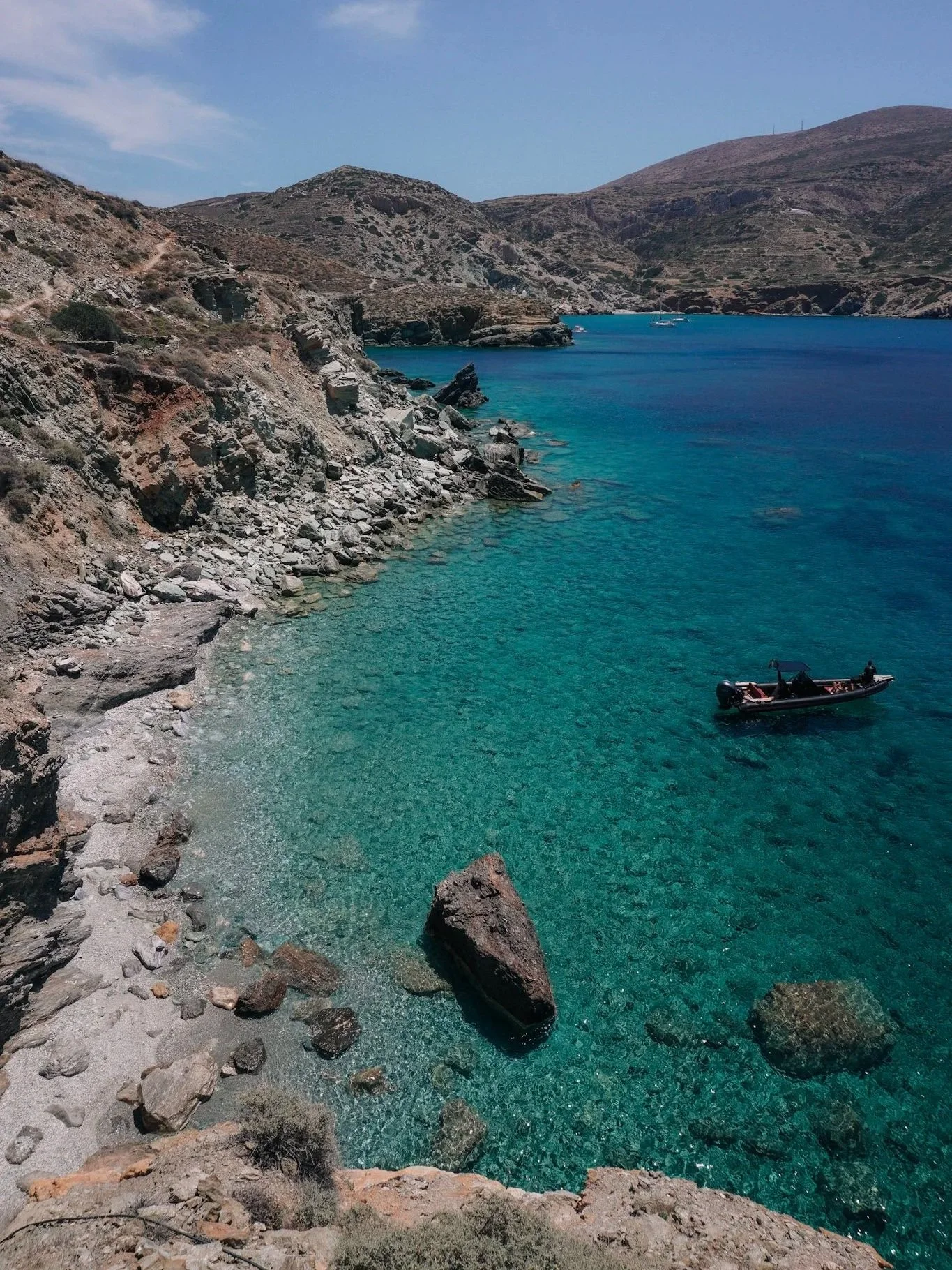
One of my favorite places for a full beach day.
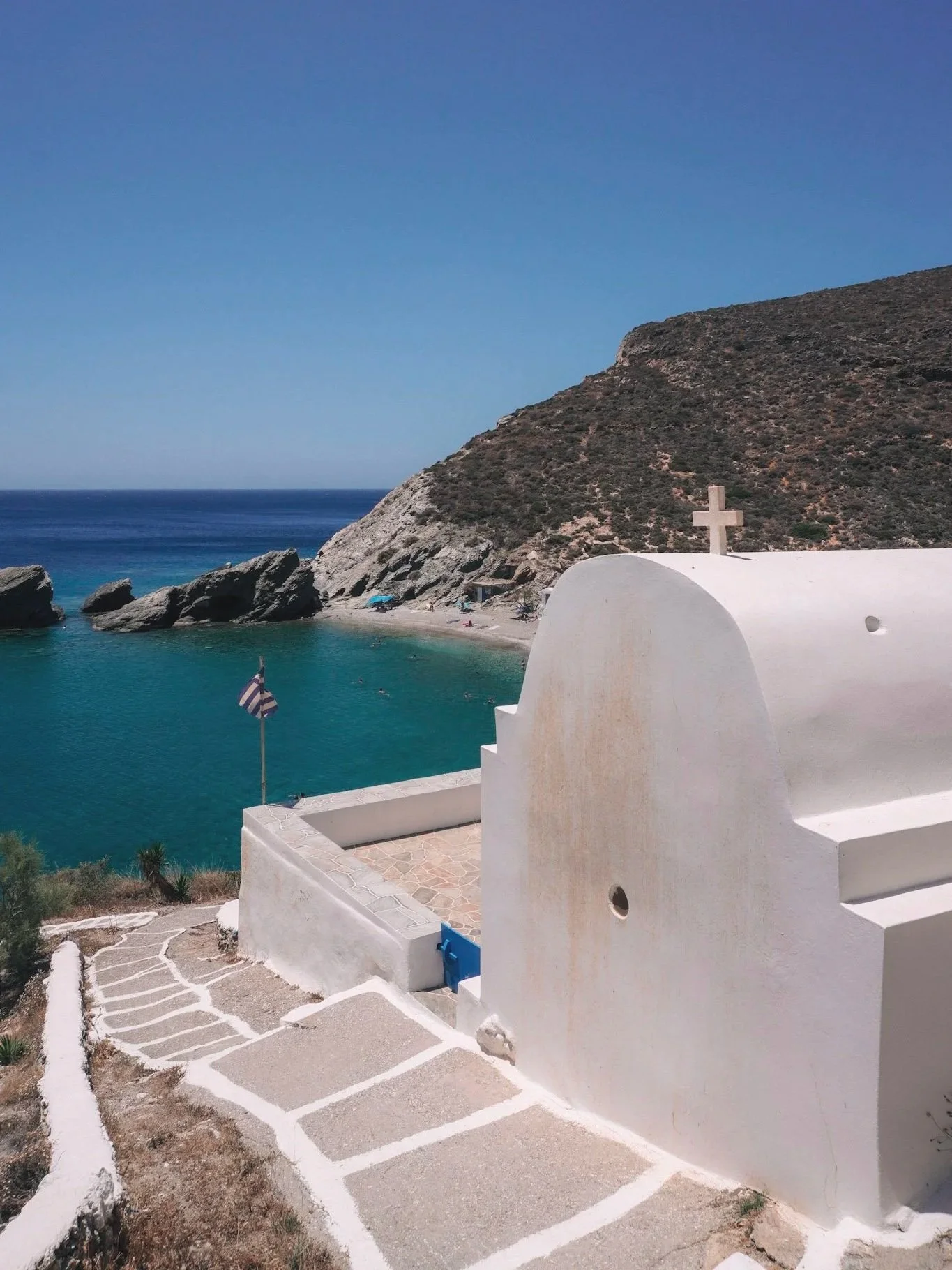
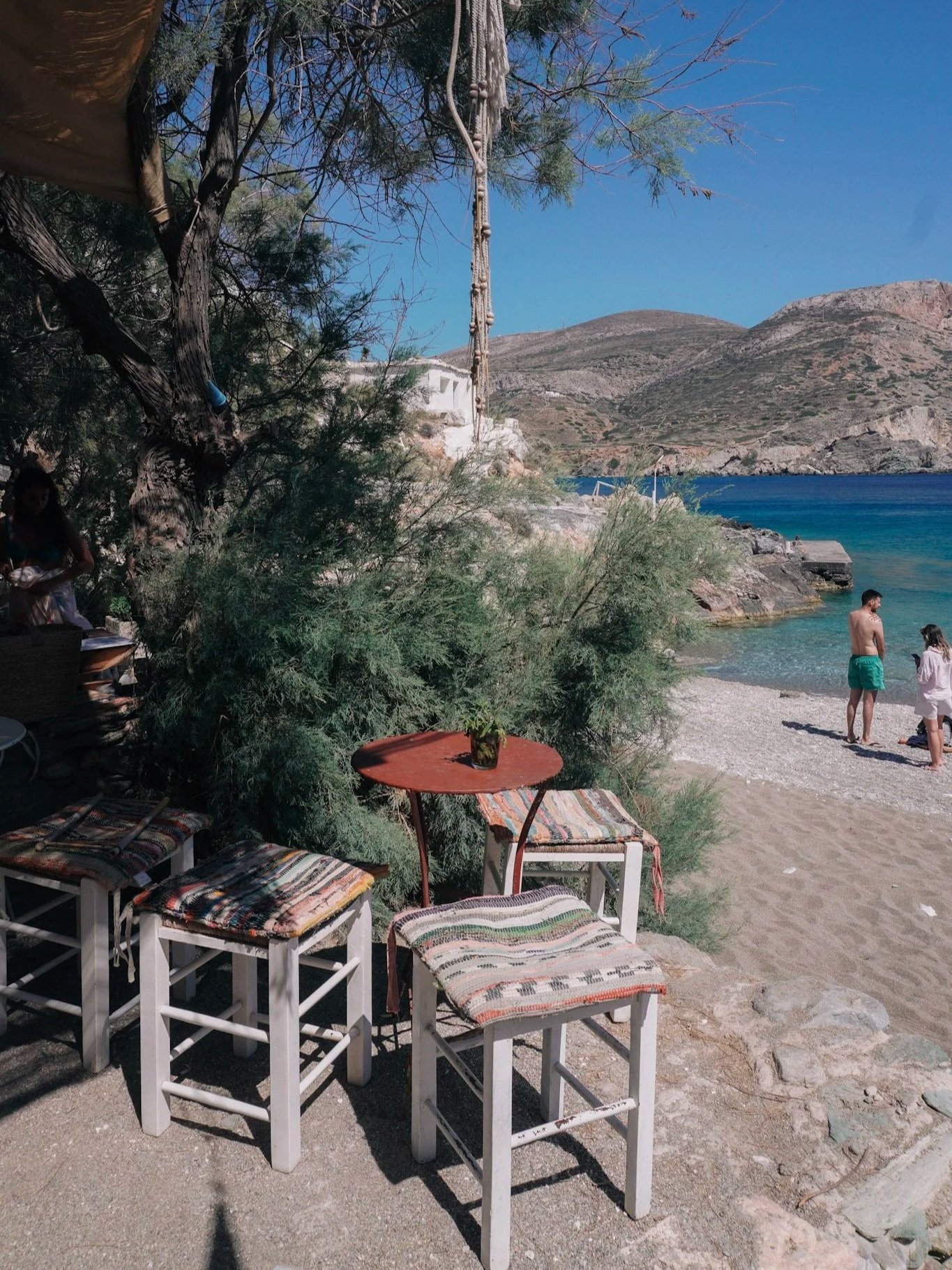
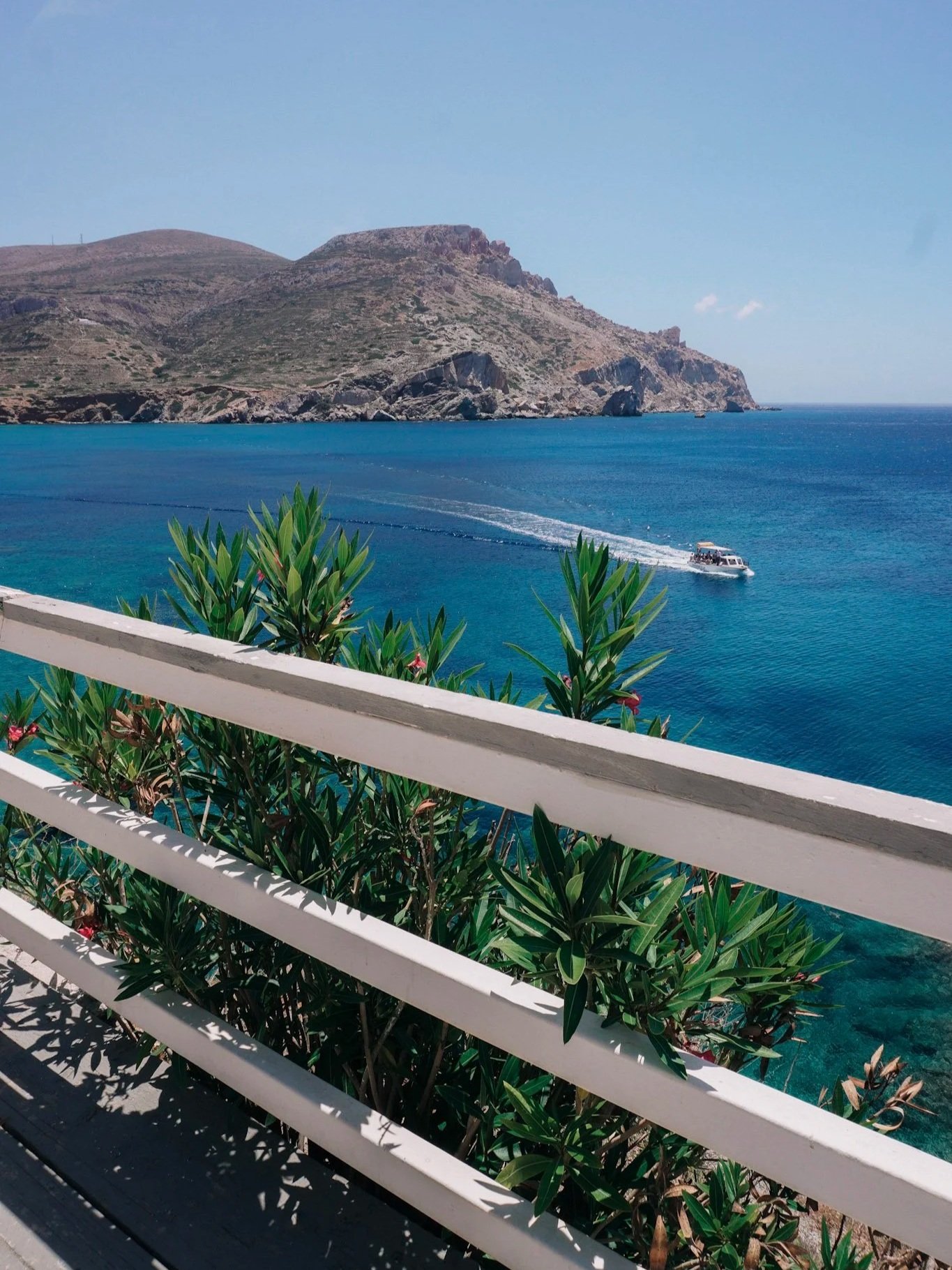
Agios Nikolaos combines beautifully clear water with a more relaxed, almost old-fashioned beach atmosphere. There are no rows of sunbeds, and pine trees provide some natural shade.
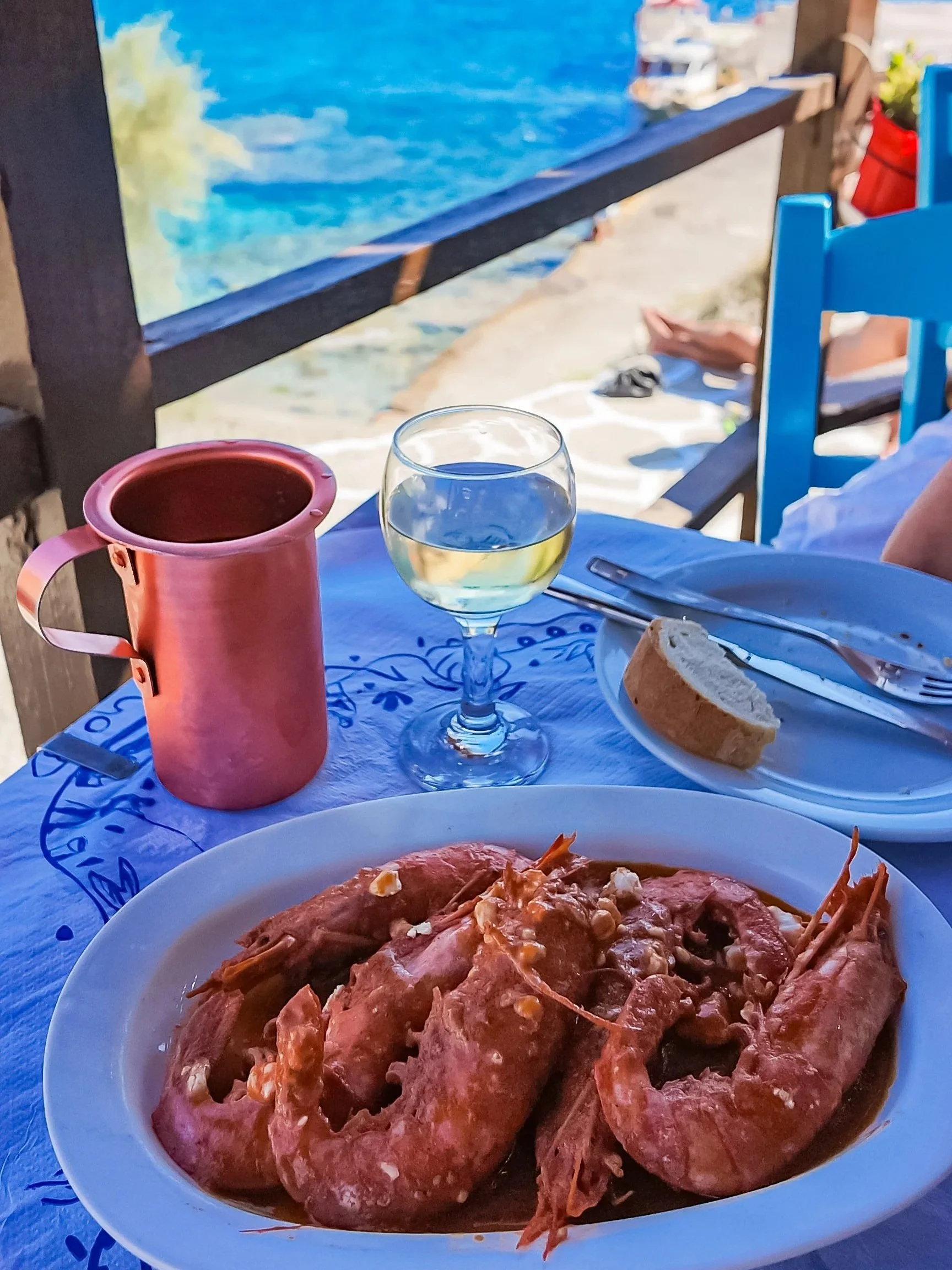
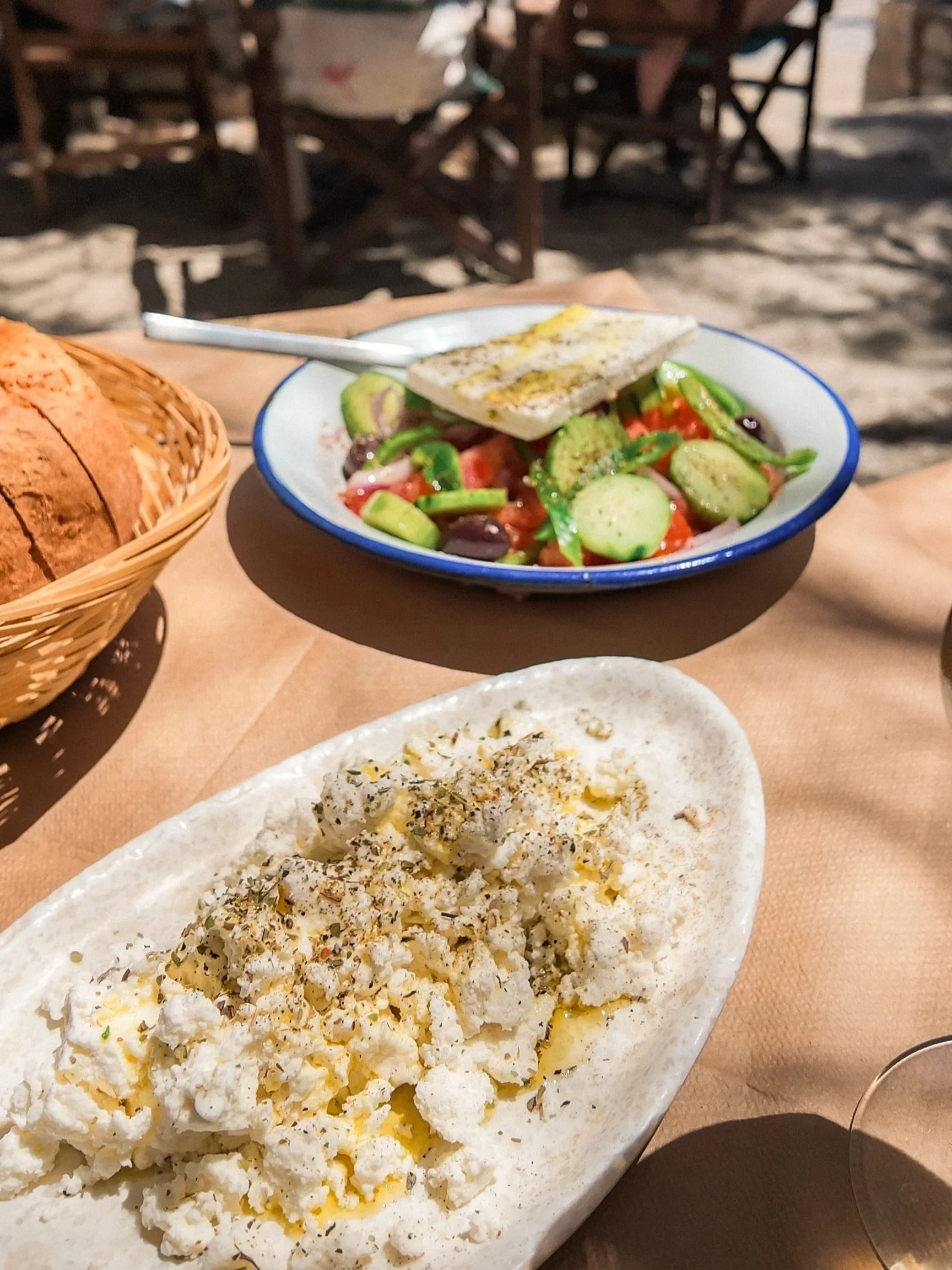
The little Taverna Agios Nikolaos right by the beach makes it particularly easy to stay for hours: swim, have a long Greek lunch and go straight back into the water.
From Agali, you can reach it by a short local boat ride or walk along the coastal path. The boat takes only around five minutes.
Livadaki
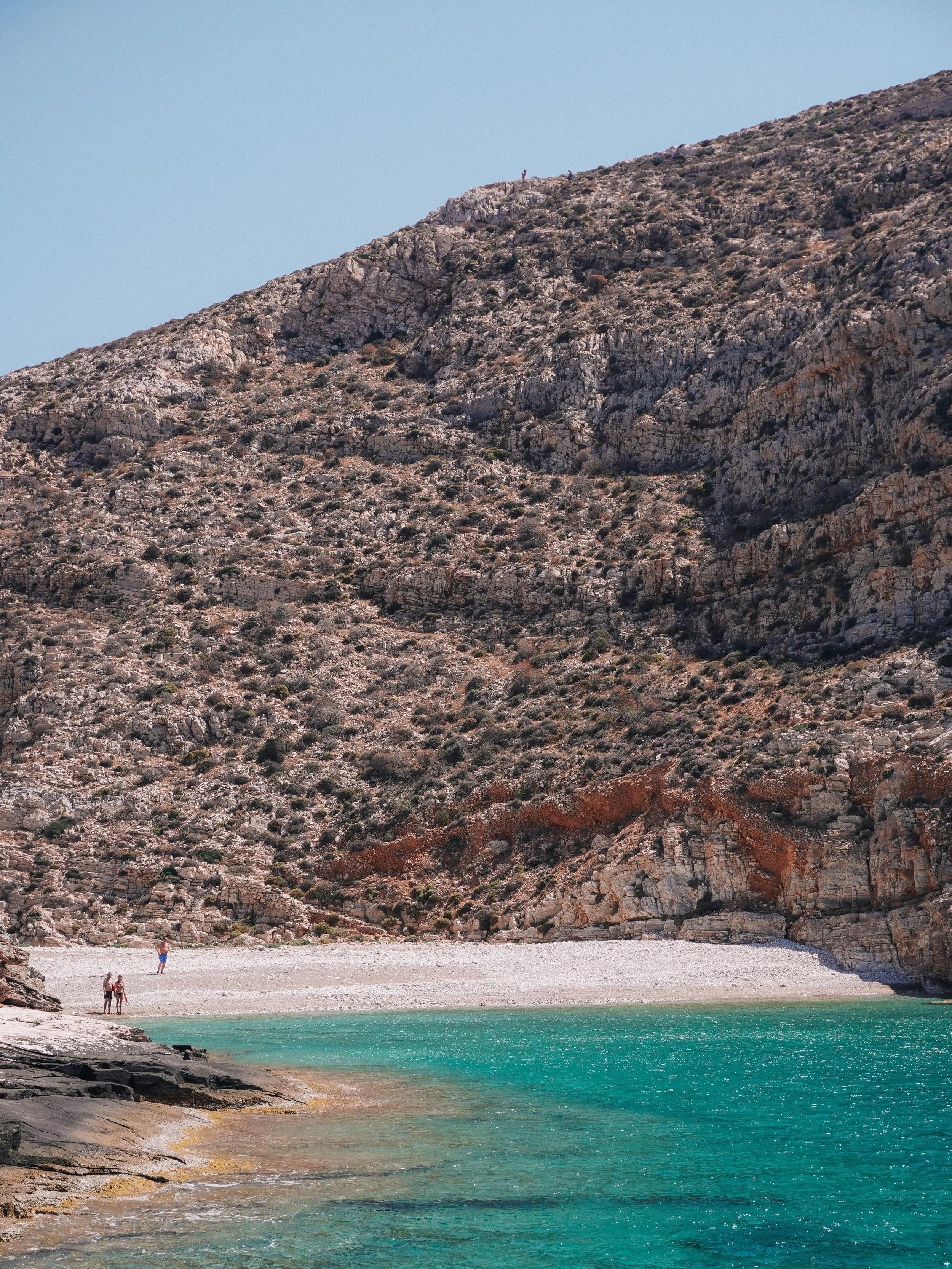
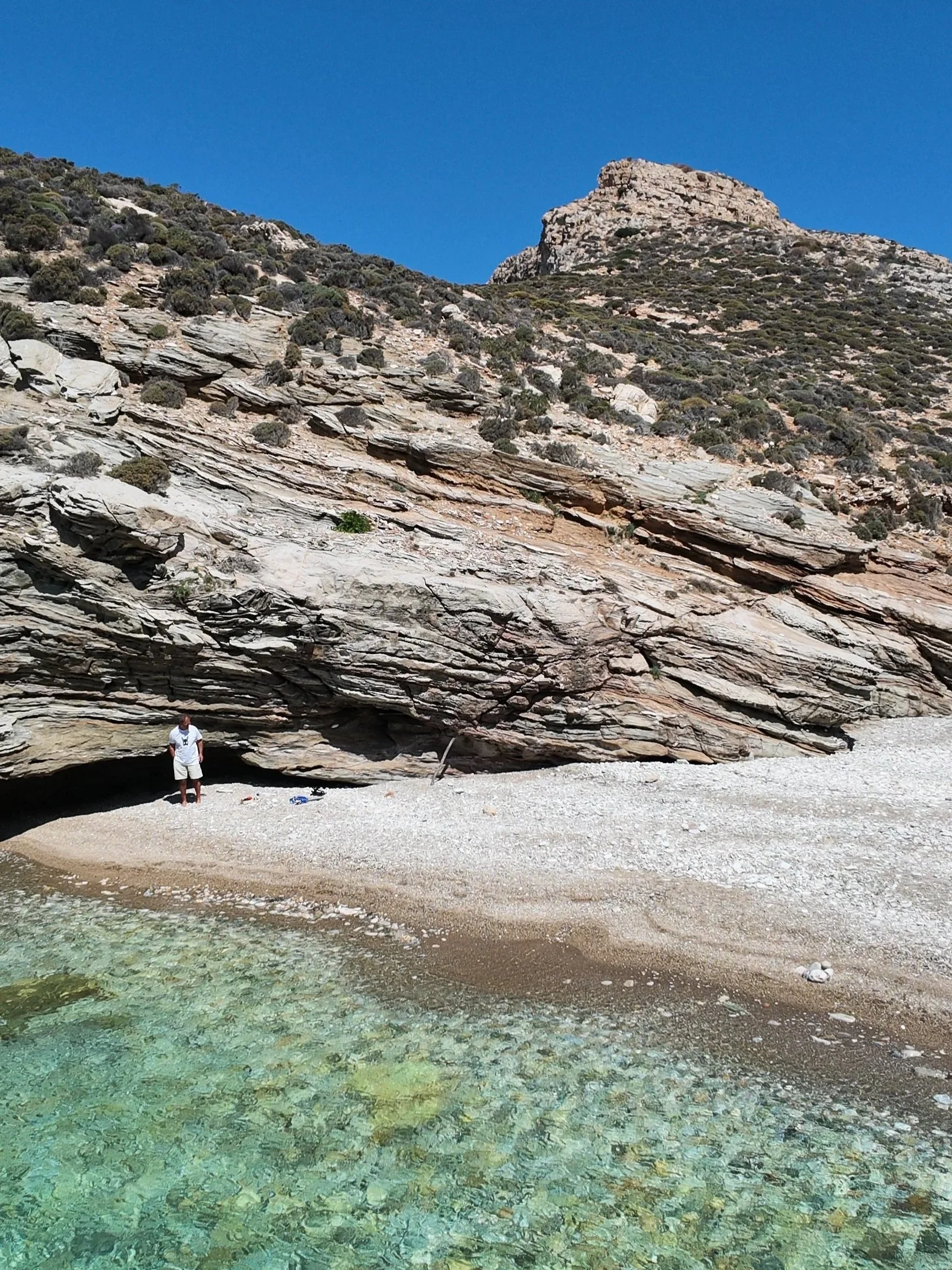
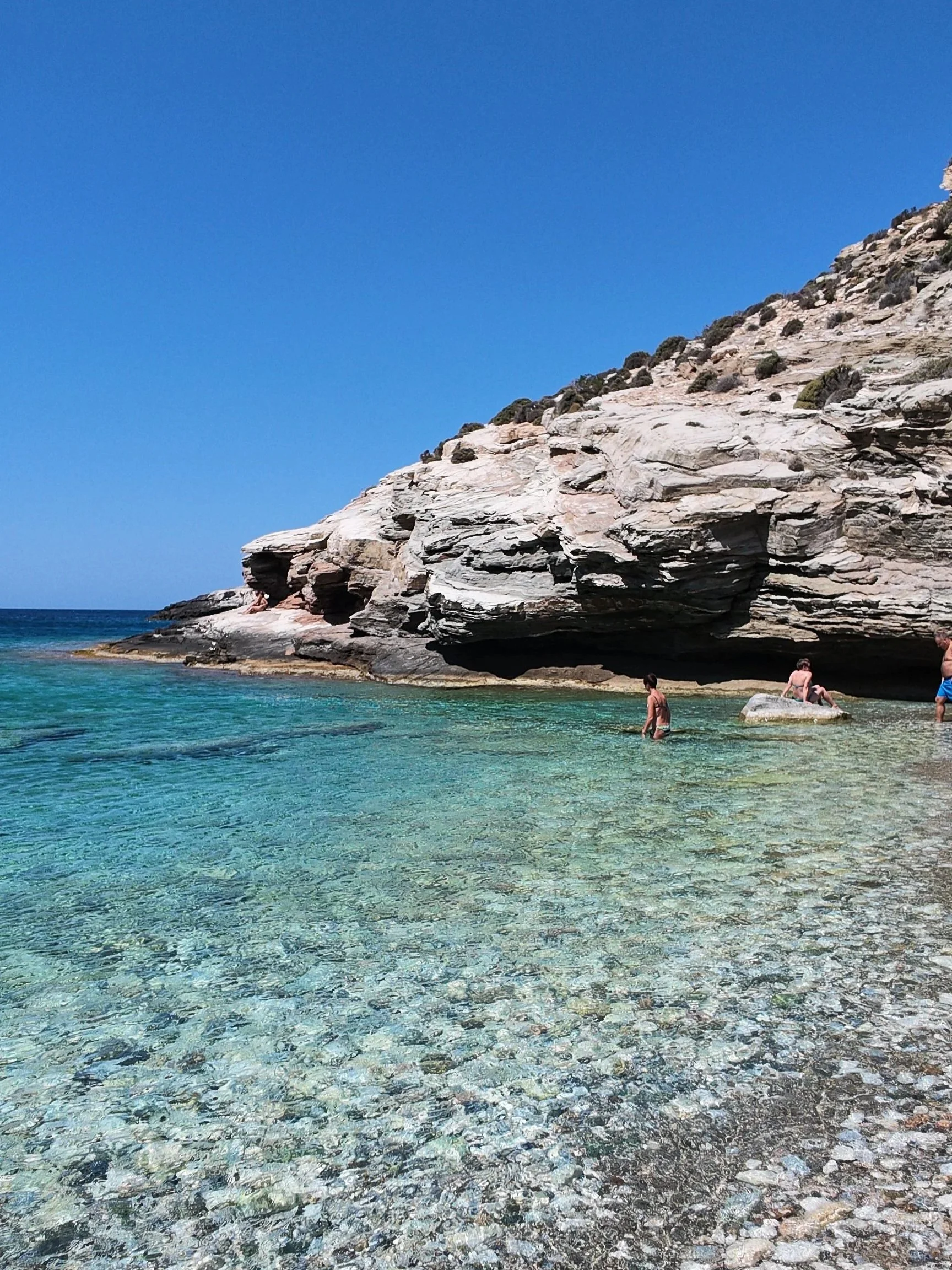
Livadaki requires a little more effort, which is precisely part of its appeal.
Hidden on the southwestern side of Folegandros, the small bay is surrounded by an almost completely undeveloped landscape, with turquoise water, pale rocks and no facilities.
You can reach it by local boat from Agali in around 15–20 minutes or hike from Ano Meria, a considerably more adventurous route taking approximately 45 minutes to an hour.
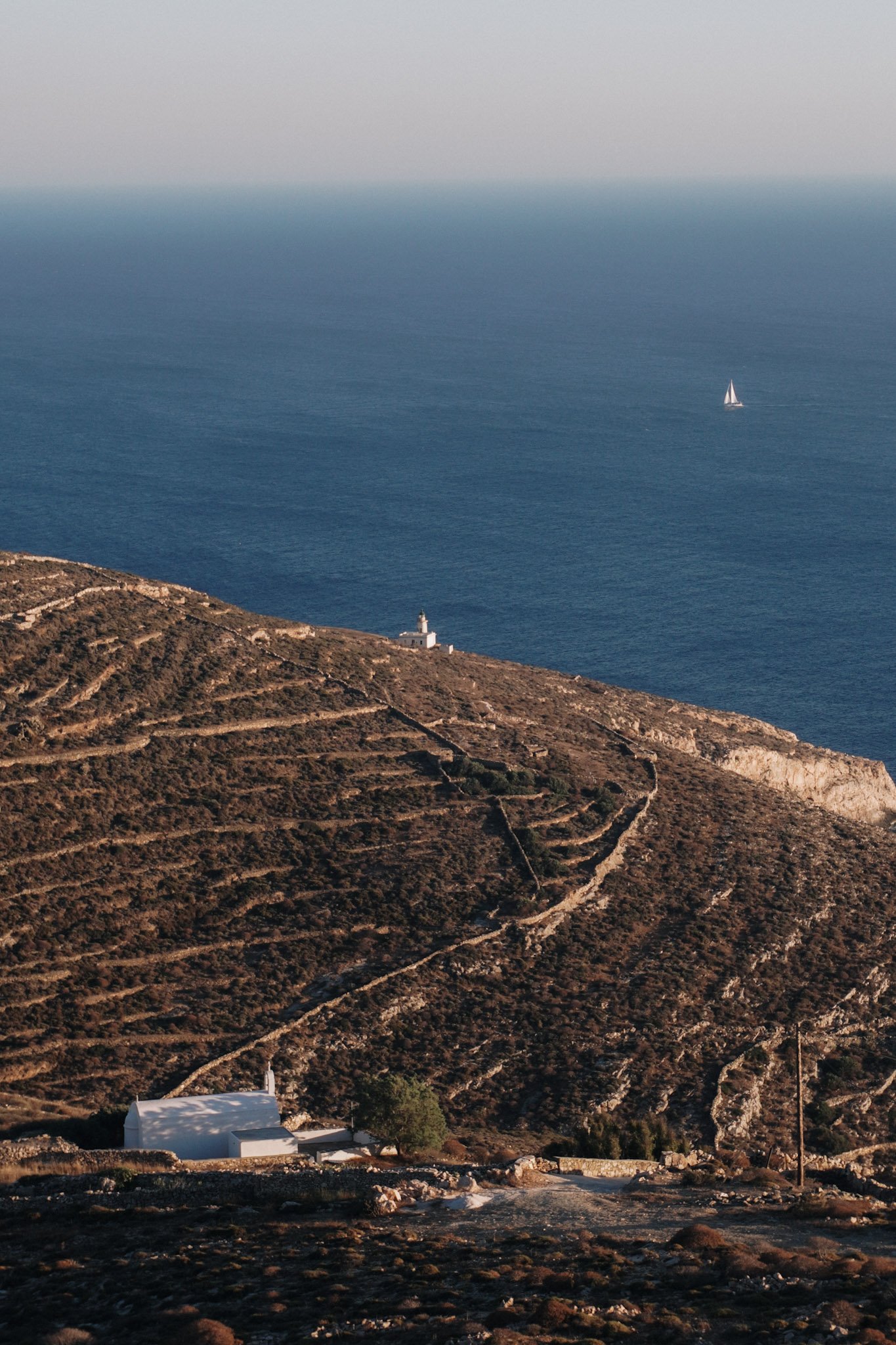
If you're walking, the nearby Aspropounta Lighthouse is worth adding to the route. It stands above the coast around ten minutes from the beach and is one of the largest lighthouses in the Aegean.
Bring water and anything you need for the day.
Katergo
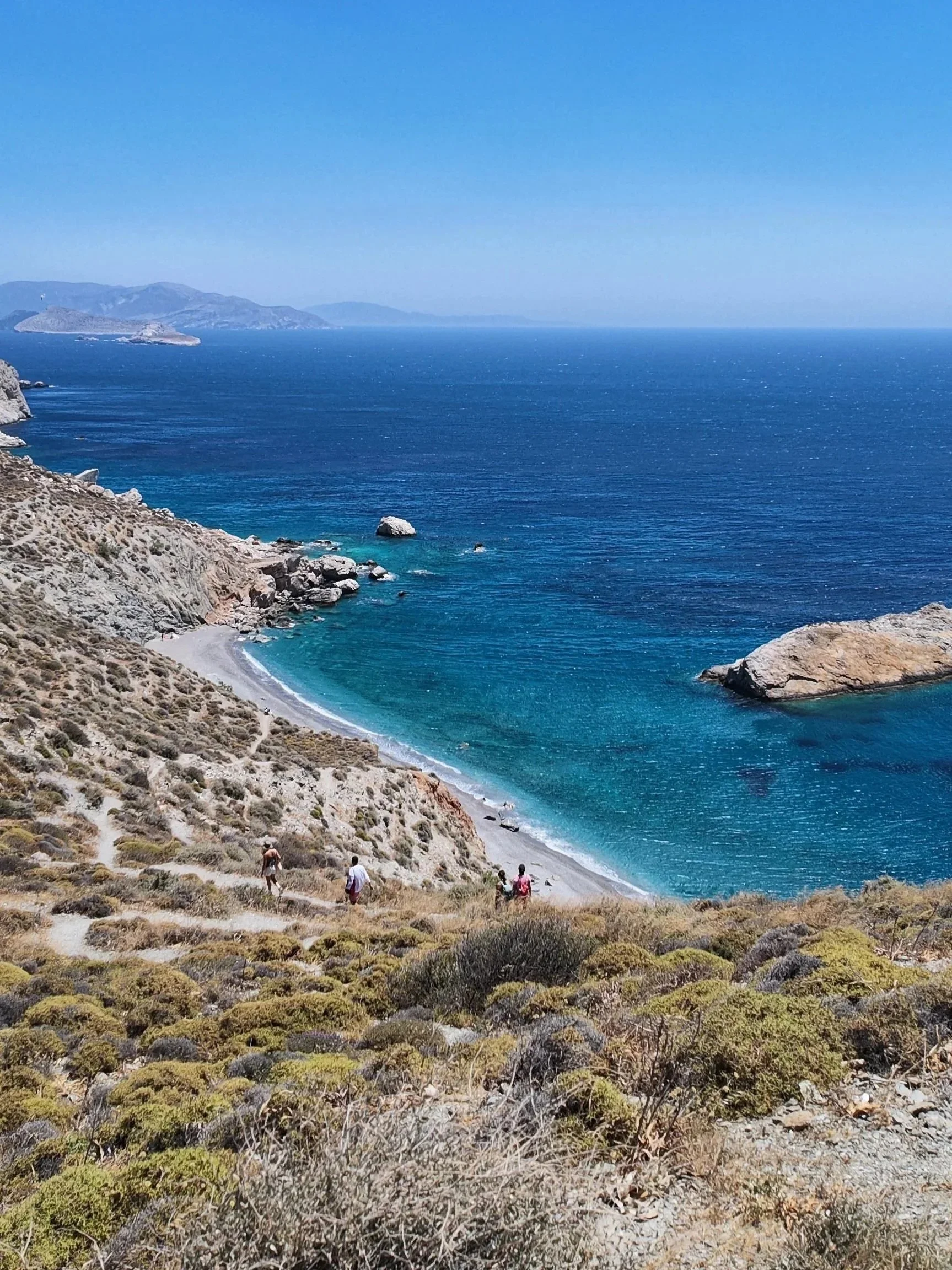
Katergo is probably Folegandros' most dramatic beach, and getting there is part of the experience.
Surrounded by a completely barren landscape, the long stretch of pebbles and intensely blue water has almost nothing around it: no tavernas, no sunbeds and very little natural shade. It is one of those beaches where Folegandros' wild character becomes particularly evident.
The easiest way to reach Katergo is by local boat from Karavostasis, a journey of around 10 minutes. You can also hike from Livadi in approximately 30 minutes, but in summer the exposed trail and heat make the boat a much easier option.
Ampeli
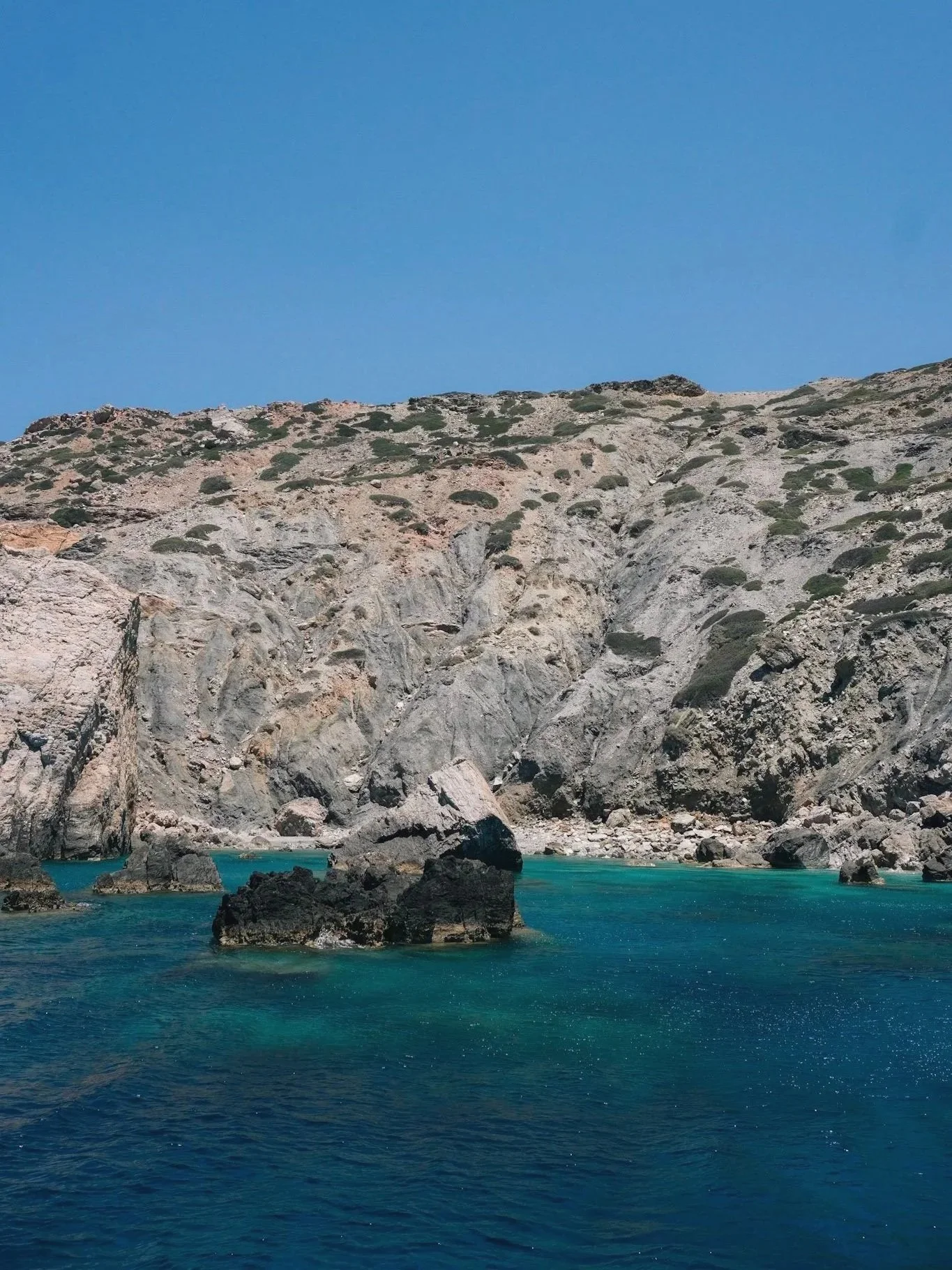
On the western side of Folegandros, Ampeli is a small pebbly cove surrounded by the island's characteristic dry, rocky landscape.
Its sheltered position offers protection from northerly winds, while the clear water makes it particularly good for snorkeling. It can be reached from Ano Meria via a dirt road followed by a short walk, or entirely on foot in around 30 minutes.
There is nothing organised once you arrive, which is very much part of its appeal.
/// Worth Discovering
Church of Panagia
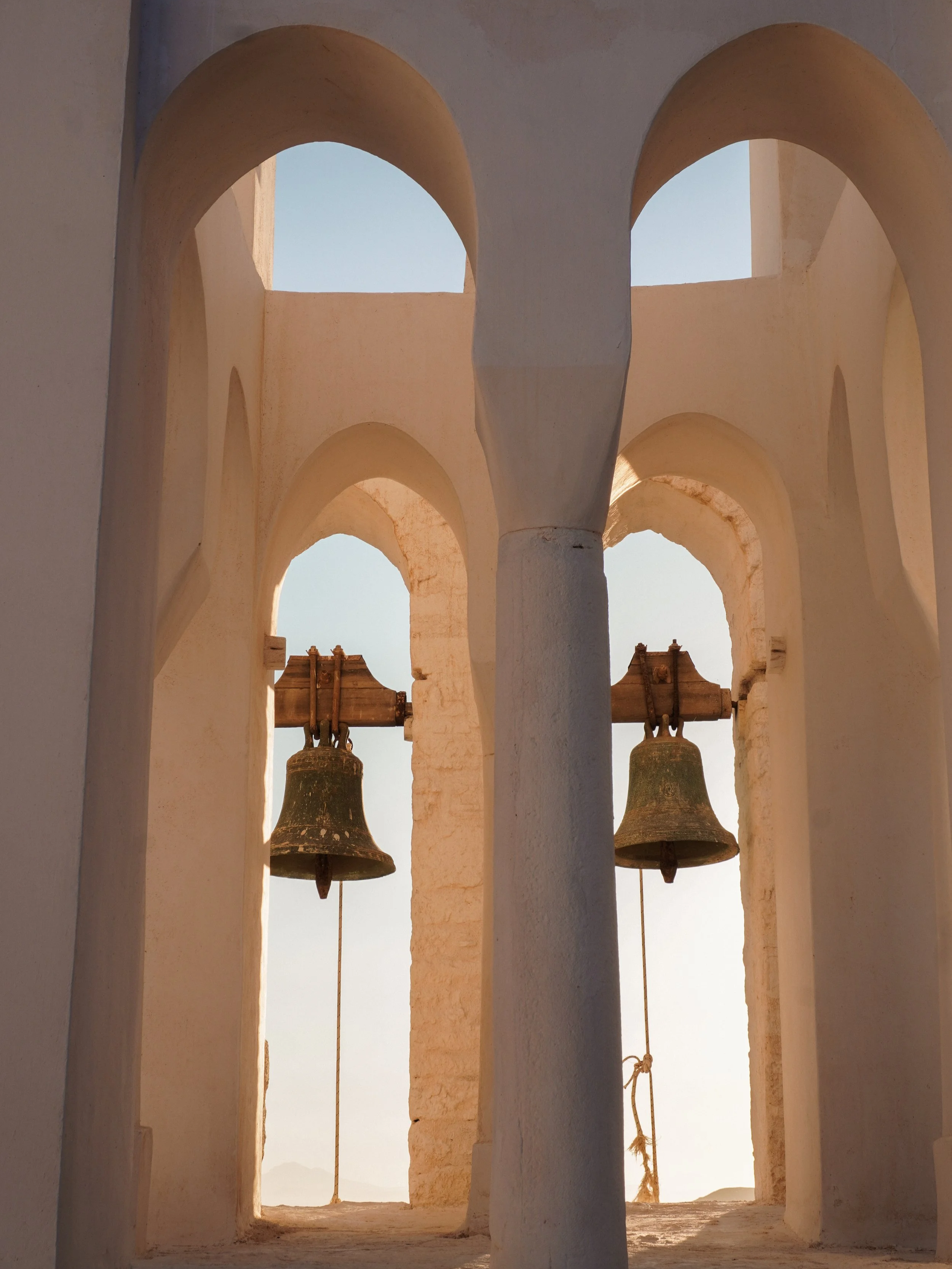
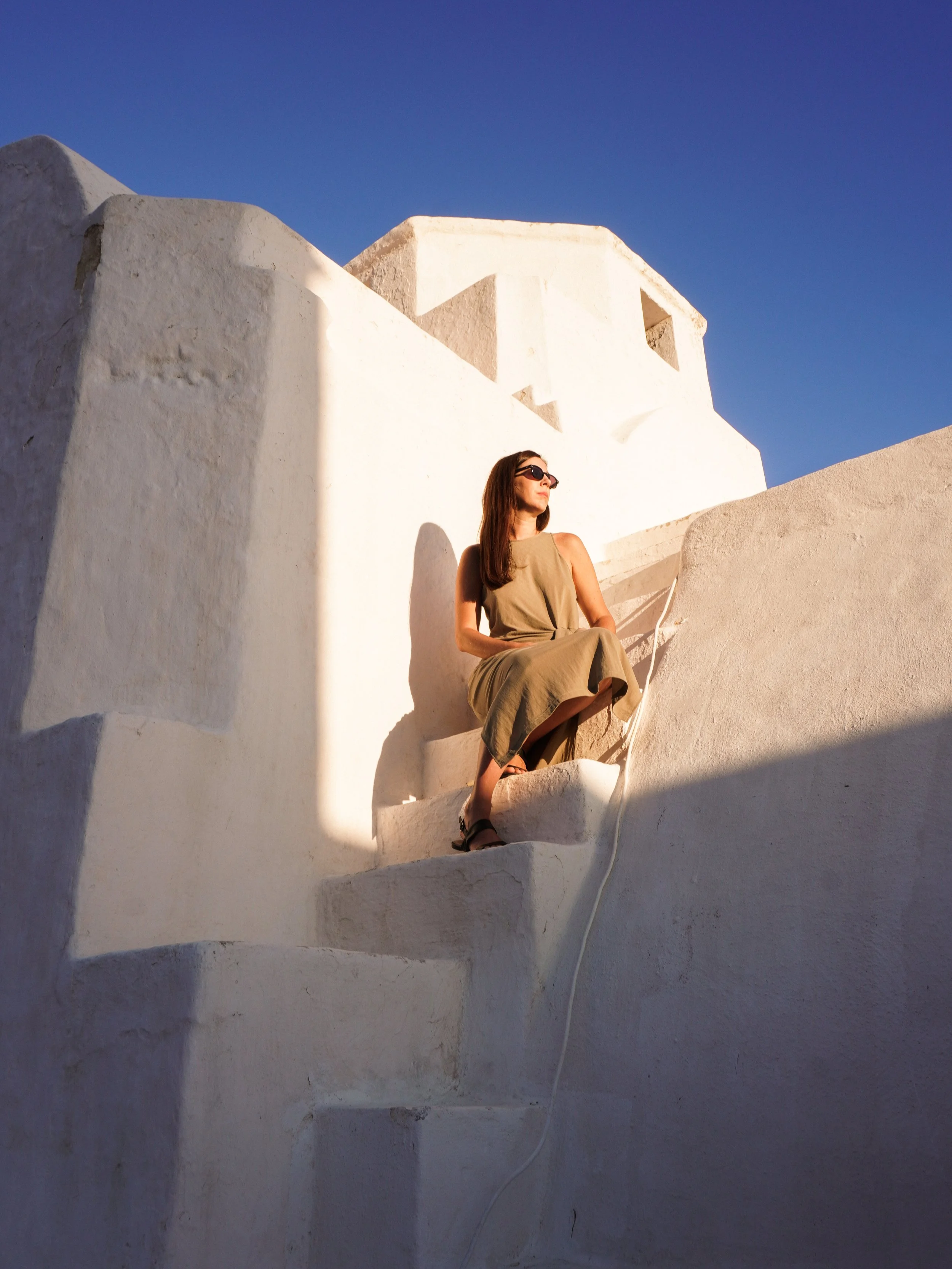
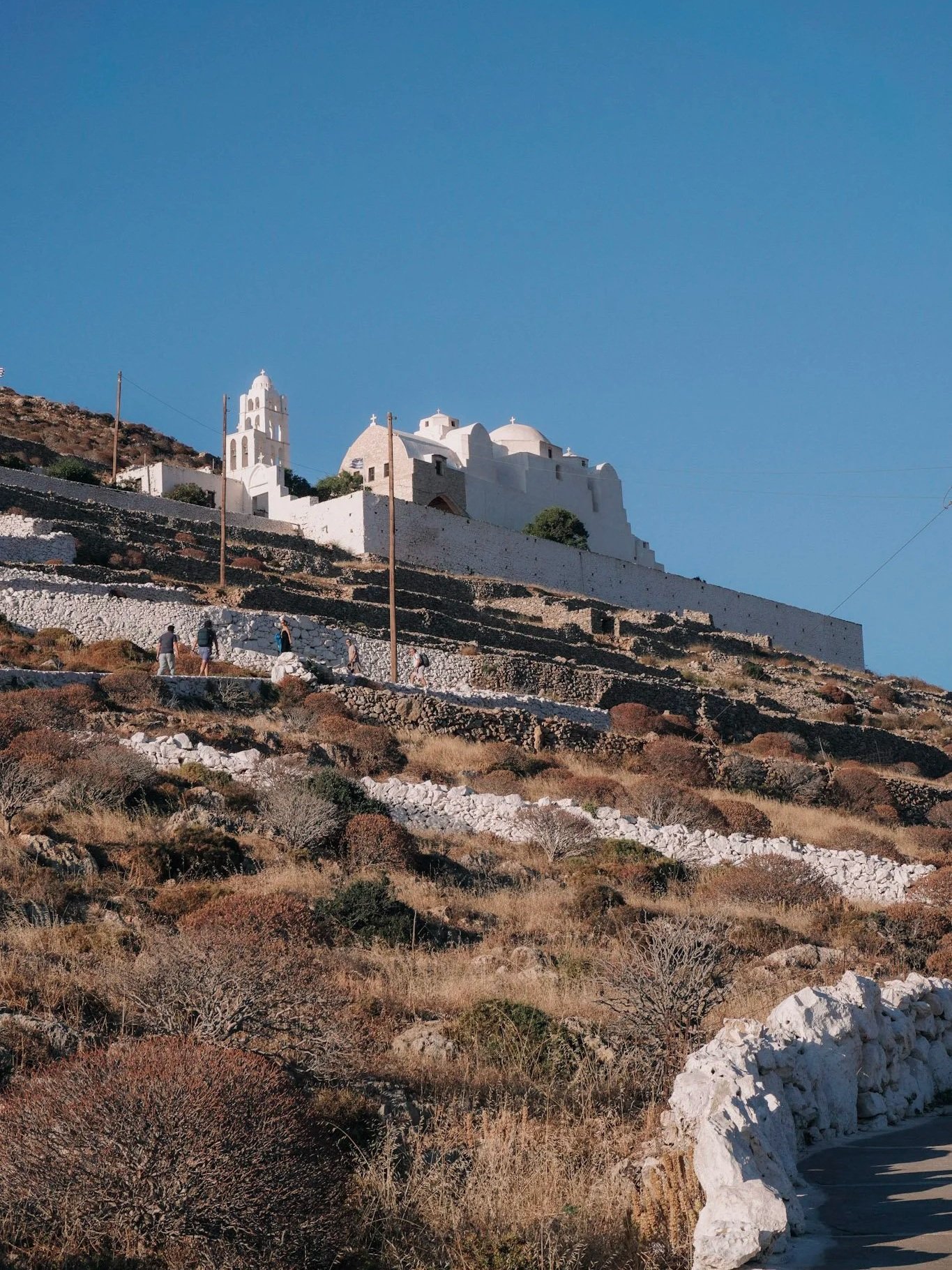
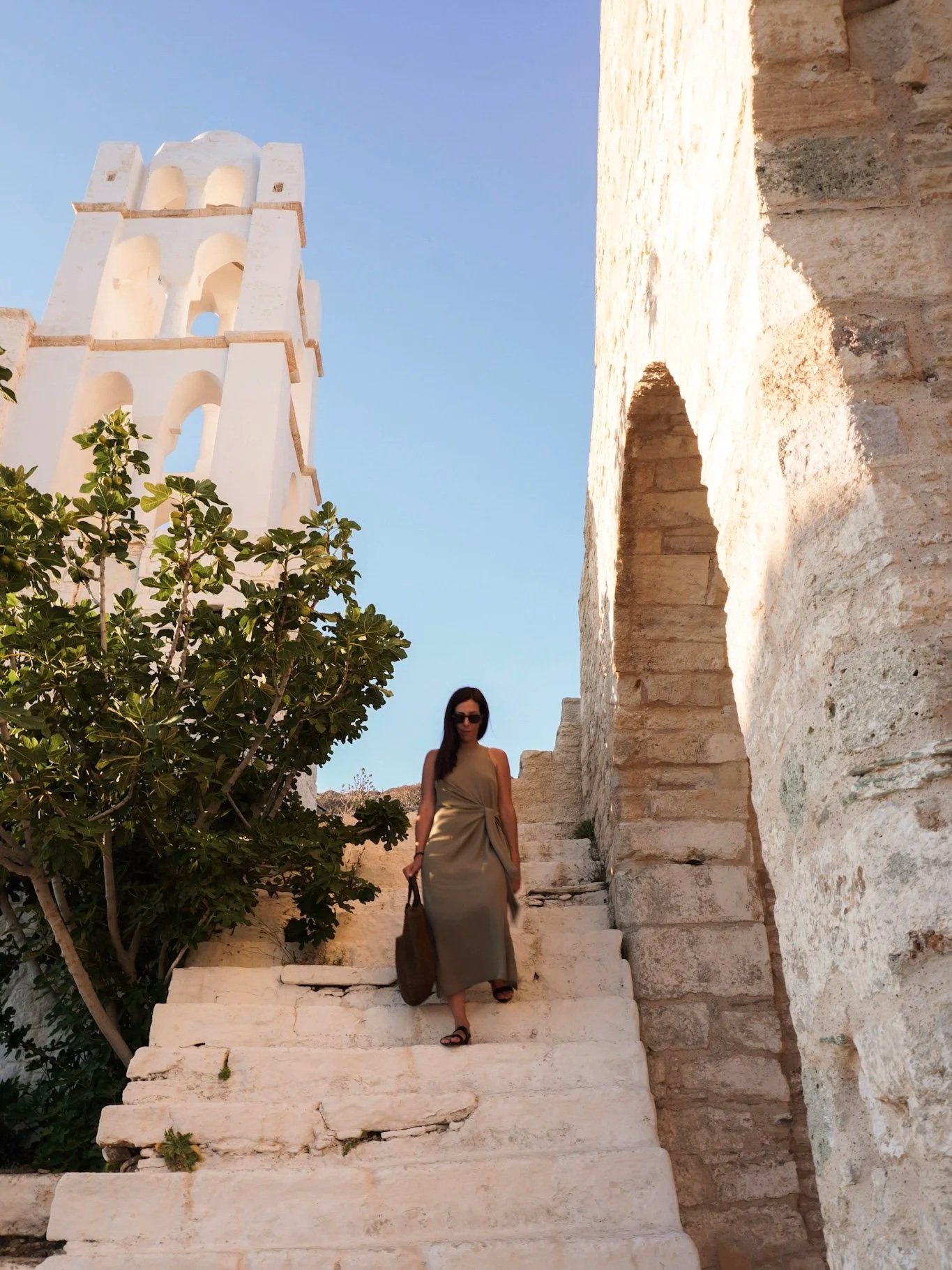
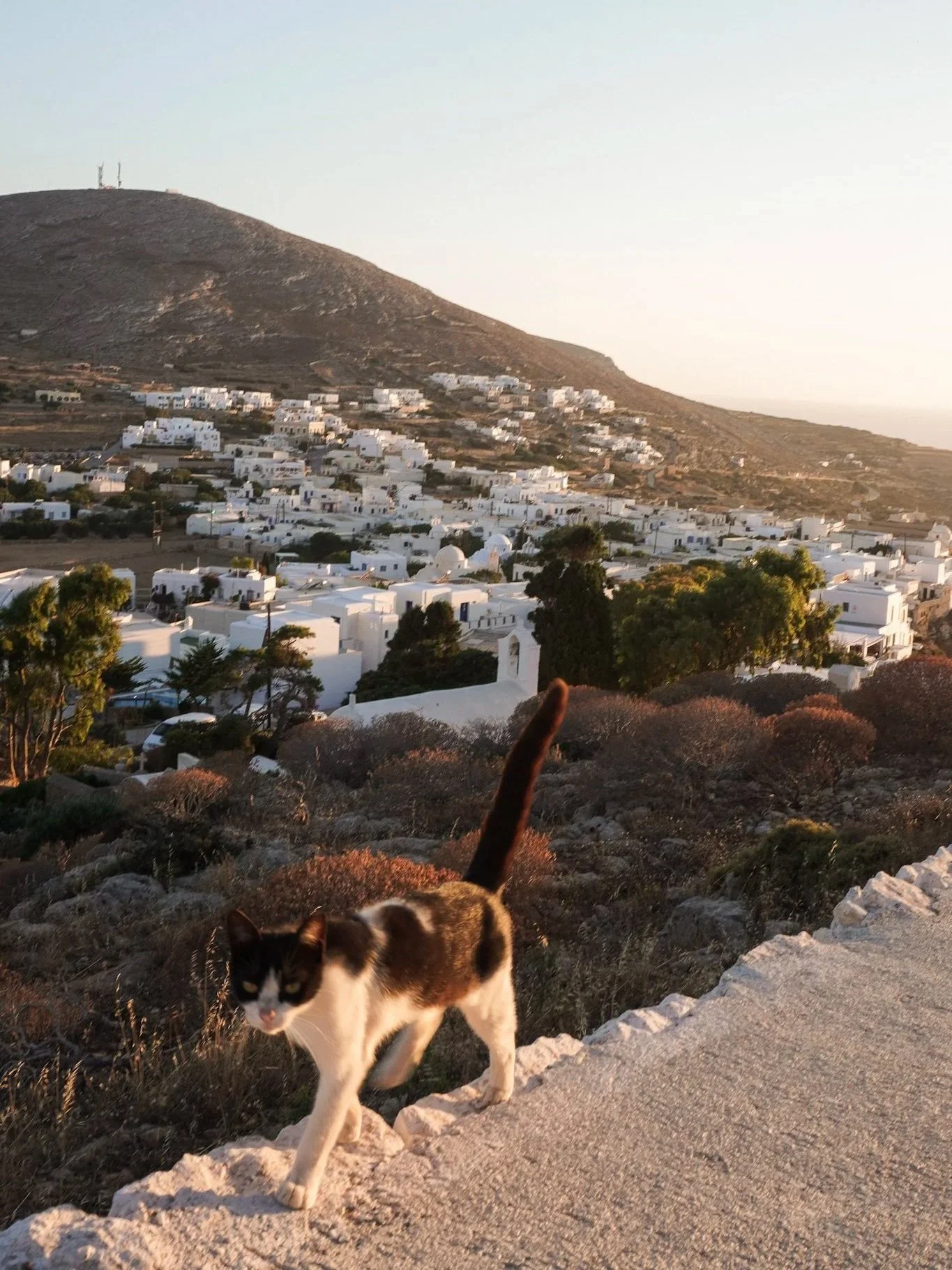
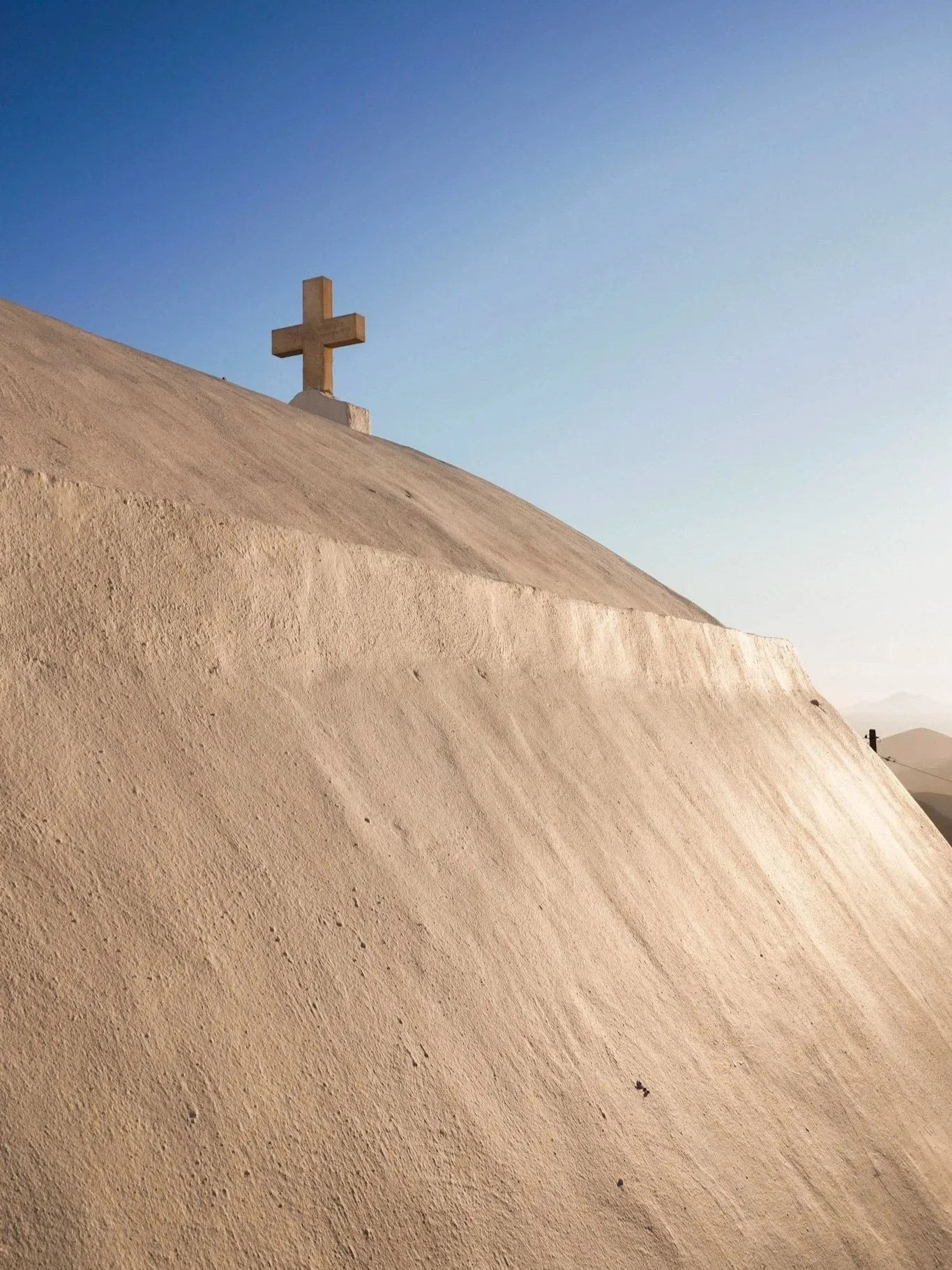
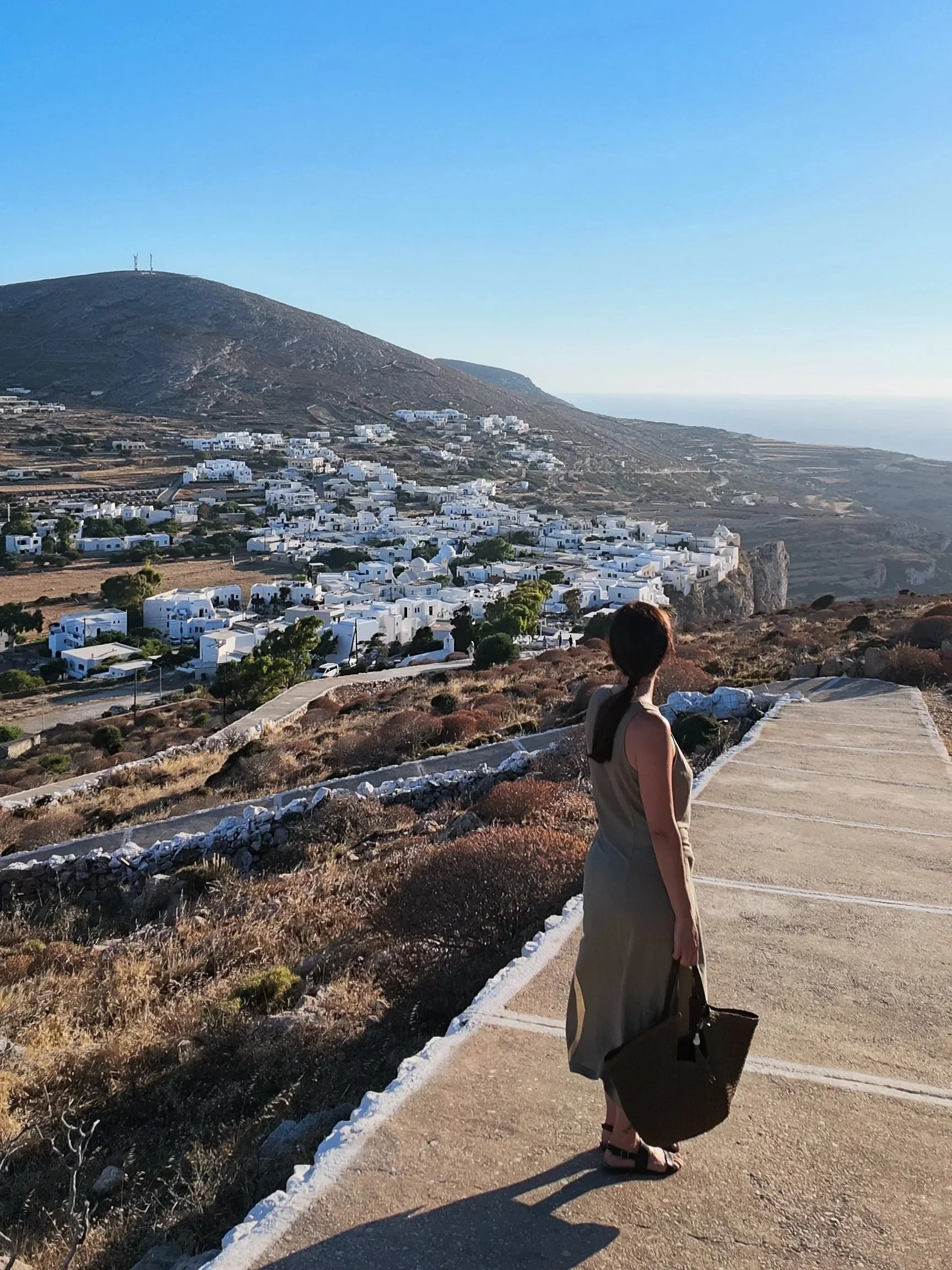
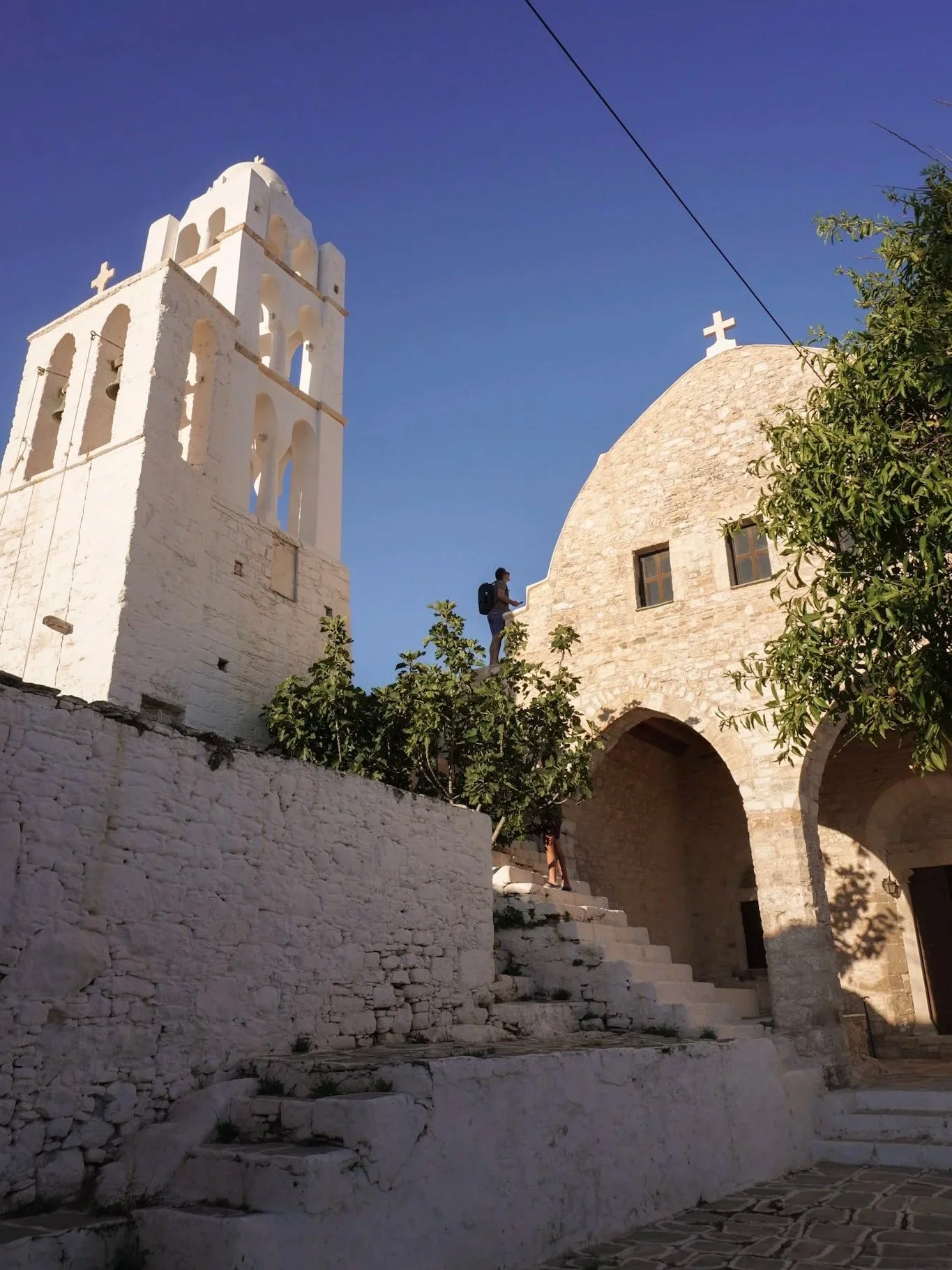
The walk to Panagia is one of the experiences I wouldn't miss in Folegandros.
The whitewashed church sits high above Chora, reached by the unmistakable zigzagging path carved into the hillside. The climb is relatively short but steep, with the views opening further over Chora and the Aegean at every turn.
Go towards the end of the day. Watching the light soften over the island from up here, with Chora directly below and almost nothing interrupting the surrounding landscape, is one of the most beautiful ways to understand just how small and remote Folegandros really is.
Boat trip from Agali
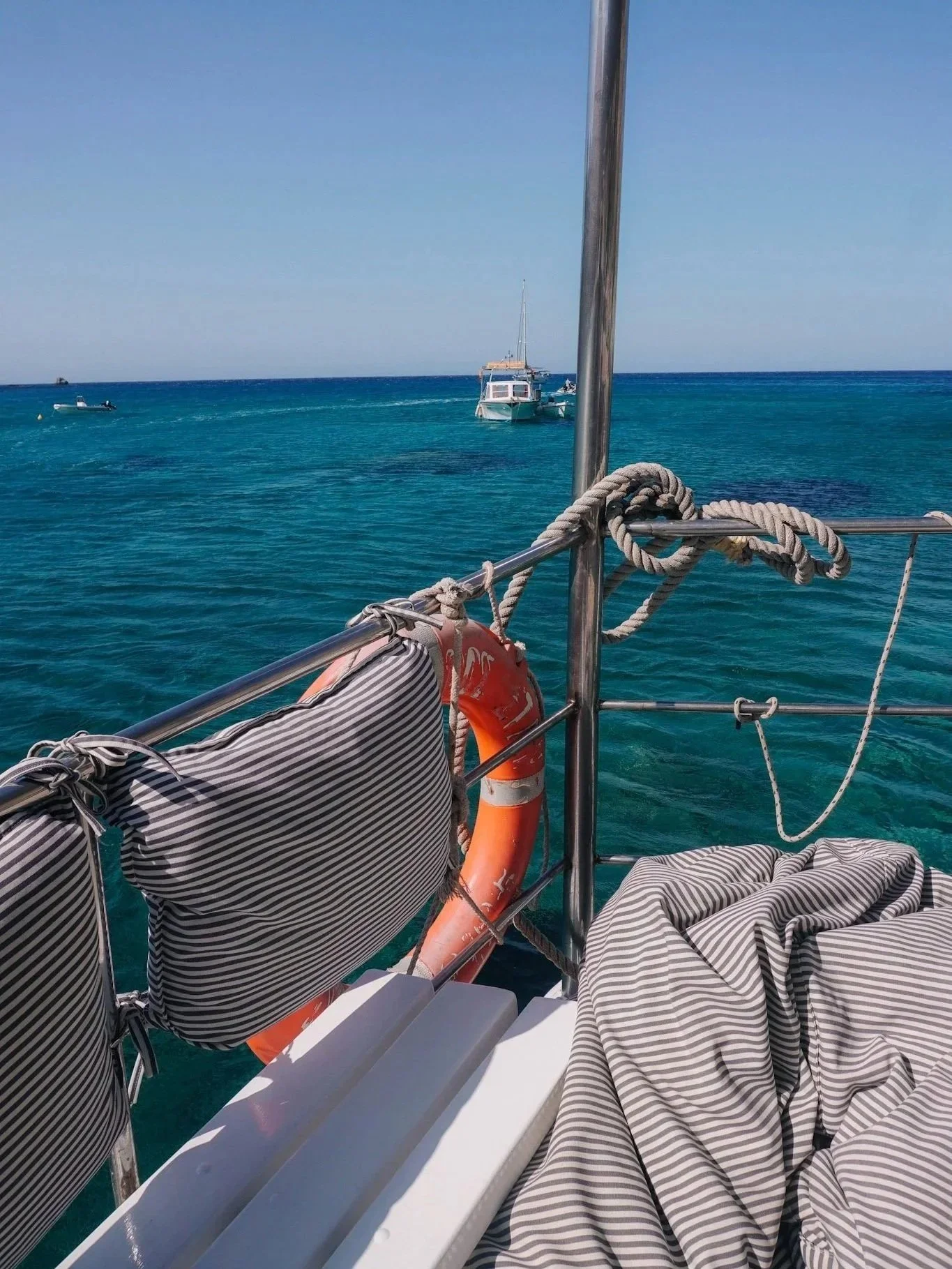
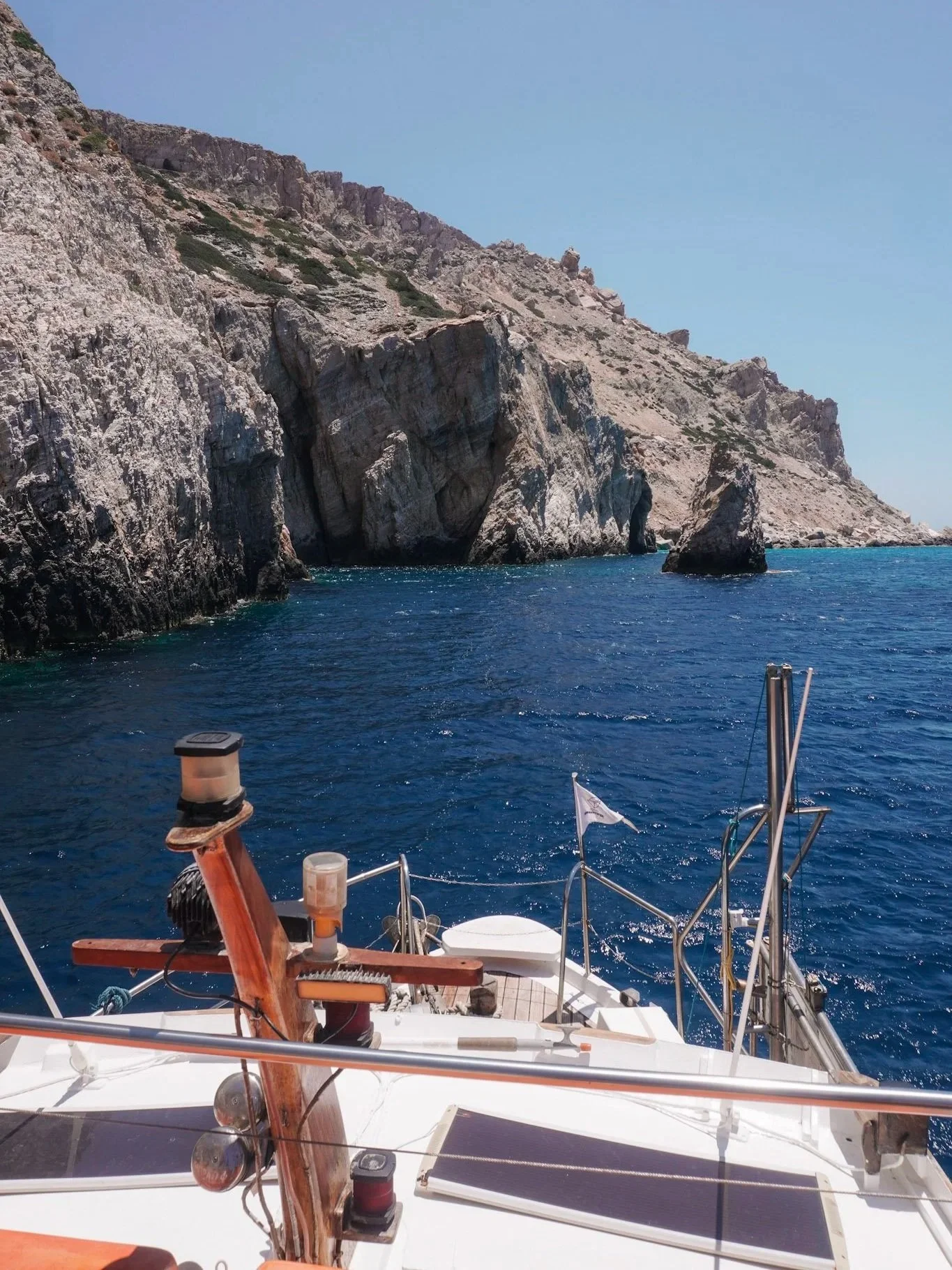
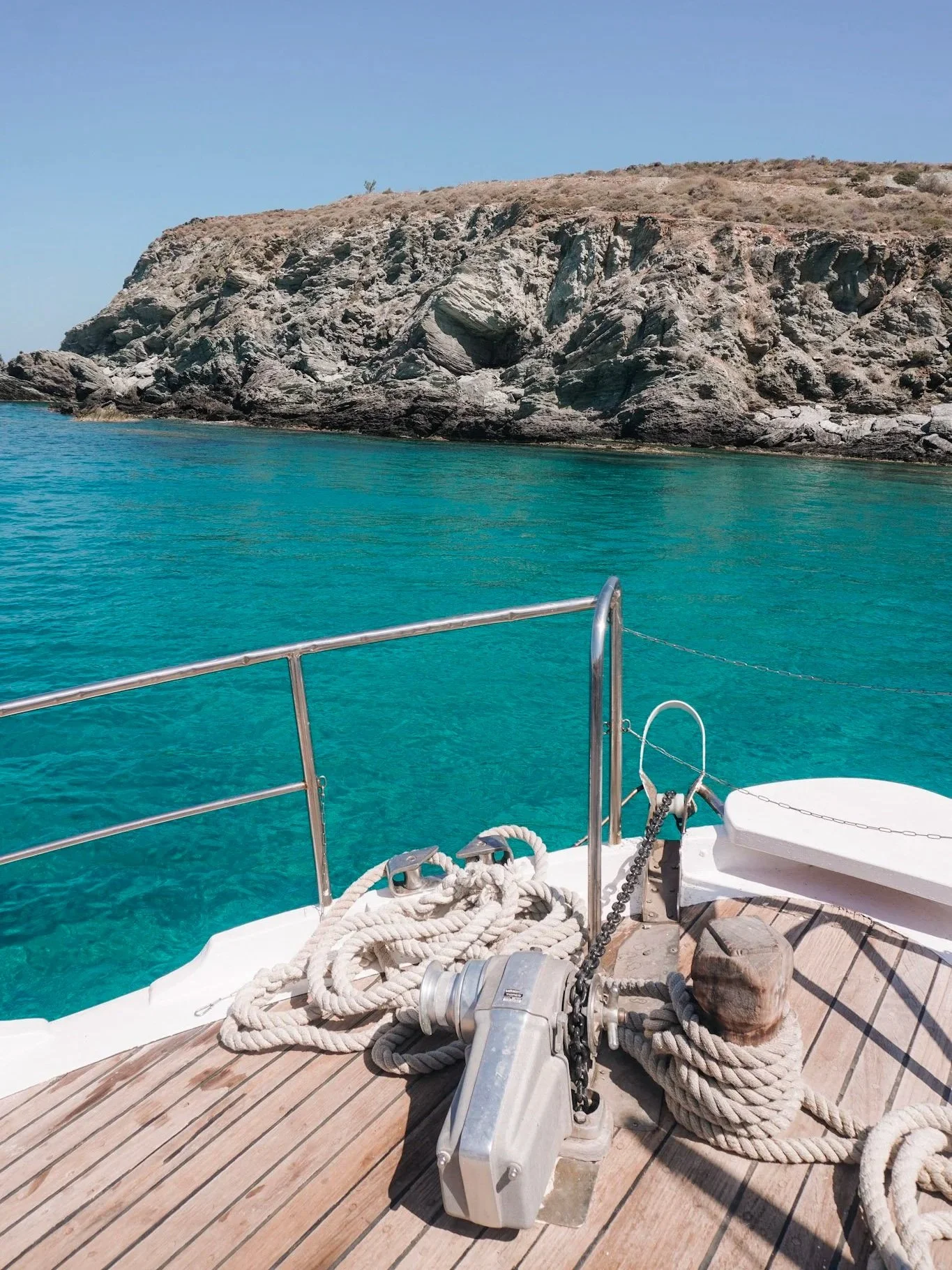
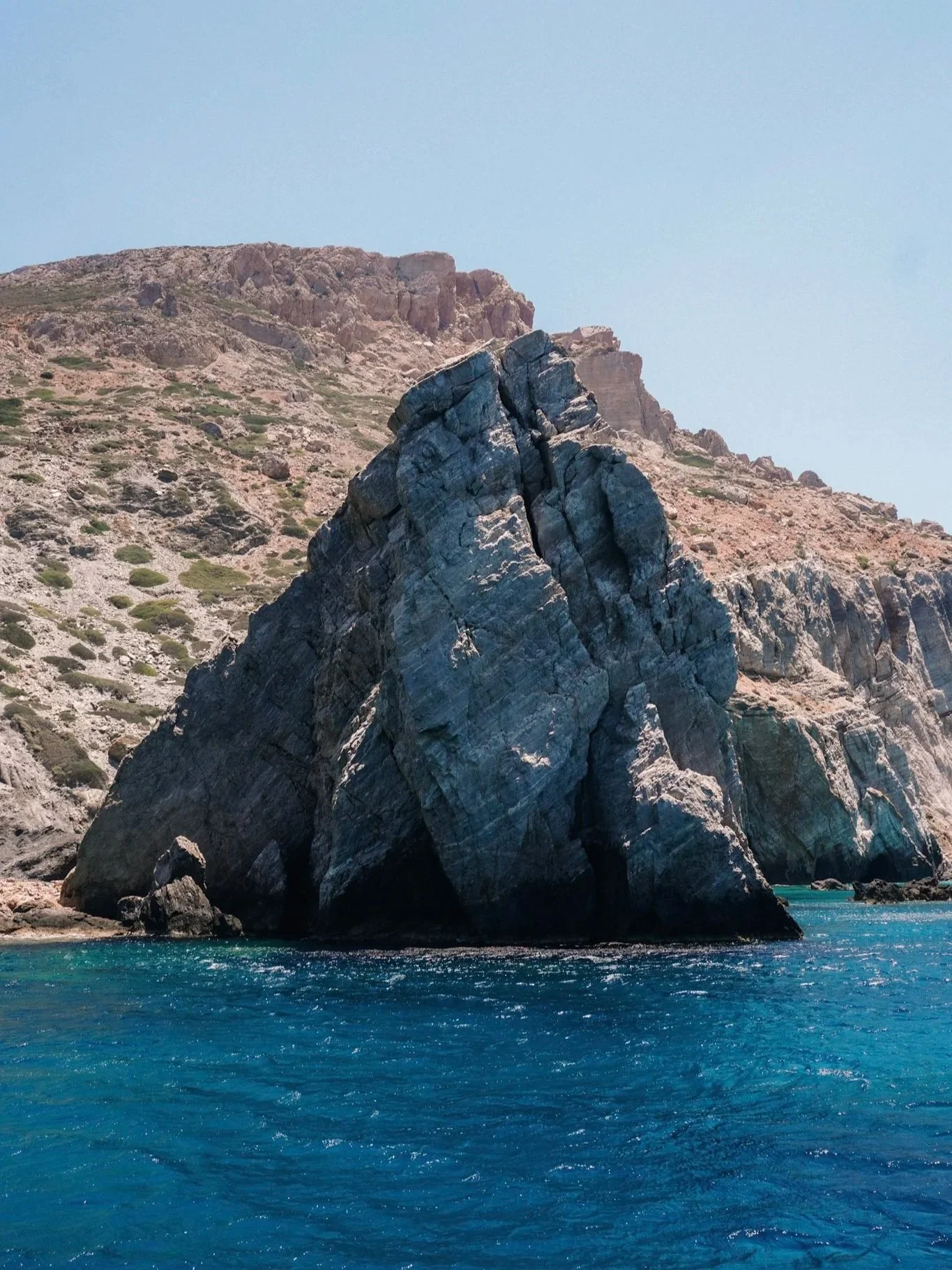
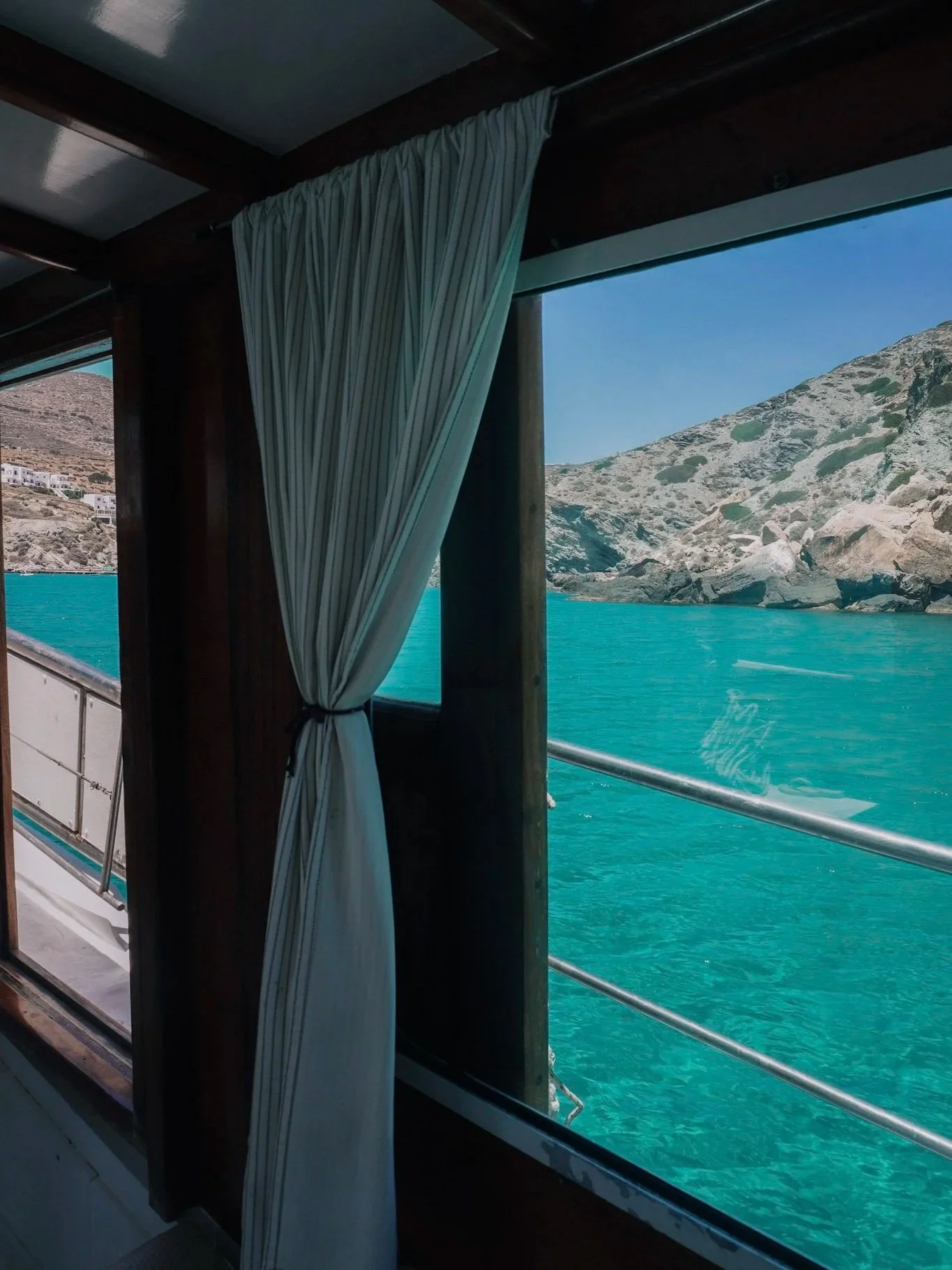
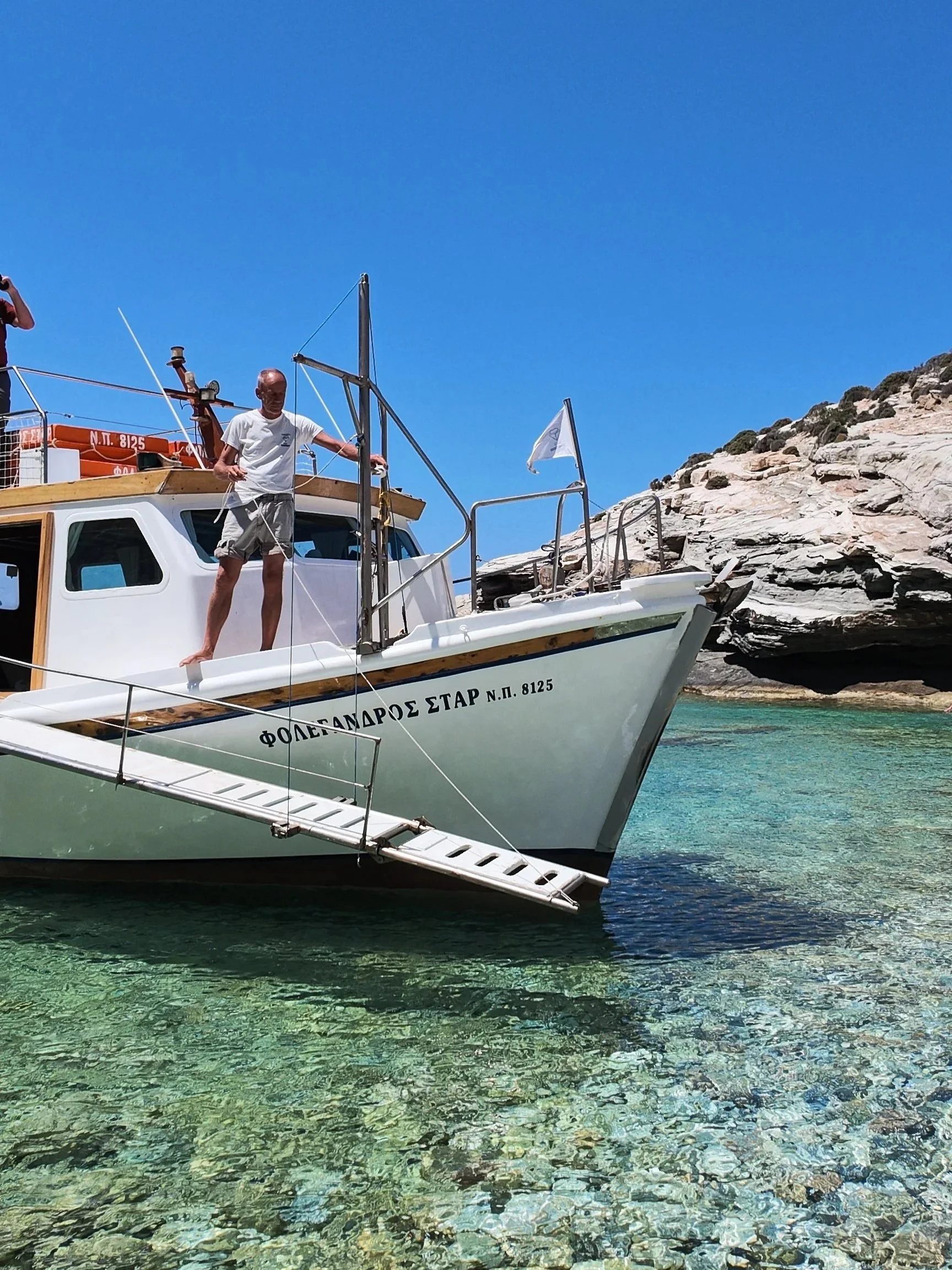
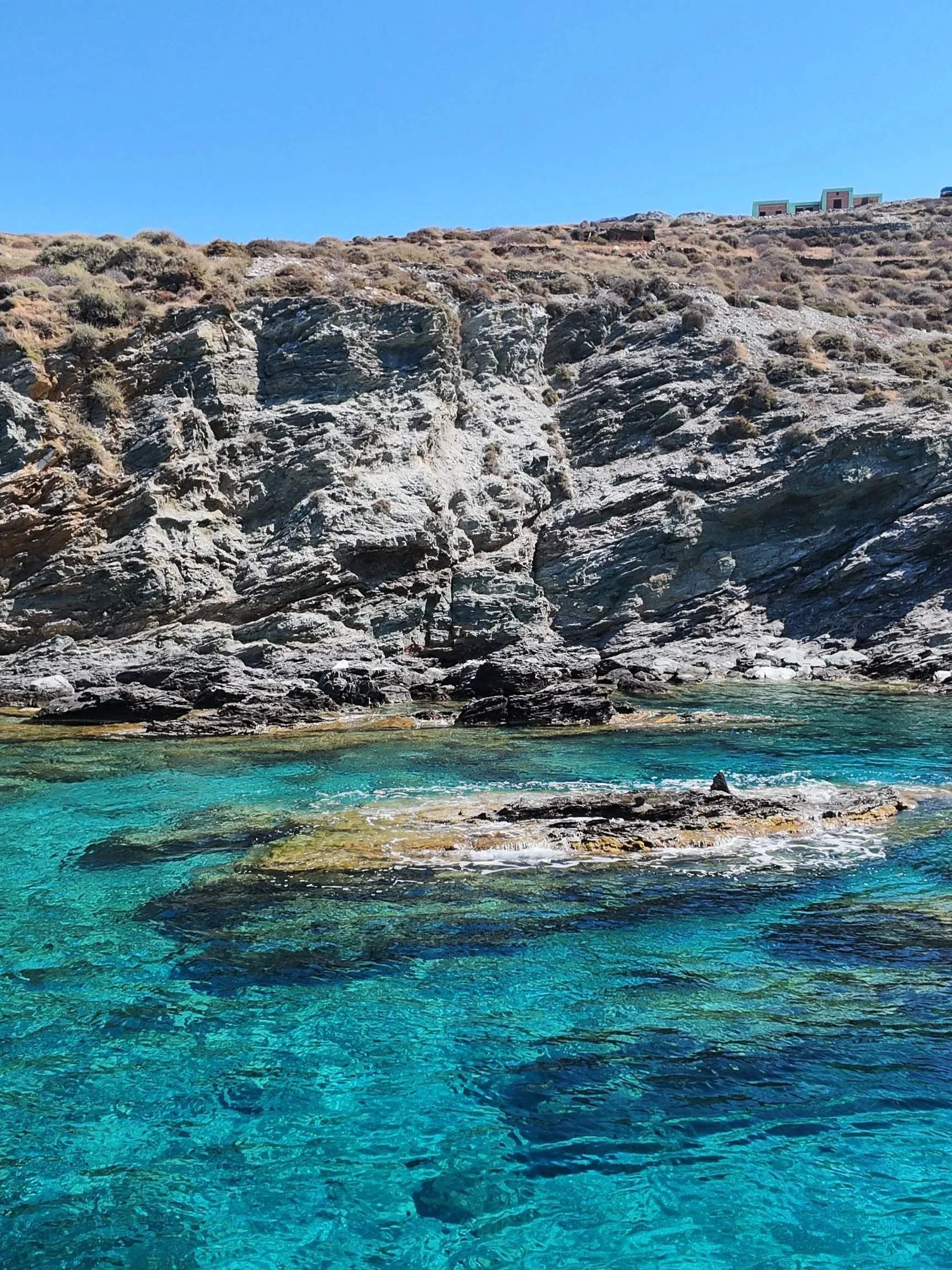
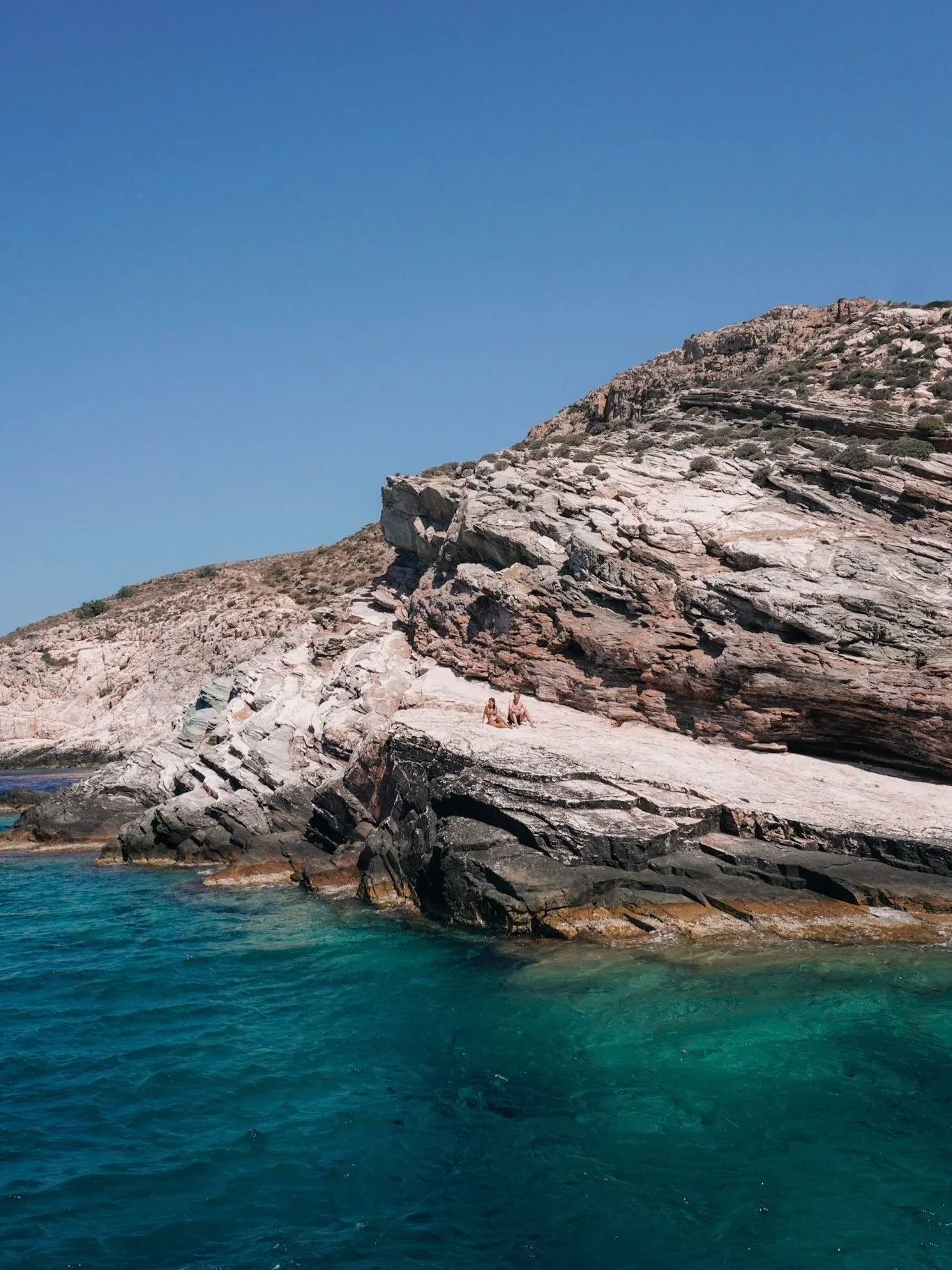
Seeing Folegandros from the water reveals just how dramatic its geography really is.
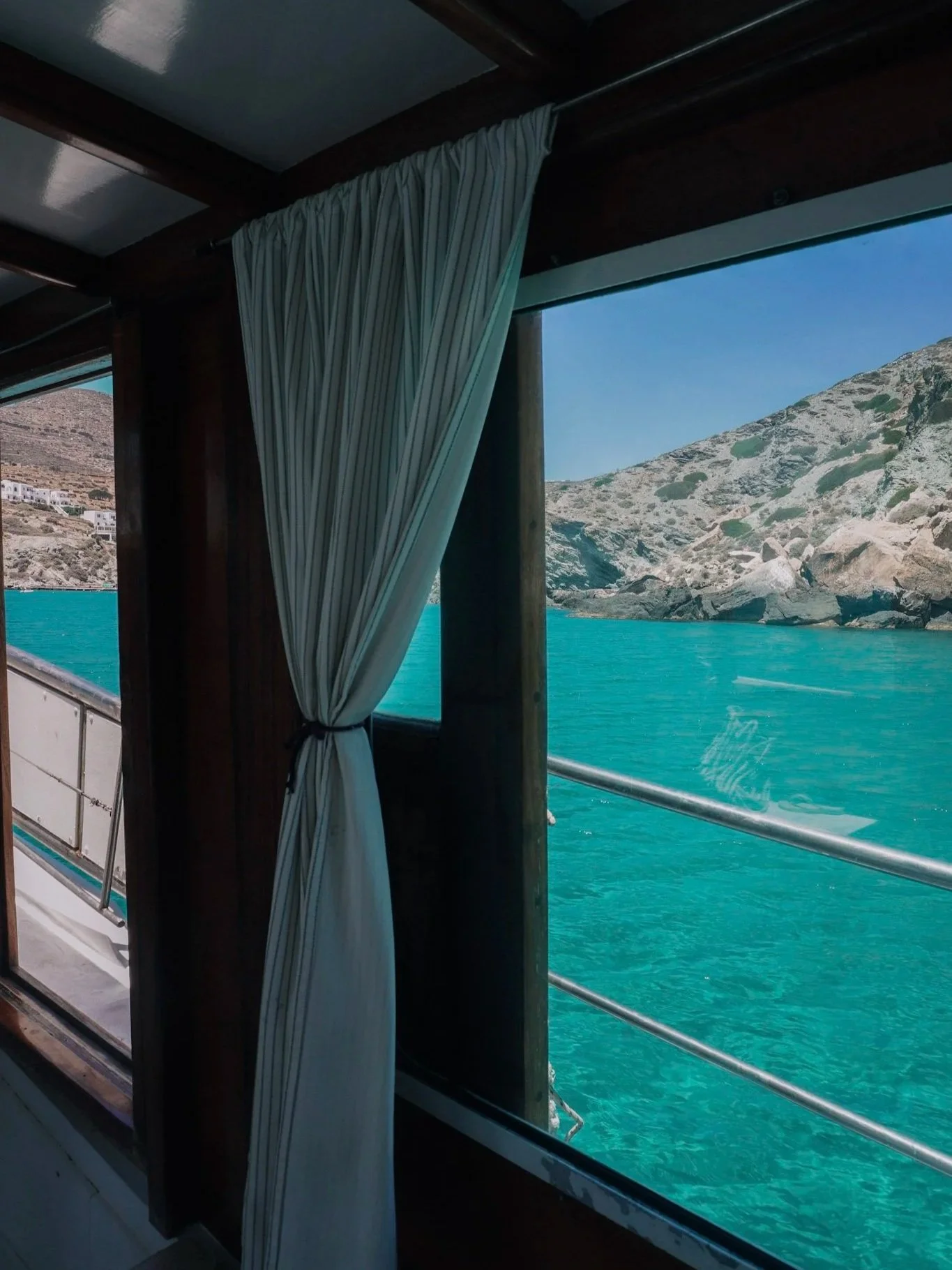
We took a four-hour boat trip with Island Spirit Cruises around the coastline, stopping along the way to swim in remote coves and places that are difficult, or sometimes impossible, to reach by road. From the sea, the scale of the cliffs is completely different, with long stretches of rugged coastline and almost no development in sight.
It was also a great way to discover several swimming spots in a single afternoon without having to navigate the island's trails and roads.
Good to know: Routes and swimming stops depend on the weather and wind, so check what is included when booking.
Hike to Aspropounta Lighthouse
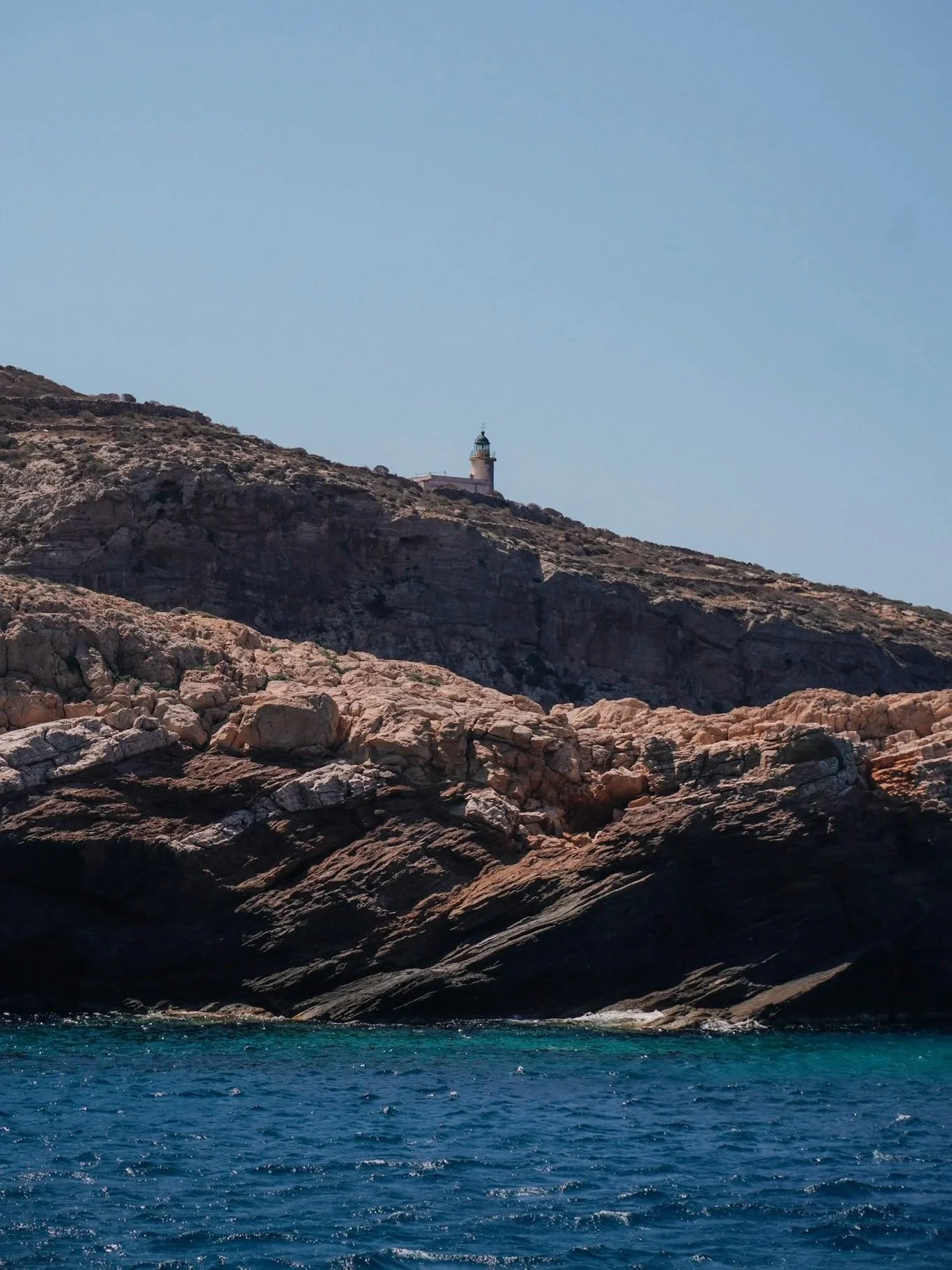
For those who want to see Folegandros on foot, the old lighthouse above Livadaki makes a particularly beautiful destination.
Built on the island's southwestern coast, Aspropounta stands alone above a rugged stretch of the Aegean. It can be combined with the hike to Livadaki Beach, making the journey as much a part of the day as the destination itself.
The landscape here is quintessential Folegandros: dry hills, stone paths, blue sea and almost nothing else.
Chrysospilia Cave
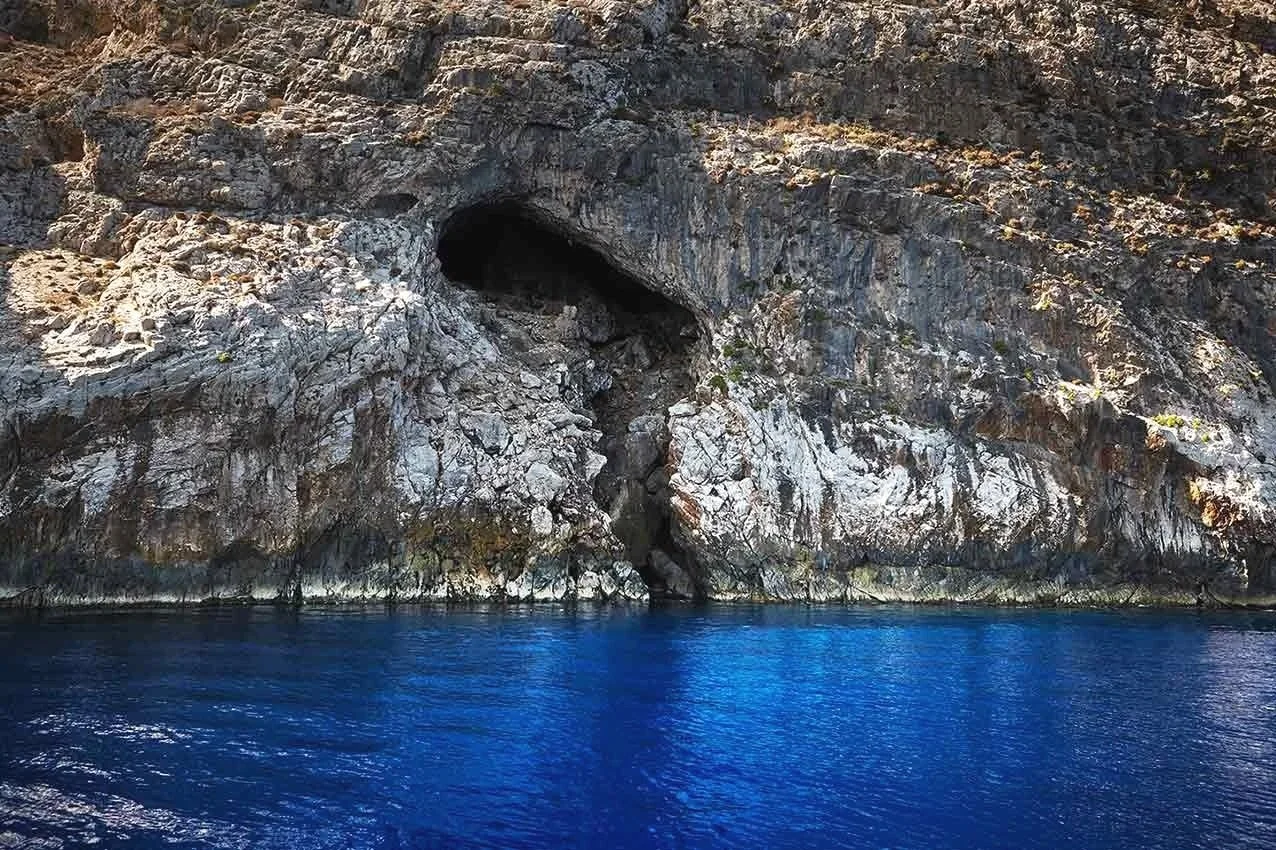
Chrysospilia is one of Folegandros' most intriguing archaeological sites.
Located high on a rocky cliff beneath the Church of Panagia, the cave is particularly important because hundreds of ancient names have been inscribed into its walls, some dating back to antiquity.
This isn't, however, a conventional cave attraction that you can simply walk into. Access is difficult and subject to archaeological restrictions, so I would think of Chrysospilia more as part of the island's fascinating history than a guaranteed stop on an itinerary.
/// Favorite Tables
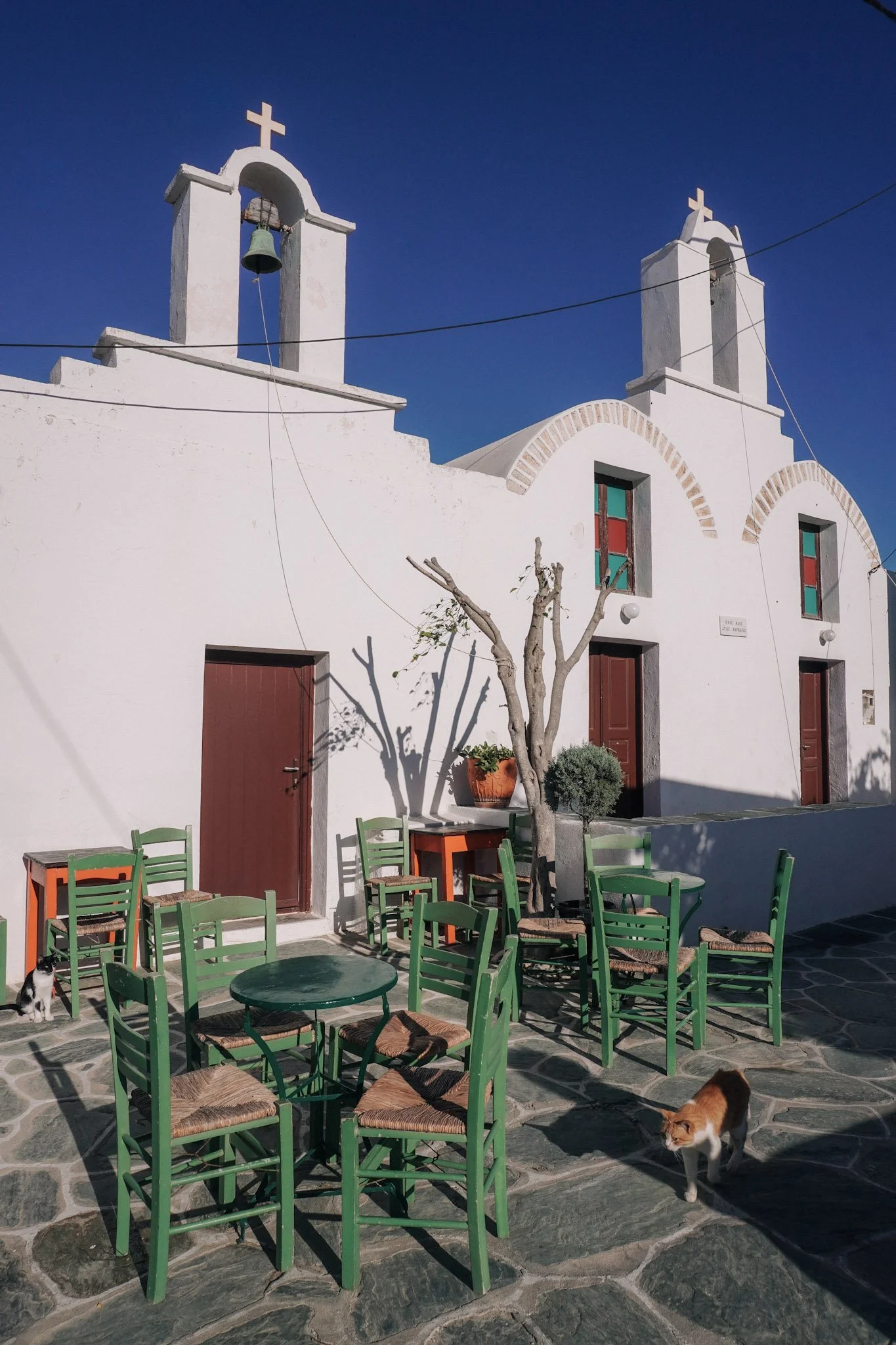
Eva's Garden (Chora)
A charming courtyard restaurant serving Greek and Mediterranean dishes in a relaxed, intimate setting.
To Barbounaki (Chora)
A small seafood-focused spot for fresh fish, meze and simple Greek dishes in the heart of Chora.
Piatsa (Chora)
Traditional Greek cooking served around one of Chora’s picturesque squares, especially lovely in the evening.
Sinadisi (Ano Meria)
A local favorite for traditional Greek dishes and a more authentic taste of rural Folegandros.
Flora Mimis (Ano Meria)
A family-run taverna known for generous, home-style Greek cooking in the quieter setting of Ano Meria.
Taverna Agios Nikolaos (Agios Nikolaos Beach)
A simple seaside taverna for fresh fish and Greek classics, perfect for a long lunch between swims.
Folegandros Bakery
A worthwhile stop for fresh bread, traditional pastries and something sweet to take to the beach.
/// Slow & Curated Stays
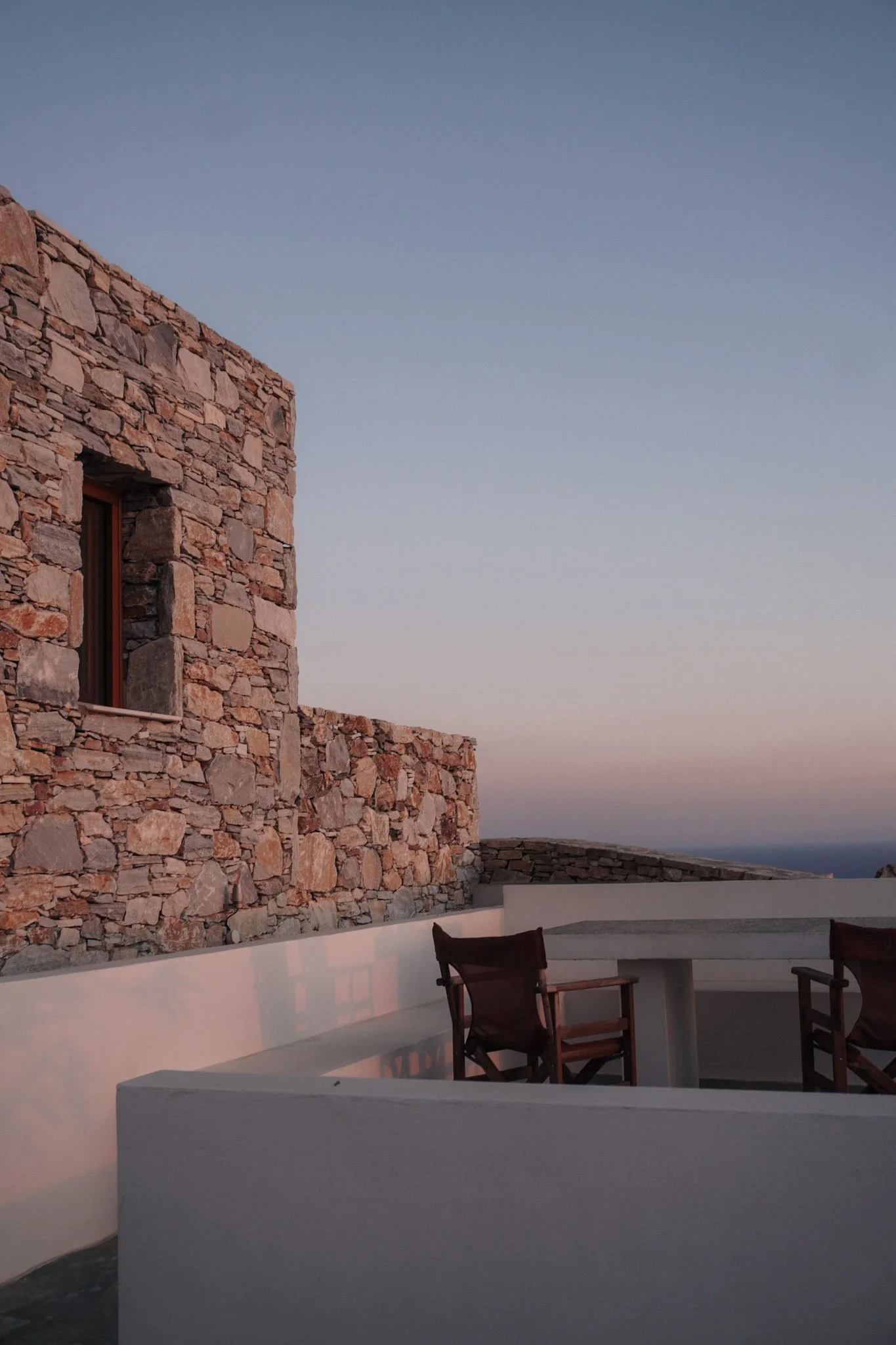
Agada Folegandros
An intimate Cycladic stay with understated interiors and a peaceful atmosphere, ideal for a quieter escape. Website
Pentanemi (Ano Meria)
Secluded residences surrounded by the rural landscape of Ano Meria, with privacy, open views and a strong sense of place. Website
Avaton Folegandros (Chora)
A refined hideaway near Chora, combining contemporary Cycladic design, sea views and easy access to the village. Website
Gundari (Petousis)
A striking luxury retreat built into the island’s rugged cliffs, with earthy architecture, private pools and uninterrupted Aegean views. Website
Cycladic Villa (Ano Meria)
A private four-bedroom villa at the entrance of Ano Meria, with panoramic Aegean views, two terraces and a pool overlooking the landscape. Website
Practical Tips
How to Get There
Folegandros doesn't have an airport, so you'll arrive by ferry.
There are connections from Piraeus and other Cycladic islands, making it particularly easy to combine Folegandros with islands such as Milos, Sifnos, Serifos or Santorini.
The ferry arrives at Karavostasis, the island's small port, around 3 km from Chora.
Getting Around
Despite its small size, I would recommend having a car or scooter if you want the freedom to explore.
Some beaches can be reached by road, while others require a walk or boat. Around Agali in particular, the network of paths and small local boats makes it easy to combine several beaches without driving.
Don't Expect Organised Beaches
Many beaches have no sunbeds, beach bars or facilities at all. Katergo, Galyfos, Fira, Livadaki and Ampeli are examples where you should arrive prepared with water and sun protection.
Wind Changes Everything
As elsewhere in the Cyclades, the Meltemi can completely change your beach plans.
Rather than deciding your entire itinerary beforehand, check the wind each morning and choose the coast accordingly. Galyfos and Ampeli, for example, are among the beaches with protection from northerly winds.
This is also why a boat trip can change route from one day to another.
Chora Is Pedestrian
One of the reasons Chora is so pleasant is that its historic centre is pedestrian.
Park outside and continue on foot through the squares and alleys. In the evening, this makes the village especially enjoyable for dinner and drinks without traffic running through its centre.
How Long to Stay
I would recommend at least four nights.
Folegandros is small enough that you don't need a week to see its main places, but rushing through it misses the point. Four or five days gives you time for several beaches, a boat day, Ano Meria, Chora, Panagia and, importantly, afternoons where you don't need to do anything at all.
Best Time to Visit
June and September are particularly good months if you want warm weather without the busiest weeks of summer.
Because Folegandros is small, even a relatively modest increase in visitors is noticeable in Chora and on the more accessible beaches. Outside peak August, it is much easier to experience the quieter side of the island.